
Weaving a Tight "Management" Net to Contain Risks
 Scan to share
Managing the source well, controlling the process, and holding the bottom line are the fundamental essentials of safety management. Since the launch of the three-year action for fundamental safety production improvement, State Nuclear Power Automation System Engineering Company (hereinafter referred to as "SNPC") has adhered to addressing both symptoms and root causes with emphasis on root causes. Under the strong leadership of the company's Party Committee, SNPC has made genuine efforts in management systems, dual prevention, supervision and inspection, emergency management, and experience feedback, comprehensively enhancing the systematic, standardized, and scientific level of safety management, and weaving a tight and solid management net for the goal of "zero accidents, zero casualties."
I. System Support: Building a New Management "Pattern"
A scientifically sound and well-established management system is an important support for intrinsic safety. SNPC persists in systematic advancement and standardized guidance, continuously learning new regulations and new standards, integrating new requirements into the company's rules and regulations, continuously carrying out training on rules and regulations that all employees should know and be able to do, and anti-violation activities, promoting the penetration and implementation of "complying with rules and executing procedures" at the front line. Through the supervision and audit of the occupational health and safety management system and the Level II safety production standardization review, relying on systematic operation, safety production work has "rules to follow and laws to abide by."
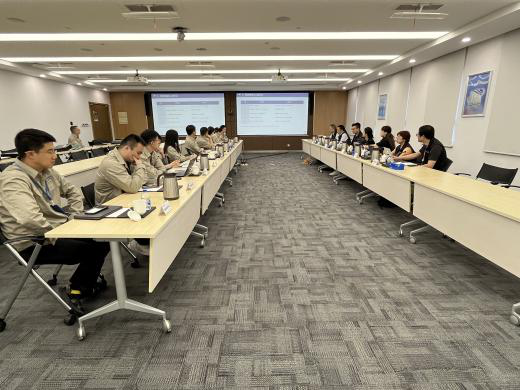
Welcoming the Safety Production Standardization Review
II. Dual Prevention: Moving the Threshold Forward to "Prevent Risks"
Risk control is the first threshold of safety management. SNPC has established and improved a dual prevention working mechanism of graded safety risk control and hidden danger investigation and governance. Following the approach of "safety risk identification - preventive measures in place - emergency measures effective," the company organizes comprehensive sorting and assessment of various risks, forming a dynamic risk database and control checklist. The company continuously improves the management of hazardous operations such as hot work, working at heights, and temporary electricity use. High-risk operations achieve full-process monitoring through law enforcement recorders, enabling the entire operation process to be traceable and reviewable.
III. Strict Supervision: Compacting Responsibilities into "Hard Constraints"
Strict supervision is an important guarantee of safety management. SNPC adheres to the strict tone without wavering, improves the criteria for determining major and relatively major hidden dangers, conducts inspections according to checklists, and ensures closed-loop rectification. Following the principle of "inspection elements itemized, elements checklist-based," the company establishes and improves a safety inspection form library, and carries out supervision and inspection by category, level, and specialty. The company establishes and improves a normalized mechanism for self-inspection and self-rectification of accident hidden dangers. The company's principal responsible person leads a safety inspection at least once per month. A responsibility mechanism of "whoever inspects is responsible" and "whoever rectifies is responsible" has been established to enhance the effectiveness of inspection and rectification. A safety production whistleblower system has been established, and the internal reporting and reward mechanism for accident hidden dangers has been implemented, enabling every employee to become a "whistleblower" of safety hidden dangers.
IV. Emergency Preparedness: Guarding the "Last Line" of Life
Emergency management is the last line of defense for safeguarding life safety. SNPC continuously improves its emergency management level. Following the "1+1+N" framework (1 management system, 1 comprehensive plan, N special plans and on-site disposal plans), the company improves its emergency management system to ensure that plan contents are complete and operable. The company organizes the formulation and implementation of emergency drill plans, increases the frequency of unscripted drills and practical drills, enriches emergency drill scenarios, and strives to achieve "everyone can respond to emergencies." The company continuously carries out emergency knowledge publicity and training, implements the mechanism of posting emergency procedures on walls, and steadily improves emergency response capabilities. A third party is commissioned to conduct emergency capability assessments, enhancing the standardized and normalized level of emergency management, making emergency response capabilities a solid guarantee that can be relied upon at critical moments and counted on at critical junctures.
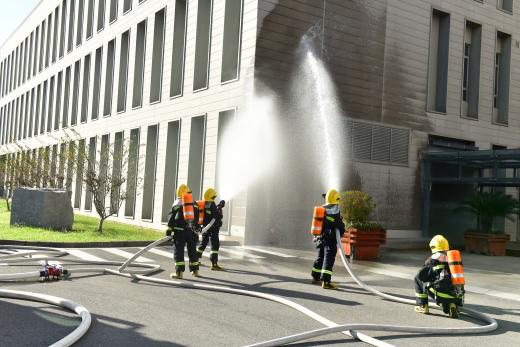
Joint Fire Drill with Local Government
V. Experience Feedback: Closed-Loop Improvement for "Long-Term Effectiveness"
Experience is the most valuable textbook, and lessons are the most profound wake-up call. SNPC standardizes safety production experience feedback work, strengthens the decomposition and implementation of documents such as accident report forms and safety warning cards, clarifies action tasks through the experience feedback platform, and forms a long-term management mechanism. The company earnestly organizes accident warning education, compiles and distributes typical case warning manuals, carries out accident reflection, and achieves "one party's lesson, all employees educated."
Three years of weaving the net, SNPC's "intrinsic safety of management" ultimately turns safety from a "passing fad" into "daily practice." System operation supports the foundation, dual prevention controls risks, supervision and inspection eliminate hidden dangers, and emergency response holds the bottom line, making "management" the most solid and reliable support for intrinsic safety.
Disclaimer: Information republished from partner media, institutions or other websites is provided for reference and communication purposes only. It does not imply endorsement of its views or verification of its accuracy. Please contact us if any content infringes rights or requires correction.