
Search Results
Keyword:surface-guided radiation therapy
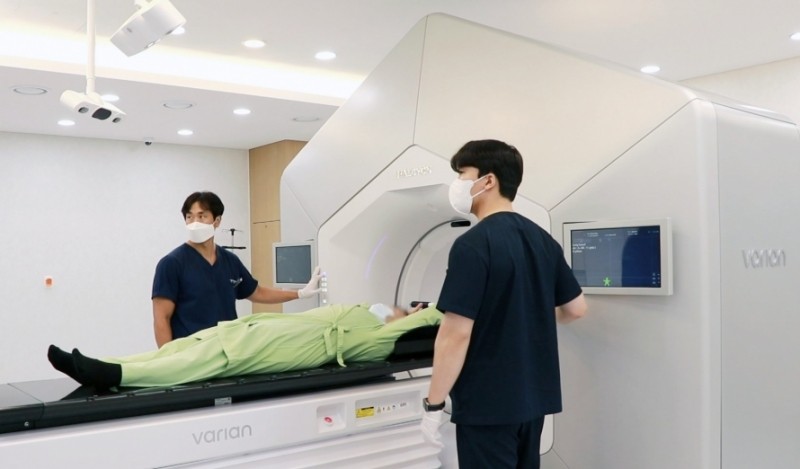
Korea's Gil Medical Center Expands Application of Markerless Surface-Guided Radiation Therapy
Gachon University Gil Medical Center in South Korea announced on August 26 that it is expanding the clinical application of markerless surface-guided radiation therapy (SGRT) to enhance the precision and comfort of radiation therapy for cancer patients. According to the hospital, the proportion of markerless SGRT in its radiation therapy procedures has increased from 28% in the first half of 2025 to 37% in the first half of 2026. This change indicates that this treatment-assistive technology, which reduces the burden of skin marking on patients, is gaining broader clinical adoption. Markerless SGRT is an advanced technique used for patient positioning and monitoring during radiation therapy. Unlike conventional methods, patients do not need to retain target line markings on their skin; the treatment system can assist in confirming patient positioning through surface guidance, enabling radiation to be delivered more accurately to the target area.
2026-08-26

Kangbuk Samsung Hospital in South Korea Validates Precision of New-Generation Surface-Guided Radiation Therapy System
The research team from the Department of Radiation Oncology at Kangbuk Samsung Hospital in South Korea announced on July 31 that they have completed validation of the geometric accuracy and respiratory tracking performance of a new-generation surface-guided radiation therapy system. The research findings have been published in the latest issue of the international academic journal *Radiation Physics and Chemistry*. In breast cancer radiotherapy, the deep inspiration breath-hold technique is commonly used in clinical practice to reduce radiation exposure to the heart and lungs. Traditional procedures typically require tattoo marks or drawn guide lines on the patient's skin surface, along with wearing sensors to monitor respiratory motion, which somewhat compromises treatment convenience and patient comfort. The new-generation surface-guided radiation therapy system validated in this study utilizes 3D stereoscopic cameras and thermal imaging technology...
2026-08-02