
Korea's Gil Medical Center Expands Application of Markerless Surface-Guided Radiation Therapy
 Scan to share
Gachon University Gil Medical Center in South Korea announced on August 26 that it is expanding the clinical application of “markerless surface-guided radiation therapy” (SGRT) to enhance the precision and comfort of radiation therapy for cancer patients.
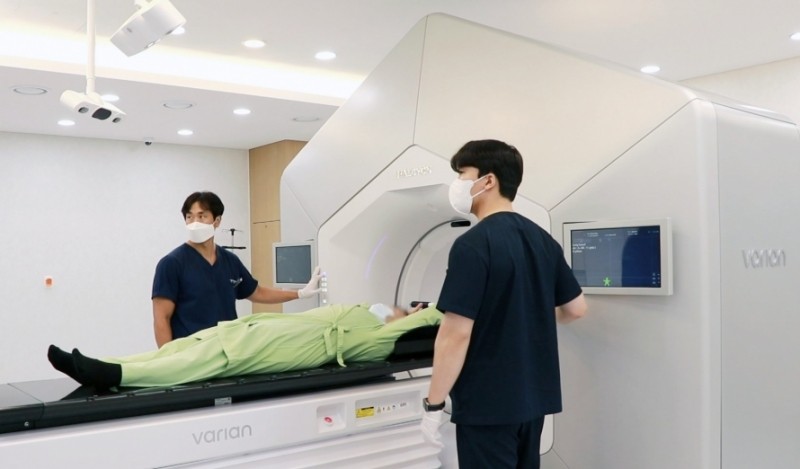
According to the hospital, the proportion of markerless SGRT in its radiation therapy procedures has increased from 28% in the first half of 2025 to 37% in the first half of 2026. This change indicates that this treatment-assistive technology, which reduces the burden of skin marking on patients, is gaining broader clinical adoption.
Markerless SGRT is an advanced technique used for patient positioning and monitoring during radiation therapy. Unlike conventional methods, patients do not need to retain target line markings on their skin; the treatment system can assist in confirming patient positioning through surface guidance, enabling radiation to be delivered more accurately to the target area. In the past, cancer patients typically had to retain skin markings throughout their 4- to 6-week treatment period, which affected daily activities such as bathing and showering. In summer, markings could also fall off due to perspiration, causing hygiene, aesthetic, and psychological inconvenience for patients.
Gil Medical Center introduced the markerless SGRT assistive device AlignRT in all treatment rooms of its Department of Radiation Oncology in 2024, becoming the first hospital in the Incheon region to fully equip treatment rooms with this technology. Subsequently, the hospital integrated AlignRT with the high-specification radiation oncology treatment system TrueBeam.
The hospital noted that TrueBeam is equipped with “RapidArc Dynamic” technology, which enables high-precision, high-dose radiation delivery concentrated on the tumor site while minimizing radiation exposure to surrounding normal organs such as the spinal cord.
Professor Kim Hyun-joo of the Department of Radiation Oncology stated that markerless SGRT can confirm patient posture and position with 0.1 mm-level precision, helping to improve the accuracy of radiation therapy. He also noted that the hospital is prudently and safely expanding the applicable scope of this technology based on clinical experience accumulated since its introduction, taking into account patient conditions and cancer type characteristics.
Disclaimer: Information republished from partner media, institutions or other websites is provided for reference and communication purposes only. It does not imply endorsement of its views or verification of its accuracy. Please contact us if any content infringes rights or requires correction.