
IAEA Study: Five-Star Rating System Can Improve CT Imaging Safety and Reduce Unnecessary Radiation Exposure
 Scan to share
A new study led by the International Atomic Energy Agency (IAEA) in collaboration with Massachusetts General Hospital and Harvard Medical School in Boston, USA, shows that a five-star rating system can help hospitals optimize image quality, reduce radiation dose, and decrease unnecessary patient radiation exposure in computed tomography (CT) examinations. The study has been published in the European Journal of Radiology.
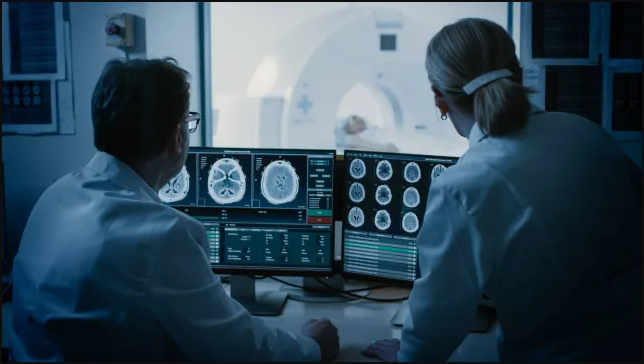
CT imaging uses X-rays to obtain detailed images of internal body structures and is an important tool in diagnosing a wide range of diseases. The study notes that CT image quality is closely related to radiation dose—higher doses typically reduce image noise and improve clarity, but do not always yield additional diagnostic value. How to minimize radiation exposure while ensuring diagnostic accuracy is key to optimizing CT examination protocols.
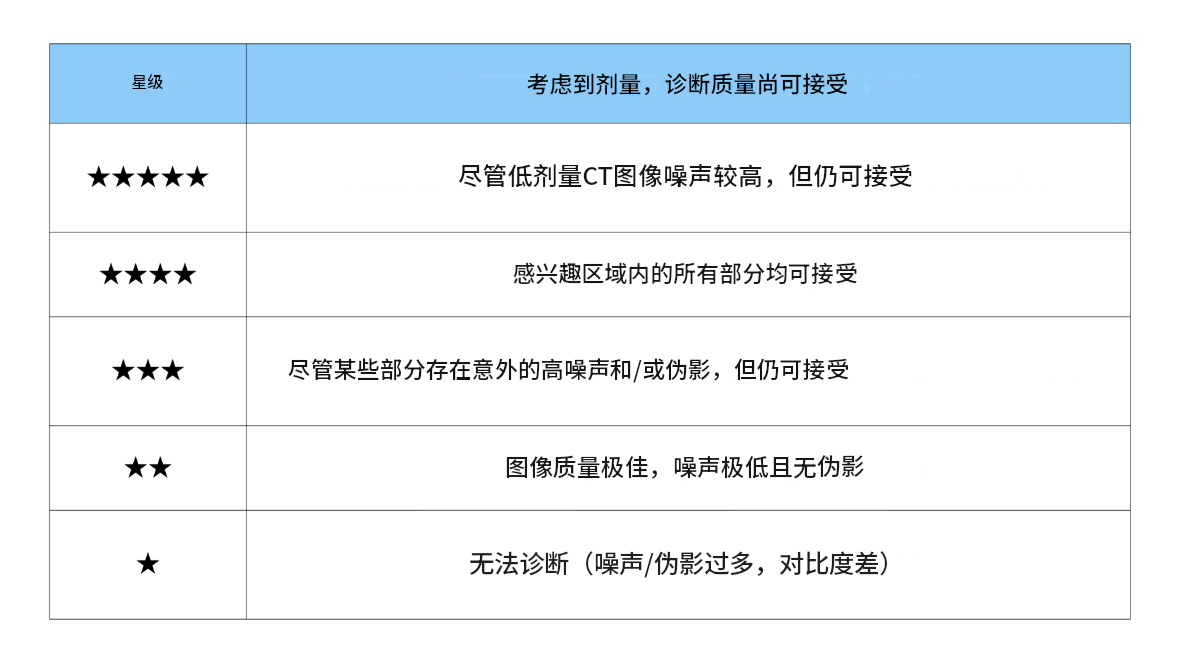
The five-star rating system considers radiation dose when assessing CT image quality. (Source: Rehani et al., 2026)
The five-star rating system, proposed in 2021, differs from traditional image quality scoring methods in that it does not simply use "the clearer the image, the better" as the criterion, but rather incorporates radiation dose into the evaluation. Under this approach, an image obtained with extremely low noise and high clarity achieved through radiation doses beyond necessary levels may receive only two stars, while an image with slightly higher noise—but sufficient to meet diagnostic requirements and acquired with a more reasonable dose—can receive a five-star rating.
The research team tested the system at six hospitals across five European countries, analyzing a total of 2,737 CT examinations of adult patients, including 1,247 chest scans and 1,490 abdominal scans, covering 23 different clinical indications. At each participating hospital, three radiologists evaluated the images using the five-star rating system.
The results showed that the scoring system demonstrated good reproducibility across different institutions. At centers with highly standardized protocols, image quality scoring consistency reached up to 93%; instances where the three radiologists disagreed were rare, accounting for only 1.6% of all examinations.
The study also found significant differences in radiation doses across different CT scanners and medical centers. In some examinations, relatively high radiation doses were observed even for clinical tasks with high tolerance for image noise, such as CT scans for pulmonary nodules, kidney stones, and appendicitis.
The researchers believe that the five-star rating method can transform radiologists' subjective judgments of image quality into a more structured evaluation tool, helping healthcare institutions tailor CT examination protocols to specific clinical needs rather than applying identical imaging settings across different body parts and indications.
By simultaneously considering image quality and radiation dose, the system is expected to promote further harmonization of imaging protocols among hospitals, countries, and CT scanner manufacturers, reducing unnecessary radiation exposure while ensuring sufficient diagnostic information, thereby enhancing patient examination safety.
Disclaimer: Information republished from partner media, institutions or other websites is provided for reference and communication purposes only. It does not imply endorsement of its views or verification of its accuracy. Please contact us if any content infringes rights or requires correction.