
Two production lines at radiopharmaceutical plant in Russia's Kaluga Region enter trial production
 Scan to share
Rosatom recently announced that two production lines at its modern radiopharmaceutical manufacturing facility in the Kaluga Region have entered trial production. The facility, built in accordance with the Eurasian Economic Union's international Good Manufacturing Practice (GMP) standards, is equipped with high-level production equipment and is designed to supply safe, quality-controlled radiopharmaceuticals to the market.
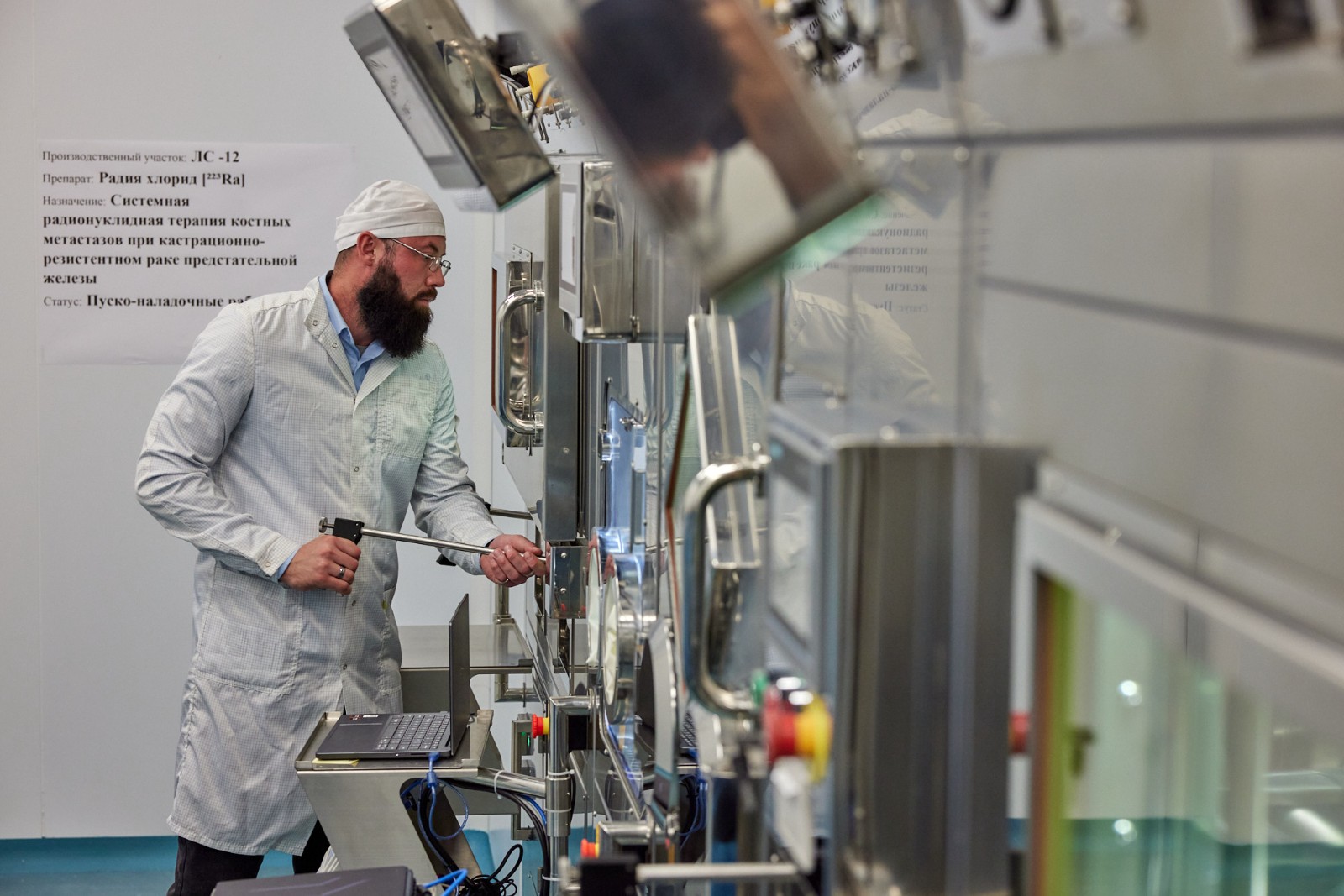
According to reports, Rosatom's subsidiary enterprises currently produce more than ten registered diagnostic and therapeutic radiopharmaceuticals, involving isotopes such as iodine-123, iodine-131, technetium-99m, and samarium-153. The new plant's production plan is based on the demand for radioisotope products from Russian medical institutions through 2030. The company stated that by the end of this decade, the project is expected to largely meet the relevant needs of Russia's healthcare system, supporting approximately 1.5 million radionuclide diagnostic and therapeutic procedures per year.
The facility has been undergoing commissioning work since early August and has now completed the tasks of the trial production phase, with products tested for compliance and quality standards. According to the plan, the plant will reach its design capacity in 2028. The company's technical director stated that for radionuclides with high demand, the enterprise is transitioning from raw material production to high-tech pharmaceutical manufacturing in compliance with GMP requirements, forming a complete cycle from isotope preparation to finished drug products to strengthen quality control and shorten the time-to-market for new domestic products.
Among the production lines now commissioned, the radiopharmaceutical based on radium-223 is primarily used for cancer treatment, particularly for therapies related to bone metastases. This radionuclide acts on metastatic lesions, exerting antitumor effects and relieving pain, which helps improve patients' quality of life.
Another production line will be used for the manufacture of radiopharmaceuticals based on actinium-225. As an alpha particle emitter, actinium-225 can be combined with specific molecules to achieve targeted delivery to cancer cells. The alpha particles it releases are capable of damaging tumor cell DNA and inducing cell death, thereby eliminating lesions, including micrometastases.
The plant employs automated synthesis modules manufactured in Russia, capable of producing at least 100 vials of radiopharmaceuticals per single shift. The automated systems help improve batch-to-batch consistency, reduce human error, ensure sterility of finished products, and allow process adjustments to accommodate the synthesis requirements of different radiopharmaceuticals.
In addition, the facility includes a radioactive waste storage and processing system. Solid radioactive waste is loaded into specially designed containers using dedicated robotic manipulators, with operators performing remote control from the control room to enhance safety in waste storage and processing operations.
The project is aligned with Russia's healthcare-related construction plans. As radionuclide diagnostic and therapeutic infrastructure advances in medical institutions, the radiopharmaceuticals produced by the new plant will provide supporting supply for clinical diagnosis and treatment.
Disclaimer: Information republished from partner media, institutions or other websites is provided for reference and communication purposes only. It does not imply endorsement of its views or verification of its accuracy. Please contact us if any content infringes rights or requires correction.