
World's First Full-Stack MRI Brain-Computer Interface Solution "uMR Shenguan" Officially Released
 Scan to share
On August 23, the first National MRI Brain-Computer Interface Conference, themed "Integration · Decoding · Modulation — Ushering in a New Era of Brain-Computer Interaction," was held in Tianjin. At the conference, United Imaging Healthcare and Tianjin University jointly released the world's first full-stack MRI brain-computer interface solution, "uMR Shenguan." "uMR Shenguan" spans the entire translational chain of brain-computer interfaces from fundamental research to clinical application, advancing the realization of "understanding the brain, precise modulation, and making neural plasticity measurable and controllable."
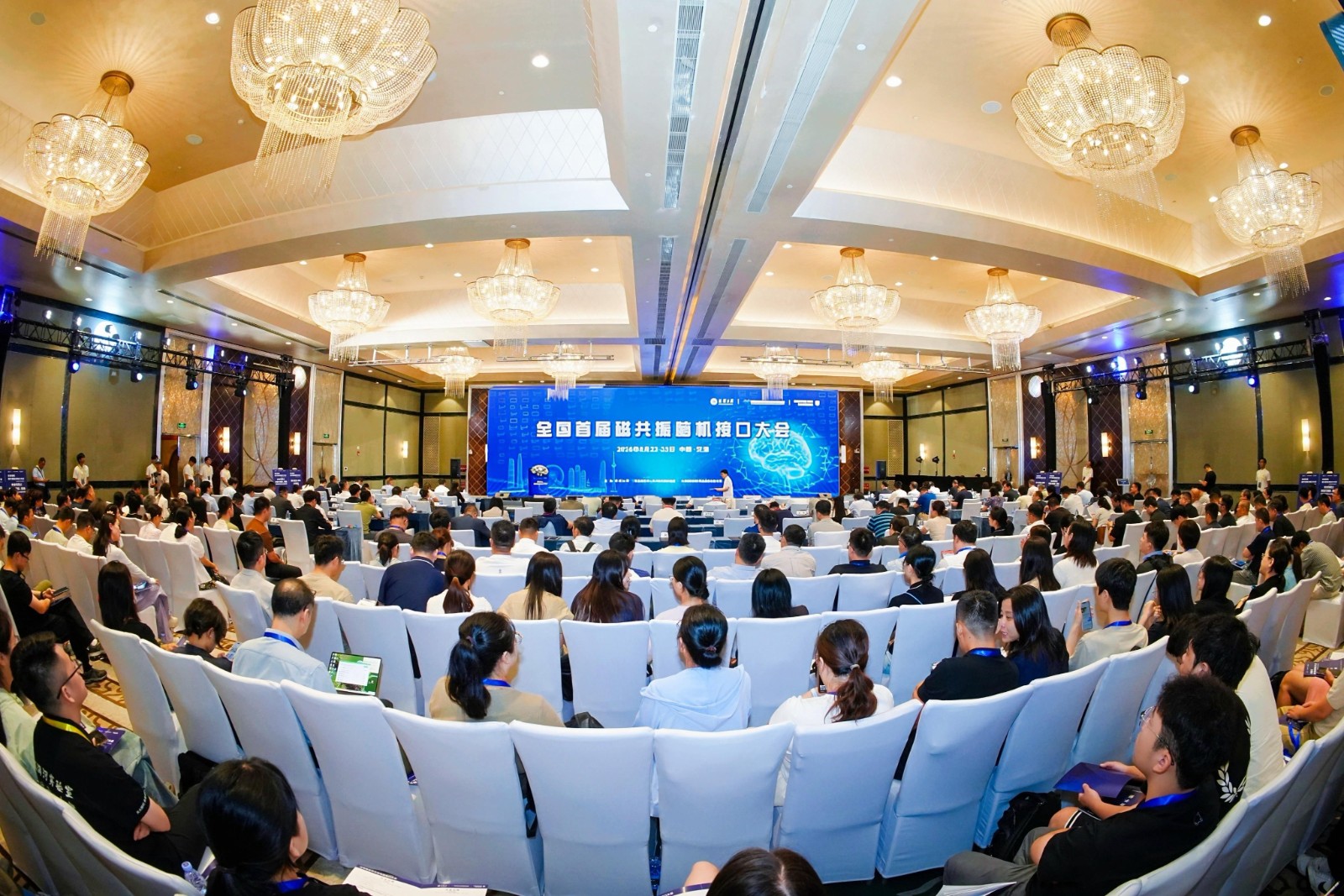
It is understood that "uMR Shenguan" is built on United Imaging's uMR series equipment as its hardware foundation, addressing key technical challenges in the closed loop of "reading the brain — writing the brain — verification" in brain-computer interfaces, providing a complete technical system that upgrades MRI equipment from a mere "imaging tool for structure" to a "central platform" participating in the entire brain-computer interaction process.
Fan Qiuyun, Deputy Dean of the School of Medicine at Tianjin University's Faculty of Medicine, introduced that to achieve this goal, "uMR Shenguan" has established a complete technical system encompassing high spatiotemporal resolution MRI, MRI hardware adaptation and optimization, a magnetic-compatible brain-computer interface adaptation toolbox, and new paradigms of MRI-guided neuromodulation.
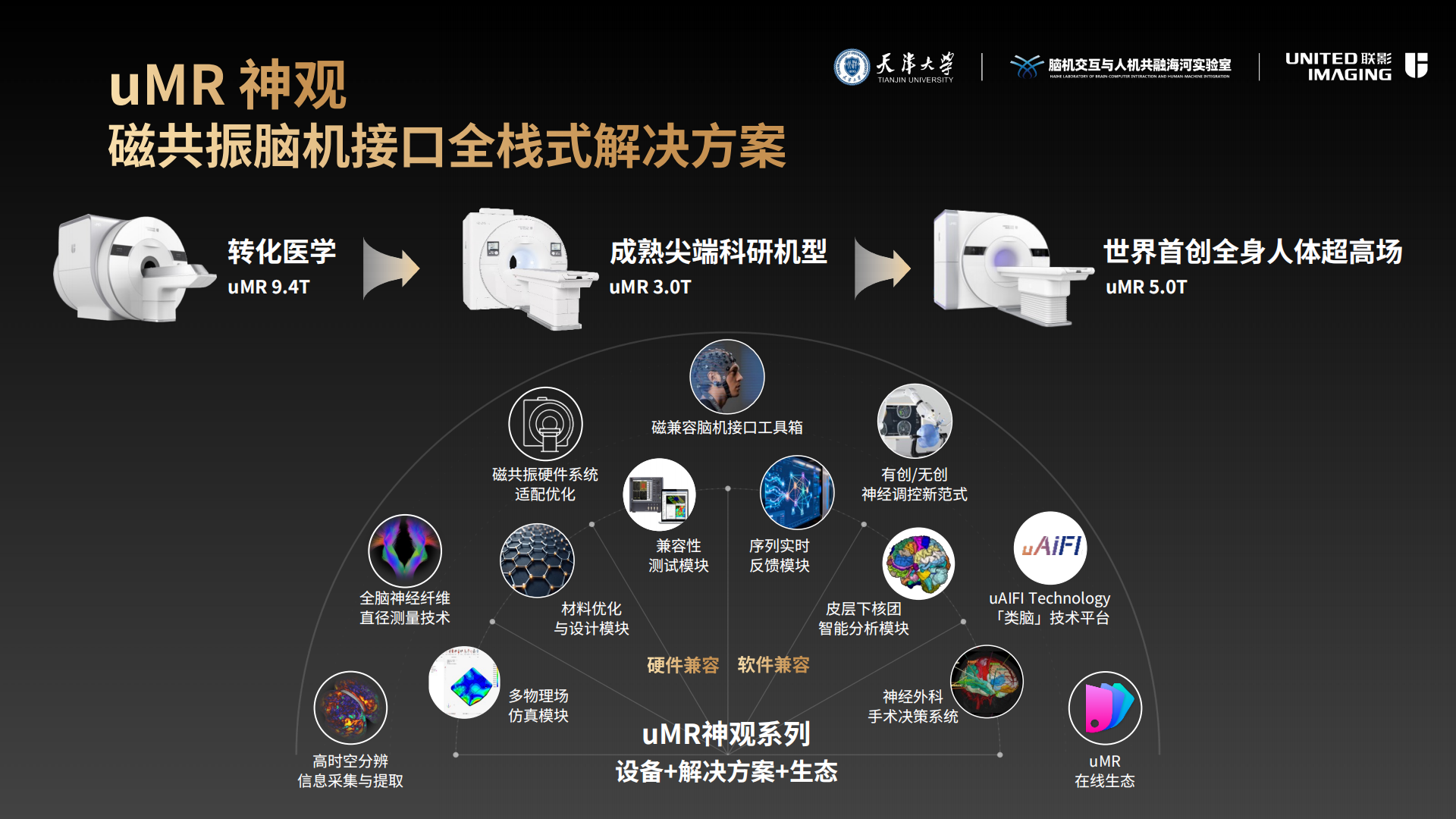
The solution features millisecond-level neural activity signal capture and sub-millimeter-level fine brain structure measurement capabilities, effectively compensating for high-order inhomogeneous magnetic fields to ensure imaging quality in environments with complex brain-computer device implantation; it builds a magnetic-compatible brain-computer interface toolbox to solve the industry challenge of mutual interference between brain-computer interface devices and MRI; and it integrates the imaging-modulation technical chain, enabling MRI to truly participate in the entire brain-computer interaction process and addressing the shortfall in the closed loop. The solution also integrates the software-hardware integrated capabilities of MRI brain-computer interfaces, covering the full clinical closed loop from precise pre-treatment planning, real-time intra-treatment navigation and intervention, to iterative post-treatment optimization.
"uMR Shenguan is not an isolated product, but rather an upgrade of MRI from an 'imaging diagnostic device' to the core sensing and feedback hub in the brain-computer interaction closed loop. What it aims to solve is not the level of a specific technical parameter, but whether the MRI imaging platform can support the full process of brain-computer interfaces from fundamental research to clinical translation," said Dr. Yuan Jianmin, Director of the Joint Innovation Department at United Imaging Healthcare's MRI Business Unit.
It is reported that Tianjin University and United Imaging Healthcare have a long-standing collaboration. In October 2025, the world's first customized MRI platform for brain-computer interaction, "Shengong — Shenguan," jointly developed by both parties, was officially launched. Over the past year, leveraging this platform, the two parties have conducted joint research and technical validation in areas such as high spatiotemporal resolution brain activity information acquisition and extraction, MRI-guided neuromodulation, MRI hardware system adaptation and optimization, and magnetic-compatible brain-computer interface adaptation engines, achieving a series of significant progress.
"High spatiotemporal resolution analysis of brain structure and function is an important foundation for developing high-performance brain-computer interaction technologies," said Ming Dong, Vice President of Tianjin University and Director of the Haihe Laboratory of Brain-Computer Interaction and Human-Machine Integration. In his view, this collaboration is a strong complementarity between "cutting-edge research capabilities in brain-computer interfaces" and "high-end domestic medical equipment capabilities," truly achieving synchronized coordination of "observation" and "intervention" in brain research, effectively advancing brain-computer interfaces from "decoding signals" to "understanding the brain," and opening up an entirely new technical pathway for brain science research.
Disclaimer: Information republished from partner media, institutions or other websites is provided for reference and communication purposes only. It does not imply endorsement of its views or verification of its accuracy. Please contact us if any content infringes rights or requires correction.