
University of South China team extracts high-purity medical alpha nuclide Lead-212 from rare earth slag
 Scan to share
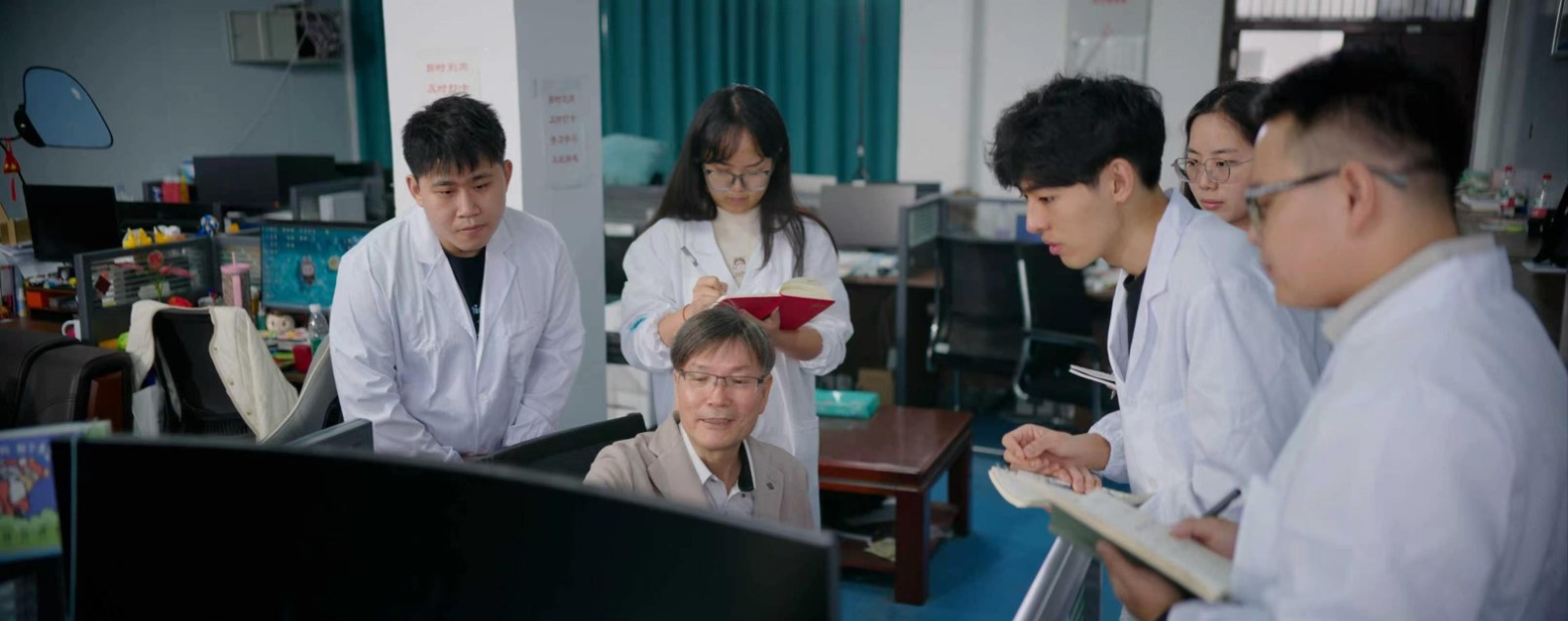
Lead-212 has a half-life of 10.6 hours and is one of the most promising targeted alpha therapy nuclides globally, applicable for the precise treatment of various malignant tumors including breast cancer, pancreatic cancer, and prostate cancer. However, the complex extraction process, low yield, and high cost of Lead-212 have hindered the widespread application of targeted drugs based on it. Currently, China's medical nuclides mainly rely on imports with long-term supply scarcity, making it urgent to develop efficient large-scale production and preparation technologies for Lead-212, build the target drug preparation/clinical application industry chain, and accelerate the achievement of self-sufficiency in important medical isotopes in China.
Radium slag from monazite processing is a radioactive radium-rich waste residue generated during the production of rare earth products using monazite ore as raw material. Wei Yuezhou's team took an innovative approach by introducing a special anion into the radium slag dissolution solution, causing Lead-212 to form an "anionic complex," and then utilized their self-developed porous silica-supported anion exchange resin to precisely "recognize" and "capture" Lead-212 from a solution containing more than 20 types of metal impurities in large quantities.
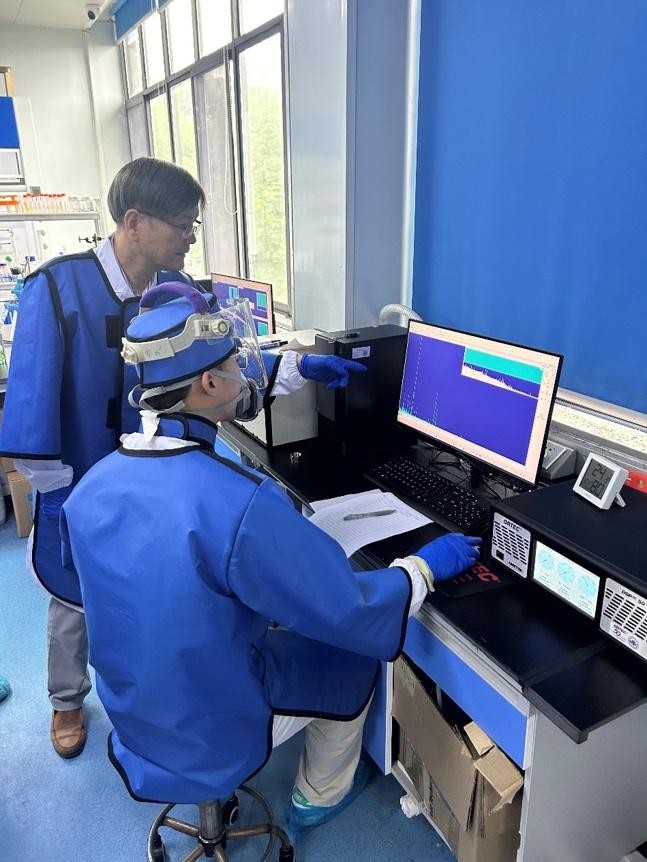
Upon testing, the Lead-212 product extracted by the team achieved a nuclide purity of up to 99.9%, with barium ions below 1 ppm and approximately 20 other metal impurity ions all below 0.1 ppm, with a single-pass recovery rate exceeding 90% and Thorium-228 single-pass recovery exceeding 85%. Wei Yuezhou stated that the process has the conditions for advancement to pilot-scale amplification, and this original technology of "turning harm into benefit and waste into treasure" is also expected to break the global "bottleneck" dilemma of severe shortage in medical alpha nuclide supply.
According to reports, applying the above research results, 1 curie of Lead-212 can be extracted from approximately 10 tons of radium slag, theoretically sufficient for the treatment of 66 cancer patients. The radium slag solution can be re-extracted after approximately 4 days of decay storage, enabling cyclic and repeated utilization. In other words, with this technology, processing 50 tons of radium slag annually can produce 365 curies of Lead-212, sufficient for approximately 24,000 cancer patients.
In addition to Lead-212, the materials and technology developed by the team can also directly separate and extract Thorium-228 from radium slag. Thorium-228 has a half-life of 1.9 years and can generate Lead-212 through decay. Due to its longer half-life, it is suitable for long-distance transportation and can also provide sufficient raw material support for the preparation of Lead-212 nuclear drugs both domestically and internationally. Wei Yuezhou stated that this technology is expected to help China achieve large-scale production of Lead-212 within 2 to 3 years, with production capacity gradually expanding to over 1 curie per day.
Disclaimer: Information republished from partner media, institutions or other websites is provided for reference and communication purposes only. It does not imply endorsement of its views or verification of its accuracy. Please contact us if any content infringes rights or requires correction.