
South Korea's Asan Medical Center Develops AI-Based Radiopharmaceutical Therapy Platform with U.S. Institutions
 Scan to share
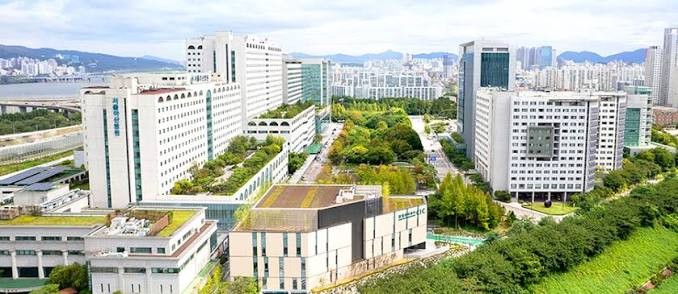
The research team at Asan Medical Center in Seoul announced on the 21st that it has recently been selected for the “2026 Korea-U.S. Innovative Outcomes R&D New Support Project” organized by the Ministry of Health and Welfare, and will collaborate with U.S. research institutions to develop an artificial intelligence-based radiopharmaceutical therapy platform aimed at exploring new treatment strategies for solid tumors that respond poorly to conventional therapies.
The team is composed of professors including Myung Seung-jae from the Department of Gastroenterology, Oh Seung-jun from the Department of Nuclear Medicine, Ryu Chang-hoon from the Department of Oncology, Jung Byung-kwan from the Department of Pathology, and Son Byung-ho from the Department of Breast Surgery at Asan Medical Center. The project will combine Asan Medical Center's large-scale clinical and pathological data, Emory University's AI-based digital pathology analysis technology, and the pathological and clinical research capabilities of Case Western Reserve University and University Hospitals Cleveland Medical Center to establish a precision medicine system covering drug development, patient screening, and treatment response prediction.
The research focuses on solid tumors such as gastric cancer, colorectal cancer, pancreatic cancer, and breast cancer. Such tumors often feature complex tumor microenvironments comprising cancer cells, fibroblasts, immune cells, blood vessels, and other components. Particularly in tumor microenvironments with pronounced fibrosis, therapeutic drugs face greater difficulty in effectively reaching cancer cells, leading to increased treatment resistance and limited clinical options.
The project proceeds along two main technical tracks. The first is C-TRACER, a complex targeted radiotherapy technology that develops radiopharmaceutical therapy capable of simultaneously targeting cancer cells and the tumor microenvironment; the second is CATCH, a companion diagnostic technology that uses artificial intelligence to analyze multi-source patient data, including digital pathology images and spatial omics data, to screen patients suitable for treatment and predict their therapeutic responses.
In terms of therapeutic targets, the combined targeted radiotherapy technology will focus on CLDN18.2, a protein predominantly present in cancer cells, and LRRC15, which is upregulated in the tumor microenvironment. LRRC15 is associated with cancer-associated fibroblasts and other components surrounding tumors. Based on these targets, the research team plans to develop radiopharmaceutical candidates using therapeutic radioisotopes and validate their tumor targeting, therapeutic efficacy, and safety.
The companion diagnostic technology will integrate digital pathology images, spatial omics data used to verify the local distribution of genes and proteins within cancer tissues, patient clinical information, and preclinical treatment outcomes to quantitatively analyze tumor target expression and tumor microenvironment characteristics, thereby developing methods for patient screening and treatment response prediction.
According to the team, the study aims to improve clinical development efficiency and reduce R&D risks by linking radiopharmaceutical development with AI-based patient stratification and early treatment response prediction. Professor Myung Seung-jae serves as the principal investigator of the project, with Korean companies including Dong-A Aptis, Geninus, and Edith Biotech participating in the research.
Myung Seung-jae stated that the study is distinctive not only in developing new radiopharmaceuticals but also in using artificial intelligence to predict which patients are more likely to benefit from treatment. The research team hopes that by combining novel therapeutic approaches targeting both cancer cells and the tumor microenvironment, along with more precise patient screening technologies, they can offer new treatment opportunities for solid tumor patients with limited therapeutic options.
Disclaimer: Information republished from partner media, institutions or other websites is provided for reference and communication purposes only. It does not imply endorsement of its views or verification of its accuracy. Please contact us if any content infringes rights or requires correction.