
Miniaturized Plug-and-Play Platform R&D Accelerates, Poised to Revolutionize Novel Positron Emission Tomography Radiotracer Preparation Workflow
 Scan to share
A research team at the Keck School of Medicine of USC is developing a miniaturized “plug-and-play” microfluidic platform aimed at significantly accelerating the synthesis and R&D cycle of novel positron emission tomography (PET) radiotracers. The project has received a four-year, $2.6 million dedicated research grant from the National Institute of Biomedical Imaging and Bioengineering (NIBIB), part of the National Institutes of Health (NIH).
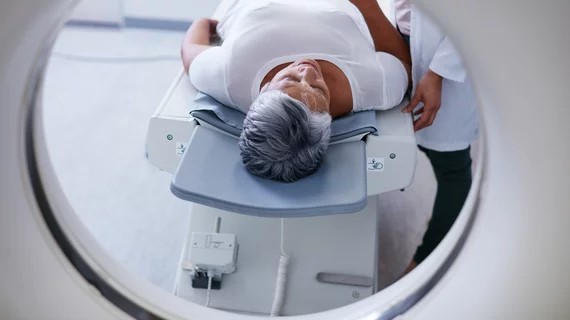
Led by Dr. Kai Chen, Professor of Radiology, Radiation Oncology, and Pharmaceutical Sciences at USC, the team is working to build a universal synthesis system that precisely couples general radioactive molecular building blocks with a variety of biological targeting molecules to rapidly generate novel molecular imaging probes. Although the biomedical community continues to discover potential disease biomarkers, rapidly translating them into clinical PET tracers faces extremely high technical barriers, as traditional biomolecular radiolabeling workflows are cumbersome and have long relied heavily on bulky, expensive dedicated shielding equipment and specialized laboratory environments.
To overcome this industry bottleneck, the USC team, together with researchers from the University of California, Los Angeles (UCLA), has highly integrated two cutting-edge chemical synthesis technologies—click chemistry and droplet radiochemistry—into a fingernail-sized chip-scale microdevice. Click chemistry enables ultra-fast coupling between functional molecules, while microdroplet radiochemistry allows efficient radiochemical reactions to be completed at ultra-small volumes of nanoliters or microliters, thereby greatly reducing dependence on traditional heavy automated synthesis hot cells and large instrument setups.
Currently, the R&D team has conducted proof-of-concept studies on multiple tumor-targeting tracers, including probes targeting fibroblast activation protein (FAP), which is highly expressed in various malignant tumors, as well as specific molecular probes for liver cancer and prostate cancer. Preliminary experiments have confirmed that click chemistry can be used to rapidly prepare radioactive probes targeting multiple tumor markers at the microscale, and the newly awarded research funding will be used to further expand the range of biological targets and refine the engineered hardware platform.
This chip platform is expected in the future to drive radiotracer R&D toward fully automated operation, exponentially reducing the hardware investment and reagent consumption required for new drug screening and probe preparation. In addition to precision diagnosis and treatment of malignant tumors, this technological approach can also be flexibly transferred to the synthesis of tracers for molecular targets in neurodegenerative diseases and cardiovascular disorders. The research team plans to systematically optimize the microfluidic chip structure within the next two years and complete the loading and in vivo validation of a larger-scale molecular probe library.
Disclaimer: Information republished from partner media, institutions or other websites is provided for reference and communication purposes only. It does not imply endorsement of its views or verification of its accuracy. Please contact us if any content infringes rights or requires correction.