
IAEA's Rays of Hope Initiative Boosts Global Cancer Care
 Scan to share
The IAEA's “Rays of Hope” initiative aims to expand access to cancer care, drive innovation, and build partnerships to narrow the global gap in cancer treatment. Every year, cancer claims more than 10 million lives, and that number is expected to nearly double by 2050.
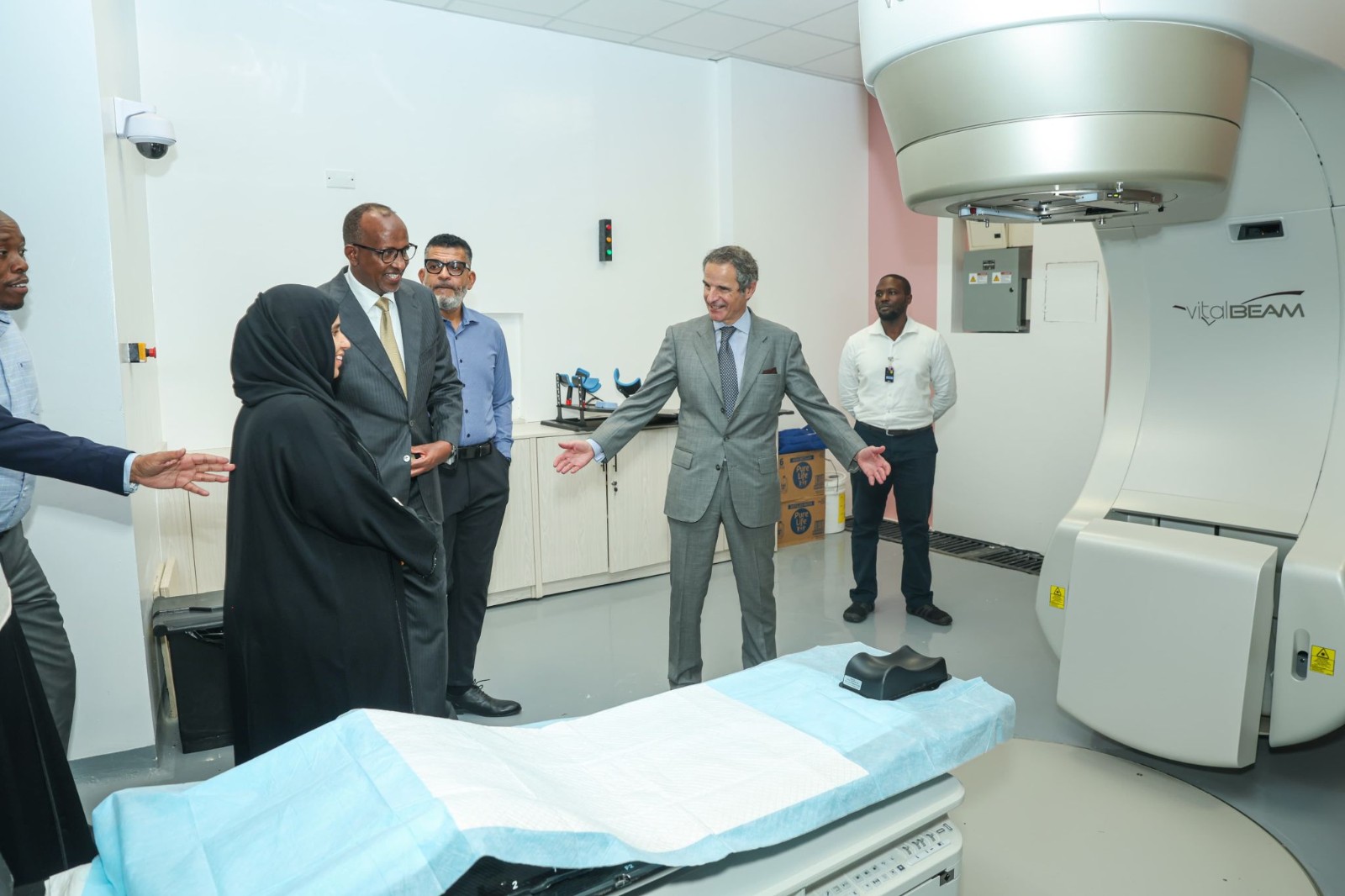
While many cancers are treatable, especially when detected early, timely diagnosis and life-saving treatment are unevenly distributed around the world. Low- and middle-income countries often lack modern medical imaging and radiotherapy equipment, trained oncologists, research capacity, and basic services. More than half of cancer cases occur in these countries, and nearly two-thirds of cancer deaths occur there as well. Radiotherapy is a cornerstone of cancer treatment, and about half of all cancer patients need it. In high-income countries, most patients who need radiotherapy can access it, but in low-income countries, only one in ten cancer patients can receive treatment. Some countries have no radiotherapy services at all.
To address this problem, the IAEA began working more than 60 years ago to help countries expand access to radiotherapy, diagnostic imaging, and nuclear medicine. The IAEA's applied research has translated into innovations in imaging, radiotherapy, and radiopharmaceuticals, enabling safer and more effective diagnosis and treatment. In 2022, the IAEA launched the “Rays of Hope” initiative, aimed at helping bridge the global gap in cancer treatment by expanding services where they are needed most.
The “Rays of Hope” project was launched in Africa in 2022, when many African countries had no radiotherapy equipment at all. Since its launch, the project has supported countries including Chad, Ethiopia, Kenya, Lesotho, Liberia, Malawi, Senegal, Togo, and Zambia in establishing or expanding national radiotherapy centers. In Latin America, “Rays of Hope” is establishing radiotherapy service systems in the Dominican Republic, Honduras, Mexico, and Paraguay. It is also expanding nuclear medicine services in Jordan, Kenya, Kyrgyzstan, Senegal, and Togo.
The shortage of professionals in oncology, imaging, and nuclear medicine is a major obstacle to cancer treatment in low- and middle-income countries. More than 90% of trained cancer professionals are concentrated in high-income countries, resulting in a huge talent gap in other regions and limiting the accessibility, quality, and scale-up of cancer services. By 2050, meeting the projected global demand for radiation oncologists, medical physicists, and radiotherapy technologists will require increasing the 2022 workforce by more than 60%.
Through its technical cooperation program, the IAEA supports in-person and online training in medical physics, radiation oncology, nuclear medicine and imaging, and radiopharmacy. “Rays of Hope” anchor centers are regional leaders in cancer care, helping to strengthen regional capacity by enhancing expertise in their respective regions and promoting the exchange of expertise and best practices.
Most cancer research is conducted in high-income countries, so cancers common in low- and middle-income countries are often under-researched, and research advances do not always address urgent needs. In many resource-poor settings, inadequate research methodology training and a shortage of funding make it difficult for local scientists to conduct research. Bridging these gaps requires sustained investment in research capacity in low- and middle-income countries, including clinical trials that reflect local needs. The IAEA provides specialized training in oncology and medical physics to “Rays of Hope” anchor centers, helping them build expertise and mentor health professionals in their regions.
“Rays of Hope” works closely with governments, academia, the private sector, and international financial institutions to combine all of the IAEA's efforts to strengthen and support national cancer control systems, so as to expand access to cancer care and advance research and innovation in diagnosis and treatment. IAEA Director General Rafael Mariano Grossi said: “The IAEA's ‘Rays of Hope’ initiative is committed to narrowing these enormous gaps by providing efficient and affordable support in underserved regions. We strive to ensure that cancer patients and their doctors, wherever they are in the world, can access the tools they need to fight the disease.”
Disclaimer: Information republished from partner media, institutions or other websites is provided for reference and communication purposes only. It does not imply endorsement of its views or verification of its accuracy. Please contact us if any content infringes rights or requires correction.