
American Society of Nuclear Cardiology Releases New 2026 Guidelines for Stress Testing in SPECT and PET Myocardial Perfusion Imaging
 Scan to share
The American Society of Nuclear Cardiology (ASNC) has recently developed and released the "2026 ASNC Guidelines for Stress Testing in SPECT and PET Myocardial Perfusion Imaging." The guidelines have been published online in the Journal of Nuclear Cardiology and will replace the 2016 version to reflect changes in the field of nuclear cardiology over the past decade in terms of technology application, examination workflows, and clinical assessment.
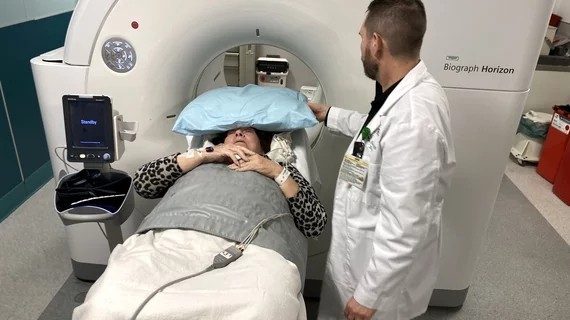
The new guidelines focus on stress testing in single-photon emission computed tomography (SPECT) and positron emission tomography (PET) myocardial perfusion imaging, updating recommendations on patient preparation, selection of stress testing modalities, safety management, protocols for different imaging modalities, image interpretation, and report writing.
Guideline chair and lead author Laine Duval, MD, stated that this updated clinical guideline aims to provide a unified reference for all aspects of stress testing, covering preparation, performance, interpretation of results, and reporting requirements for both exercise and pharmacological stress testing.
In recent years, one notable change in the field of nuclear cardiology has been the gradual expansion of PET applications in myocardial perfusion imaging. Compared with conventional SPECT, PET can provide higher-quality imaging results and can obtain additional information such as myocardial flow reserve (MFR). ASNC proposed in early 2026 that PET will become the preferred imaging modality when conditions permit. However, SPECT remains an important foundational technology for myocardial perfusion imaging.
According to the guidelines, the 2026 version adds recommendations for specific SPECT and PET protocols, exercise PET, protocols corresponding to different stress agents, radiotracer administration timing, and myocardial blood flow assessment. Adjustments have also been made to the patient preparation section, including avoidance of caffeine intake, breastfeeding-related precautions, optimization of medication management, and pre-examination guidance for new patients.
Regarding safety requirements, the new guidelines expand the content on contraindications and precautions. For example, new recommendations are provided for patients at risk of seizures; the guidelines also clarify when early termination of testing should be considered and emphasize selecting or adjusting the stress testing modality based on individual patient circumstances.
In the image interpretation and reporting section, the guidelines also propose new standards covering exercise capacity, clinical symptoms, electrocardiogram findings, and heart rate and blood pressure responses. In addition, the document discusses emerging methods such as the cold pressor test and psychological stress testing.
Disclaimer: Information republished from partner media, institutions or other websites is provided for reference and communication purposes only. It does not imply endorsement of its views or verification of its accuracy. Please contact us if any content infringes rights or requires correction.