
Search Results
Keyword:PET
Microstructure Imaging's MICSI-PET Software Receives FDA Clearance to Enhance Neurological PET Imaging Using MRI
Microstructure Imaging's software platform has received 510(k) clearance from the U.S. Food and Drug Administration (FDA). The platform is designed to enhance neurological positron emission tomography (PET) images using structural magnetic resonance imaging (MRI). The software, called MICSI-PET, can denoise and super-resolve PET images using MRI guidance while preserving quantitative PET information. It supports PET exams for amyloid, Tau, and FDG (fluorodeoxyglucose), and can provide automated Centiloid measurements for amyloid imaging and CenTauR measurements for Tau imaging....
2026-09-18

Siemens Healthineers Invests $44 Million to Expand PET/CT Production Capacity
Siemens Healthineers announced that the company will make an investment of nearly $44 million at its PET detector center in Rockford, Tennessee, to increase production capacity for PET/CT equipment. This investment marks the completion of the company's construction project at the center, which is aimed at meeting growing demand for PET/CT technology and supporting new product lines launched in the U.S. and international markets. In the Rockford expansion project, approximately 40,000 square meters of building area were added, increasing the total campus footprint to 97,000 square meters, while 7,500 square meters of existing buildings were also renovated. The campus is Siemens Healthineers' only...
2026-09-15

Vietnam and Russia Exchange Agreement on Nuclear Safety Regulation for Peaceful Uses of Atomic Energy
On September 9 local time, during the state visit to Russia by To Lam, General Secretary of the Communist Party of Vietnam Central Committee and President of Vietnam, multiple cooperation documents were exchanged in Moscow, witnessed jointly by To Lam and Russian President Vladimir Putin. Nuclear energy-related documents include the agreement between the Vietnam Agency for Radiation and Nuclear Safety (VARANS) and the Federal Environmental, Industrial and Nuclear Supervision Service of Russia (Rostekhnadzor) on radiation and nuclear safety management for the peaceful uses of atomic energy. The agreement covers activities in the peaceful uses of atomic energy...
2026-09-10

Rosatom and Petrovietnam to Build Additive Manufacturing Center Together
The Fuel Division of Rosatom and Petrovietnam signed an agreement to jointly advance a project to build an additive manufacturing center in Vietnam. The document exchange ceremony was held on September 9, 2026. Under the agreement, the two sides defined the scope of equipment and the delivery schedule required to establish a fully functional 3D printing center in Vietnam. The project is intended to introduce 3D printing equipment produced by the Fuel Division of Rosatom, using selective laser melting and direct laser deposition technologies for the manufacture of metal parts. At the same time, the agreement also includes arrangements for the delivery of related Russian equipment for heat treatment, turning, laboratory analysis, and other purposes. The Vietnamese side stated...
2026-09-10

Siemens Healthineers Completes PET Detector Manufacturing Expansion Project in Tennessee, USA
Siemens Healthineers recently completed the expansion and renovation project of its PET detector center in Rockford, Tennessee, USA, with a total investment of $43.6 million. The project aims to enhance PET detector manufacturing capacity to meet the growing demand for PET/CT scanning equipment. The project added 40,000 square feet of building area to the existing 97,000-square-foot campus and renovated 7,500 square feet of existing space. The Rockford facility is Siemens Healthineers' only manufacturing site globally for producing PET detectors used in its PET/CT systems. The expansion includes 36,000 square feet of dedicated manufacturing space and a 4,000-square-foot expansion of R&D facilities; meanwhile, the company also renovated...
2026-09-10
American Society of Nuclear Cardiology Releases New 2026 Guidelines for Stress Testing in SPECT and PET Myocardial Perfusion Imaging
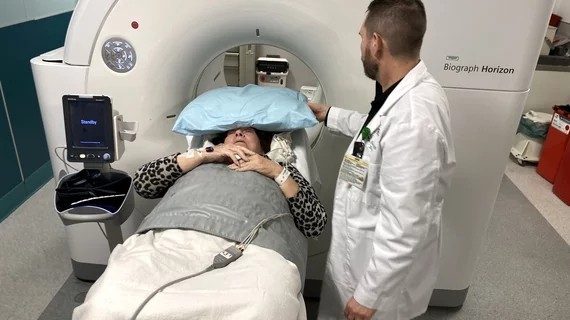
The American Society of Nuclear Cardiology (ASNC) has recently developed and released the "2026 ASNC Guidelines for Stress Testing in SPECT and PET Myocardial Perfusion Imaging." The guidelines have been published online in the Journal of Nuclear Cardiology and will replace the 2016 version to reflect changes in the field of nuclear cardiology over the past decade in terms of technology application, examination workflows, and clinical assessment. The new guidelines focus on stress testing in single-photon emission computed tomography (SPECT) and positron emission tomography (PET) myocardial perfusion imaging, updating recommendations on patient preparation, selection of stress testing modalities, safety management, protocols for different imaging modalities, image interpretation, and report writing. The guideline chair and lead...
2026-09-10

Vietnam's Petrovietnam and Korea Electric Power Corporation Advance Cooperation on Ninh Thuan 2 Nuclear Power Project
On September 7, 2026, Vietnam's National Industry and Energy Group (Petrovietnam) and Korea Electric Power Corporation (KEPCO) are accelerating cooperation in nuclear power research and development. On September 8, a delegation led by Petrovietnam General Director Le Manh Cuong held a working meeting in Seoul, South Korea with a delegation led by KEPCO Chairman and CEO Kim Dong-cheol, with both sides focusing on the implementation of the cooperation agreement in the nuclear power sector. Le Manh Cuong stated that Vietnam is taking measures to create conditions for the implementation of nuclear power projects. Previously, Petrovietnam and KEPCO signed a cooperation agreement witnessed by high-level leaders of both countries, demonstrating that nuclear power has become a key area of Vietnam-Korea cooperation...
2026-09-09

South Korea's DuChemBio to Build Country's First Radiopharmaceutical CDMO Plant
South Korean radiopharmaceutical therapy company DuChemBio will build the country's first contract development and manufacturing organization (CDMO) plant dedicated to radiopharmaceuticals, in response to growing demand for radiopharmaceuticals used in the diagnosis and treatment of cancer and neurological diseases. DuChemBio is a subsidiary of healthcare distributor Geo-Young Group. The company recently signed an investment agreement with North Jeolla Province and the city of Jeongeup to invest KRW 34.3 billion (approximately USD 25.5 million) in building a new plant in Jeongeup. The company stated that this is the largest investment since Geo-Young acquired DuChemBio. According to the plan, the new facility will integrate radioisotope production...
2026-09-08
South Korean research team reveals that water storage capacity of cold subducting slabs has been underestimated using synchrotron radiation sources
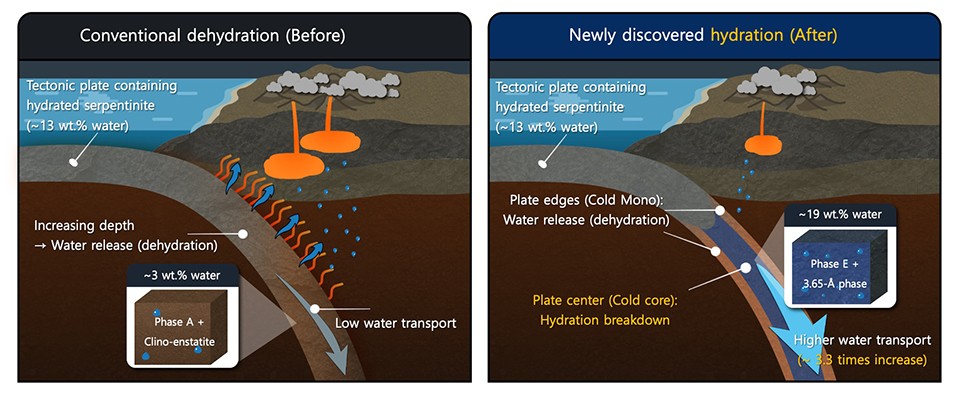
A research team led by Professor Yongjae Lee of the Department of Earth System Sciences at Yonsei University in South Korea has recently found that in cold, rapidly descending tectonic subduction zones, crustal rocks may transport up to 1 trillion kilograms of water to the mantle each year—approximately twice the previous estimate. The findings have been published in Nature Communications. Subduction zones are regions where Earth's tectonic plates converge and one plate descends beneath another, often accompanied by volcanic and seismic activity. For a long time, the academic community has generally believed that serpentinite, a water-bearing rock, gradually dehydrates as it descends with the plate due to increasing pressure and temperature, and the released water further promotes melting of the overlying plate and is associated with the formation of volcanic arc chains.
2026-09-07
Japanese Research Uses Tau PET to Reveal Association with Symptom Progression in Progressive Supranuclear Palsy
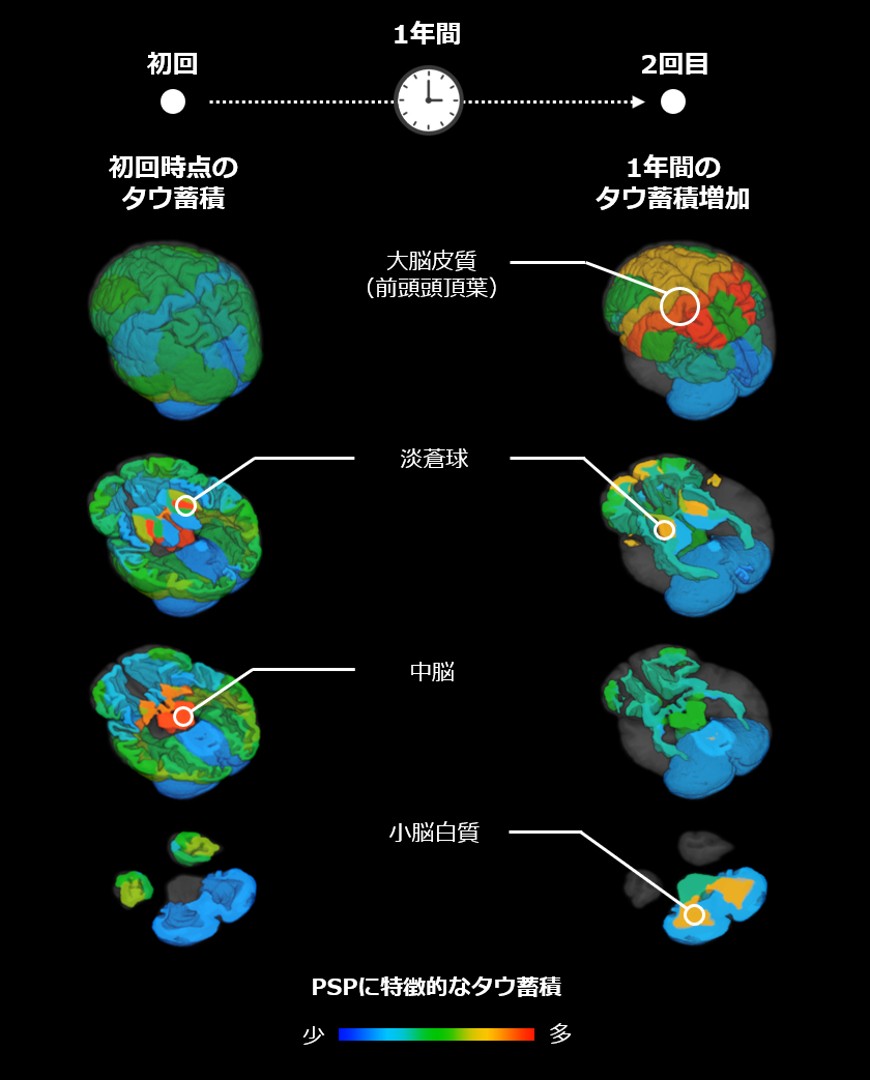
A research team at the National Institutes for Quantum Science and Technology (QST) in Japan recently announced findings from a study on progressive supranuclear palsy (PSP). Using their self-developed tau PET imaging technology, the researchers conducted follow-up scans on the same group of PSP patients at approximately one-year intervals, confirming for the first time in living brains that the faster tau protein accumulates in the globus pallidus region deep within the brain, the faster patient symptoms progress. The findings were published on September 5, 2026, in the international neurology journal *Movement Disorders*. Characteristic tau protein accumulation regions in PSP Progressive supranuclear palsy is a progressive neurodegenerative disease occurring in middle-aged and older adults, with common manifestations including increased risk of falls, difficulty with movement, eye movement disorders, postural instability, and cognitive dysfunction. There is currently no therapy that can cure or halt disease progression; therefore, establishing biomarkers that can objectively reflect disease changes and treatment efficacy has been a critical issue in drug development. Previous autopsy studies have shown that abnormal tau protein accumulation in the brains of PSP patients is an important pathological feature, particularly concentrated in deep brain regions such as the globus pallidus and midbrain. However, autopsy samples cannot be used for long-term dynamic observation, and how tau protein accumulation changes over time and how it corresponds to symptom progression had previously remained unclear. In recent years, positron emission tomography (PET) has made it possible to observe tau protein in living brains, but existing studies have mainly shown that tau protein increases over time without sufficiently demonstrating a direct association between these changes and symptom worsening. In this study, the research team used the PET radiopharmaceutical 18F-PM-PBB3 developed by QST, namely florzolotau (18F), to perform two PET examinations on 26 PSP patients and 10 healthy controls, conducted at baseline and approximately one year later. The researchers combined 57 brain regions identified by MRI and performed multivariate analysis of PET signal changes to identify PSP-related tau protein accumulation regions and their spread over time. The results showed that at baseline, tau protein in PSP patients was primarily accumulated in subcortical regions such as the globus pallidus and midbrain, consistent with previous reports. Follow-up imaging at one year showed further increases in tau protein accumulation in the globus pallidus, along with marked increases in tau accumulation in the frontoparietal lobes and cerebellar white matter, suggesting that during the course of PSP, tau protein may spread from deep brain regions to the cerebral cortex and cerebellar-related areas. The research team further focused on Richardson's syndrome, the most typical and common subtype of PSP. This subtype typically progresses rapidly, and the 18 patients with this subtype included in this study showed significant increases in PSP rating scale scores within one year. The analysis found that changes in tau protein accumulation in the globus pallidus showed the strongest correlation with the degree of symptom progression; that is, the faster tau protein accumulated in this region, the more pronounced the worsening of patient symptoms. Analyses of individual patients likewise showed that globus pallidus tau protein accumulation can reflect the course of PSP from mild to severe stages. The researchers believe that serial tau PET imaging has the potential to serve as a novel imaging biomarker for assessing PSP disease progression, and also provides a basis for tau-targeted therapeutic strategies: if future therapies can inhibit tau protein accumulation, it may be possible to slow symptom progression. Next steps still require longer-term follow-up in a larger number of patients to validate the relationship between changes in tau protein accumulation and overall symptom progression and treatment response. The imaging assessment method established in this study may not only be used for disease monitoring and clinical trial efficacy evaluation in PSP, but may also be extended to research on other tau protein-related neurodegenerative diseases and dementias, providing new technical support for the diagnosis and therapeutic development of related diseases.
2026-09-07

FDA Grants Breakthrough Therapy Designation to JBS-003 for Guiding De-escalated Radiotherapy in HPV-Positive Oropharyngeal Cancer
On September 1, Juniper Biosciences announced that the U.S. Food and Drug Administration (FDA) has granted Breakthrough Therapy Designation to its hypoxia tracer JBS-003. The product, 18F-Fluoromisonidazole (FMISO), is intended to identify tumor hypoxia and guide de-escalated radiotherapy in patients with HPV-positive oropharyngeal cancer (OPC). JBS-003 is licensed from Memorial Sloan Kettering Cancer Center (MSK). According to information released by the company, the tracer is based on F-MISO PET molecular imaging technology and can visualize specific hypoxic features within tumors. Tumor hypoxia is considered to be associated with radioresistance; by imaging hypoxic regions, clinicians can stratify patients by risk and...
2026-09-02
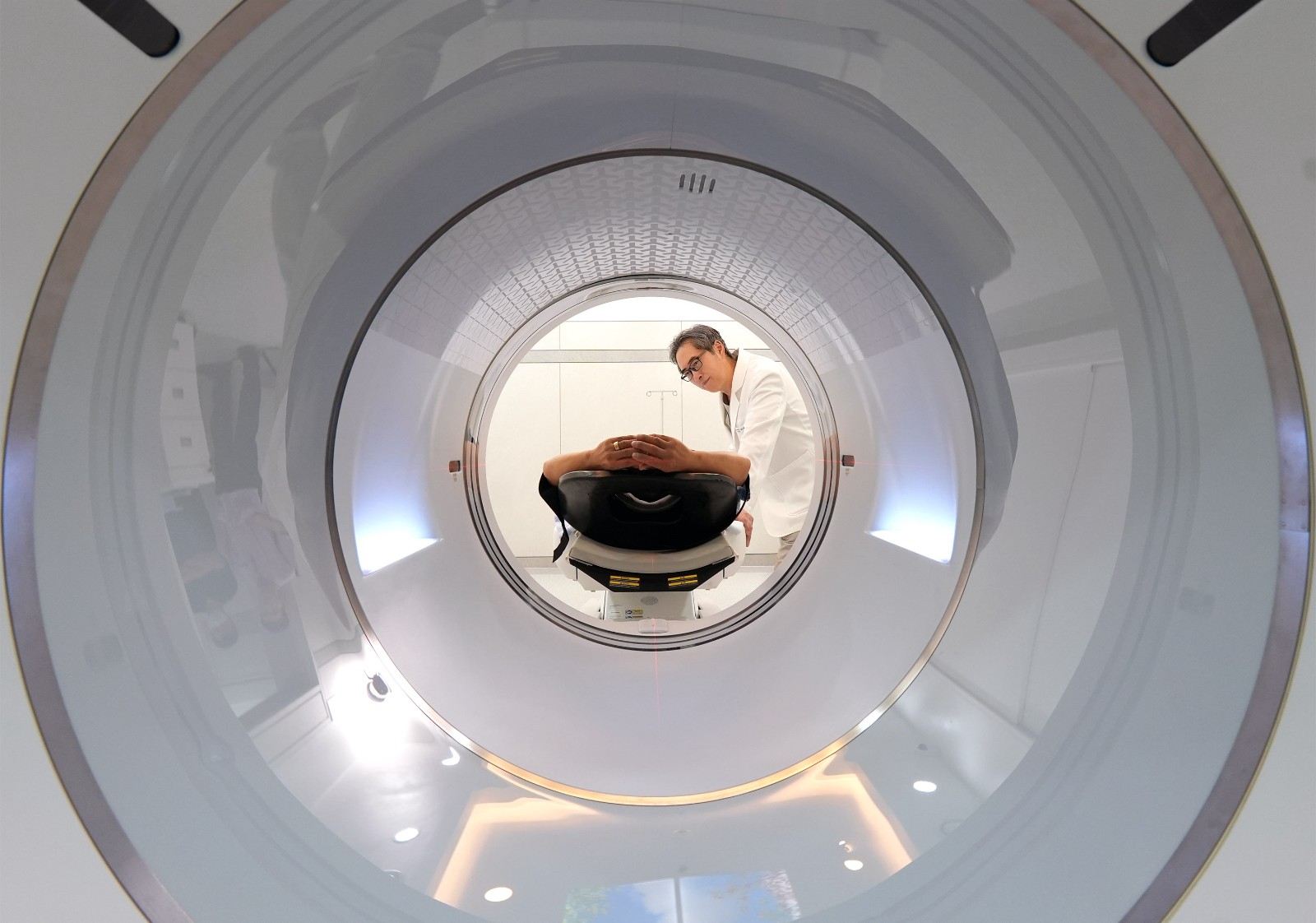
Dankook University Hospital Introduces Next-Generation Digital PET-CT System to Enhance Precision Diagnosis of Cancer and Other Diseases
Dankook University Hospital announced on September 1 that it has introduced GE HealthCare's next-generation digital PET-CT system, the OMNI Legend 32, to enhance precision diagnostic capabilities for a wide range of diseases, including cancer, brain disorders, and cardiac conditions. PET-CT is an important nuclear medicine diagnostic imaging modality. During the examination, a radiopharmaceutical is injected into the patient, and the system observes metabolic activity through positron emission tomography (PET) while simultaneously confirming anatomical structures via computed tomography (CT), thereby providing imaging evidence for clinical diagnosis. According to the hospital, the newly introduced OMNI Legend 32 employs AI-based image reconstruction technology to visualize small lesions with greater clarity, assisting physicians in making more accurate assessments...
2026-09-01

Bayer Presents Phase III Data for Iodine-124 PET Tracer: High Sensitivity Shown in Cardiac Amyloidosis Diagnosis
At the 2026 European Society of Cardiology Congress, Bayer presented results from the Phase III REVEAL study of its investigational PET radiotracer iodine-124 evuzamitide (I-124 evuzamitide). Data showed that the tracer met the study's primary endpoints in diagnostic sensitivity and specificity when used for imaging in patients with suspected cardiac amyloidosis. The REVEAL study, sponsored by Brigham and Women's Hospital, is a multicenter, open-label, single-arm Phase III clinical trial conducted at 18 sites in the United States, enrolling 170 adult patients with suspected cardiac amyloidosis. Following a single intravenous injection of I-124 evuzamitide, subjects underwent cardiac and...
2026-09-01

Russia and Egypt Plan to Cooperate on Construction of Nuclear Medicine Center and Radiopharmaceutical Plant
Alexey Likhachev, CEO of Rosatom, recently stated that Russia and Egypt are expanding cooperation in non-energy nuclear technologies, with one of Egypt's key priorities being the construction of a high-performance nuclear medicine center based on a research reactor. According to reports, the project will adopt a comprehensive approach, including a radiopharmaceutical production plant, isotope production facilities, and modern diagnostic systems based on PET and SPECT technologies. Some diagnostic systems will use Russian equipment. Once completed, the project is expected to conduct up to 30,000 diagnostic examinations annually and provide treatment services for 400 patients. Construction of the medical facility is expected to begin as early as 2027...
2026-08-28

Russia's SKIF Synchrotron First Scientific User Competition Expected to Launch in Second Half of 2027
The competition to select the first research teams for the Siberian Circular Photon Source (SKIF) synchrotron in Russia is planned for the second half of 2027. Valery Bukhtiyarov, Director of the Boreskov Institute of Catalysis of the Siberian Branch of the Russian Academy of Sciences, stated at the Technoprom-2026 forum held in Novosibirsk that the first open competition will be launched in the second half of 2027. The institute is responsible for commissioning the construction of this large-scale scientific facility. Bukhtiyarov noted that SKIF is scheduled to receive synchrotron radiation and conduct its first experiments in the autumn. Construction of the facility was completed in June 2026, with an opening ceremony held in August 2026. Once operational, SKIF will use synchrotron radiation to help...
2026-08-27