
South Korean lawmaker calls for heavy ion therapy center in Daejeon to ease regional cancer treatment disparities
 Scan to share
South Korean lawmaker Park Yong-gap recently called on the government to support the construction of a heavy ion therapy center in the central region of Daejeon, aiming to improve access to advanced radiation therapy for cancer patients outside the capital area and promote a balanced distribution of regional medical resources.
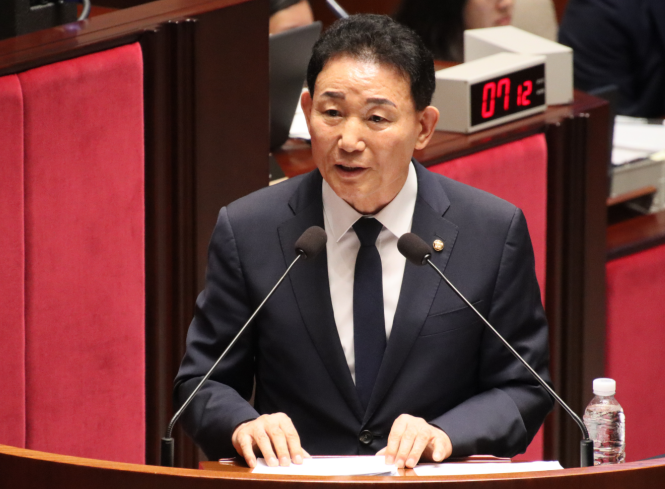
Park stated that heavy ion therapy centers are often referred to as “dream cancer treatment centers.” Compared with conventional radiation therapy, heavy ion therapy and proton therapy can target cancer cells more precisely while minimizing impact on surrounding normal tissues, making them advanced particle therapy technologies drawing attention in the current cancer treatment field.
According to him, the relevant treatment centers currently in operation in South Korea are mainly concentrated in the capital area, including the heavy ion therapy center at Sinchon Severance Hospital of Yonsei University, the proton therapy center at Samsung Medical Center in Seoul, and the proton therapy center at the National Cancer Center in Goyang, Gyeonggi Province.
Park pointed out that as of 2024, among approximately 3.17 million cancer patients nationwide in South Korea, 1.59 million reside in non-capital areas, accounting for 50.4%. However, due to the lack of proton or heavy ion therapy centers in these regions, many patients are forced to travel to the capital area for treatment, increasing their medical burden.
Currently, the Ministry of Science and ICT is building the first heavy ion therapy center outside the capital area in Gijang-gun, Busan, with a target of becoming operational by 2027. However, Park believes that patients in the Chungcheong and Honam regions may still face issues such as long travel distances for treatment and insufficient resources.
He emphasized that while the construction of the Chungnam National University Hospital Cancer Hospital is underway, the government needs to provide support to ensure the heavy ion therapy center project in the central Daejeon region proceeds in parallel. Park believes this will help alleviate regional medical imbalances and improve cancer patients' access to advanced treatment.
Disclaimer: Information republished from partner media, institutions or other websites is provided for reference and communication purposes only. It does not imply endorsement of its views or verification of its accuracy. Please contact us if any content infringes rights or requires correction.