
International Students of the "Chinese Government Atomic Energy Scholarship" Program Visit China Isotope & Radiation Corporation
 Scan to share
On July 22 and July 29, over 50 international students from more than 10 countries, including Egypt, Pakistan, Ethiopia, Ghana, the Philippines, Cambodia, Mongolia, Bangladesh, Namibia, Nigeria, El Salvador, Sudan, Yemen, and Russia, who are part of the “Chinese Government Atomic Energy Scholarship” program, visited China Isotope & Radiation Corporation (CIRC). They experienced firsthand the vibrant vitality of China's nuclear technology application industry, enhancing their understanding and recognition of China's nuclear industry through tours and exchanges.
First Stop Atomic High-Tech Jinhui RadiationWhen Nuclear Technology Enters Daily Life
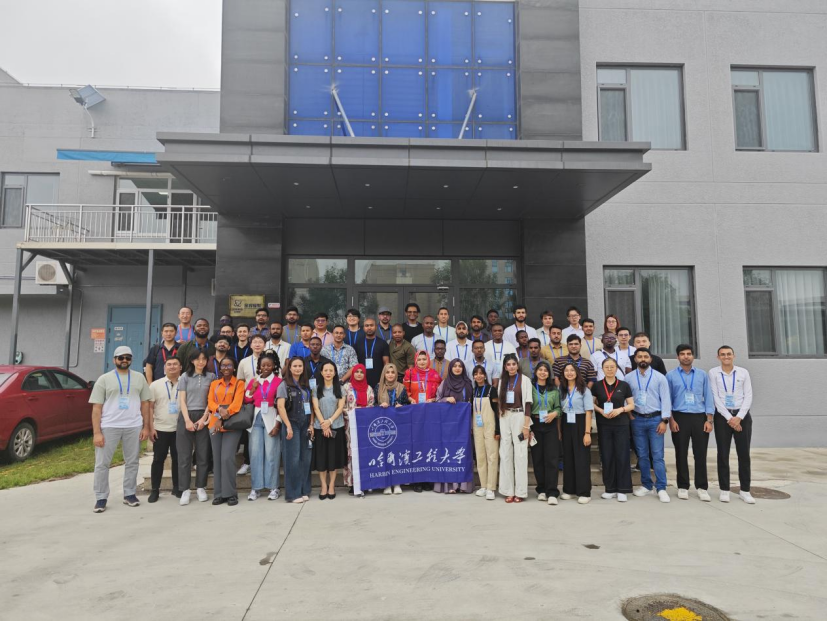
The students visited Atomic High-Tech Jinhui Radiation to learn about the extensive applications of irradiation technology in medical sterilization, food preservation, aerospace testing, and other fields, and observed relevant process flows. A student from Pakistan exclaimed, “I never imagined irradiation technology had penetrated so deeply into various fields. This has given me a completely new understanding of the breadth of China's nuclear technology applications.” The students engaged in lively interactions with technical staff on topics such as the safety and application prospects of irradiation technology.
Second Stop China Nuclear Industry Science and Technology MuseumTraversing Over Seventy Glorious Years of the Nuclear Industry
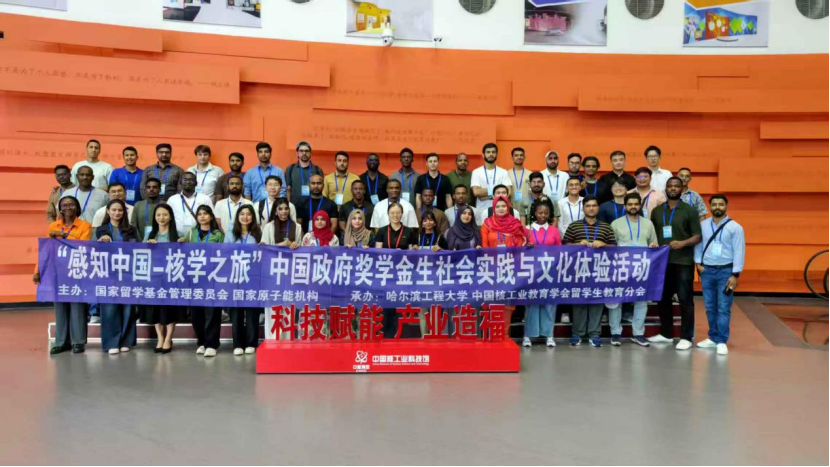
At the China Nuclear Industry Science and Technology Museum, the students delved into the arduous journey of China's nuclear industry from scratch to strength, and its major achievements such as the “Two Bombs, One Submarine” and “Hualong One,” through a wealth of precious historical photos, physical models, and video materials. A student from Sudan said with deep emotion, “The development history of China's nuclear industry is a history of entrepreneurship through self-reliance and hard work. This spirit is admirable and worthy of being remembered by every student of nuclear science and technology.” Many students took photos in front of the Wall of Merit, deeply moved by this sense of mission.
Third Stop Atomic High-Tech North China Radiopharmaceutical Production BaseWitnessing the Robust Development of China's Radiopharmaceutical Industry
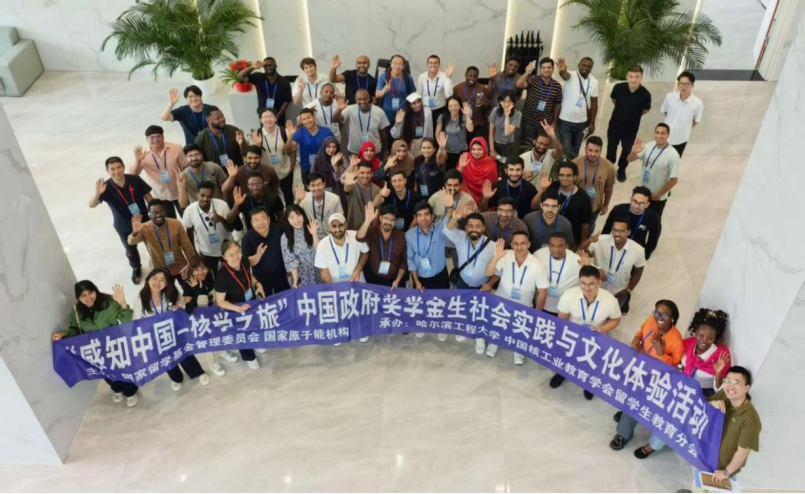
The students visited the Atomic High-Tech North China Radiopharmaceutical Production Base in Zhuozhou, Hebei Province, to learn about the plant layout and plans for multiple radiopharmaceutical production lines. They received a detailed introduction to the strategic layout of Atomic High-Tech's national medical centers and various types of radiopharmaceuticals. Additionally, the presenters promoted and explained the principles and application scenarios of radiotherapy and equipment, as well as breath testing products, in the exhibition hall. A student from Ghana stated, “In my country, nuclear medicine resources are still very limited. If these advanced radiopharmaceuticals and equipment could reach Africa, they would benefit countless patients.” Students from Pakistan and Ethiopia also engaged in discussions with on-site managers on topics such as product export and technical cooperation.
Fourth Stop CNNC ChengyingPerceiving the Innovation Vitality of Nuclear Medical Equipment
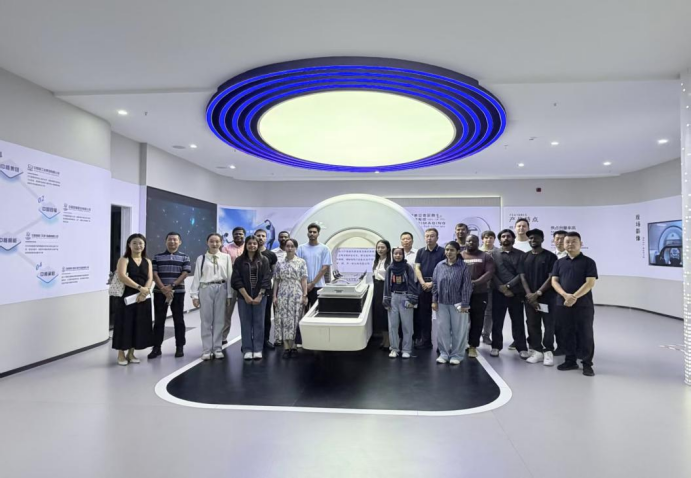
At CNNC Chengying, the students closely observed the company's self-developed Gamma Knife stereotactic radiotherapy system. During the exchange session, they engaged in in-depth discussions with technical staff on topics such as the clinical indications of the Gamma Knife and equipment maintenance. The professional questions and practical exchanges sparked intellectual synergy in this cross-border technical interaction. A student from Sudan stated, “Nuclear medical resources are relatively scarce in developing countries. How to select cost-effective radiotherapy equipment suitable for national conditions is an important issue that benefits a large number of patients.”
Bridging with Nuclear Energy, Embracing the Future TogetherAlthough this visit was brief, it allowed the international students from countries along the “Belt and Road” to truly feel the profound heritage and vibrant vitality of China's nuclear industry. From the irradiation processing at Jinhui Radiation and the historical review at the Nuclear Industry Science and Technology Museum, to the modern production lines at the North China Radiopharmaceutical Production Base and the nuclear medical equipment at CNNC Chengying, the students not only witnessed the hardcore strength of China's nuclear technology application industry but also felt the spiritual power of China's nuclear industry professionals who “dedicate themselves to the country.” As the team leader of the visiting group stated, this activity aimed to broaden students' horizons and build a platform for exchange and cooperation for strategic talents in the atomic energy field, bridging with nuclear energy and embracing the future together. CIRC will continue to uphold the concept of openness and cooperation, deepen international talent exchanges and industry-university-research collaboration, enabling nuclear technology applications to better serve human society and empower a better life, contributing Chinese wisdom and strength to building a “Nuclear-Powered Beautiful Home.”
Disclaimer: Information republished from partner media, institutions or other websites is provided for reference and communication purposes only. It does not imply endorsement of its views or verification of its accuracy. Please contact us if any content infringes rights or requires correction.