
JAEA Develops 3D-Printed Disposable Aerosol Particle Size Classification Device
 Scan to share
On July 30, 2026, the Japan Atomic Energy Agency announced the development of a palm-sized, 3D-printed disposable device named "µSPLIT (micro splitter)" that can separate airborne particles by particle size on-site and collect them onto filters for subsequent or direct measurement.
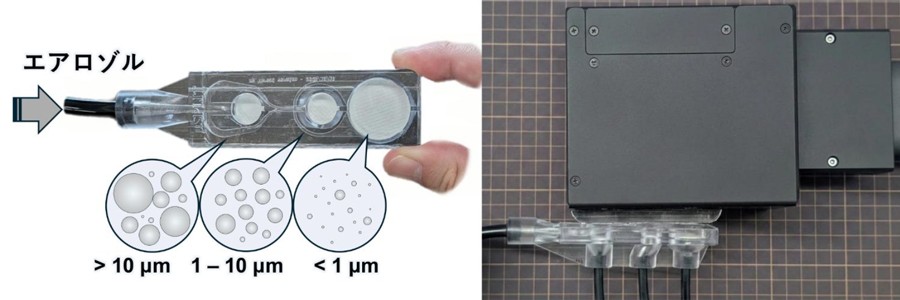
Disposable classification and measurement device "µSPLIT"
(Left) By controlling the intake flow rate, aerosols are separated by particle size and collected on filters. (Right) The main unit can be directly connected to a radiation detector via a thin film.
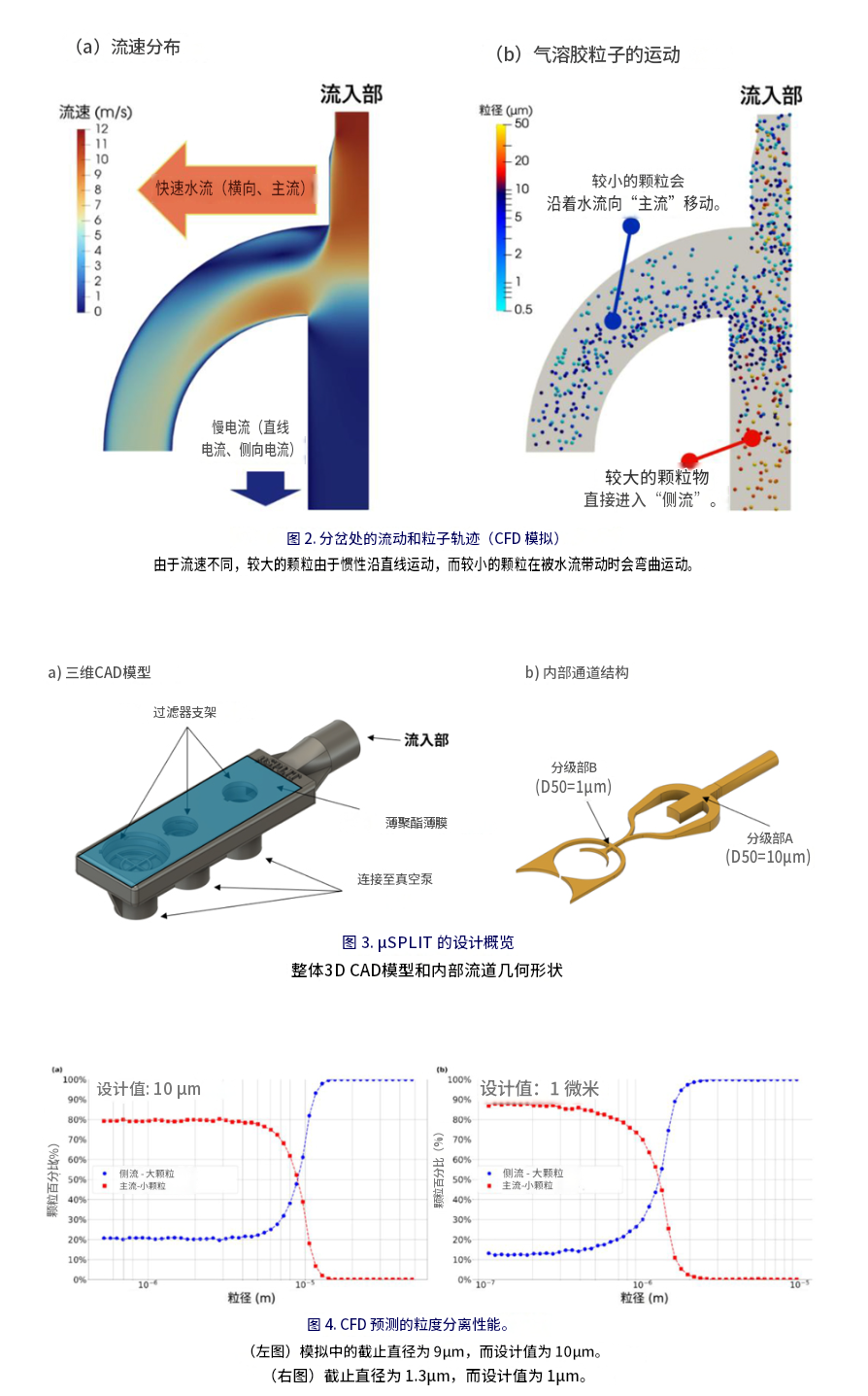
According to reports, µSPLIT measures approximately 12 cm × 3 cm × 3 cm and is integrally molded from transparent resin using stereolithography 3D printing technology. The research team used computational fluid dynamics (CFD) to design the internal flow channels, and through differences in airflow and particle inertia, the device separates aerosols into three particle size ranges: greater than 10 micrometers, 1 to 10 micrometers, and less than 1 micrometer. Particle separation and filter collection are completed within the same module, reducing losses and contamination risks associated with sample transfer.
A key feature of the device is its ability to connect directly to a radiation detector. In demonstration tests, the research team prepared radioactive aerosols by attaching radon (²²²Rn) progeny to sodium chloride particles, with an average particle size of approximately 1.7 micrometers. Test results showed the highest alpha-ray counts observed on filters in the 1 to 10 micrometer particle size range, confirming that the device successfully classifies particles as designed and enables direct alpha-ray measurement at the filter position.
Conventional aerosol measurement instruments are typically made of metal, are relatively expensive, and usually require opening the device, removing the filter, and cleaning the interior after measurement. In environments containing radioactive particles, this process can pose risks of secondary contamination and worker exposure. µSPLIT features a single-use design that can be disposed of directly after measurement, helping to reduce decontamination burdens and exposure risks while also facilitating deployment at multiple locations.
The research team stated that the technology can be applied to safety management at nuclear facilities, particularly for on-site monitoring of radioactive aerosols during decommissioning operations at Tokyo Electric Power Company's Fukushima Daiichi Nuclear Power Station. The technology is also expected to expand into environmental and occupational health monitoring scenarios such as PM2.5, dust, and microplastics. Going forward, the team plans to conduct more demonstration tests in real-world environments and advance sensor integration, including multi-channel radiation pixel sensors capable of identifying alpha, beta, and gamma rays from particles of different sizes, along with associated analysis systems.
The research findings were published online in ACS Omega on July 19, 2026, and the research team has also filed a Japanese patent application for the "classification device and its manufacturing method."
Disclaimer: Information republished from partner media, institutions or other websites is provided for reference and communication purposes only. It does not imply endorsement of its views or verification of its accuracy. Please contact us if any content infringes rights or requires correction.