
New Decommissioning Plan for Fukushima Daiichi: Priority on Internal Investigation of Unit 3 Before Fuel Debris Retrieval
 Scan to share
The Nuclear Damage Compensation and Decommissioning Facilitation Corporation of Japan released on August 6 an outline of the 2026 edition of the "Decommissioning Strategic Plan," proposing technical approaches for the decommissioning of Tokyo Electric Power Company's Fukushima Daiichi Nuclear Power Station. The plan highlights that, for the large-scale retrieval of melted fuel debris at Unit 3, expected to commence in or after fiscal year 2037, priority should currently be given to internal investigations of the reactor building to provide a more reliable basis for subsequent engineering plans.
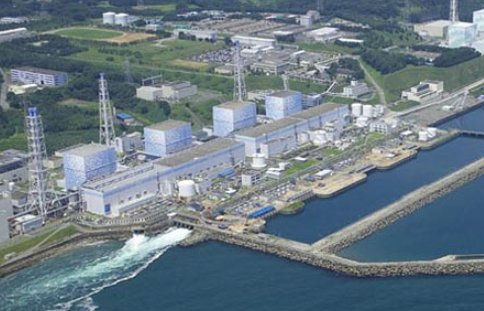
The plan states that the fuel debris retrieval method being studied by TEPCO still requires further improvement in certainty, with the key prerequisite being an understanding of the actual internal conditions of the reactor. Due to the high radiation levels and complex structural damage inside the unit following the accident, external estimations are insufficient to achieve the precision required for large-scale operations. Therefore, the overall strategic direction and technical roadmap should be reconfirmed based on information obtained through internal investigations.
According to the plan, one of the investigation methods involves using drones that have previously demonstrated operational track records, entering through penetration points on the side of the reactor containment vessel to conduct focused inspections of the reactor pressure vessel and its lower support structures. These areas are considered closely related to the distribution and accumulation state of melted fuel debris as well as future retrieval pathways, and they serve as an important foundation for determining equipment design and operational safety conditions.
The plan also proposes raising the priority of investigations conducted from above the containment vessel. This signifies that the decommissioning work at Unit 3 of Fukushima Daiichi will shift from merely advancing retrieval preparations to placing greater emphasis on preliminary information collection and risk assessment. For a long-term and highly challenging decommissioning project, clarifying internal conditions at an early stage helps reduce uncertainty in subsequent construction and lays the technical foundation for the large-scale retrieval operations potentially implemented in or after fiscal year 2037.
Disclaimer: Information republished from partner media, institutions or other websites is provided for reference and communication purposes only. It does not imply endorsement of its views or verification of its accuracy. Please contact us if any content infringes rights or requires correction.