
After only 4 days of restart, Unit 2 of France's Golfech Nuclear Power Plant shut down again due to Garonne River water temperature approaching limit
 Scan to share
On the evening of August 8, French utility EDF (Électricité de France) once again shut down Unit 2 of the Golfech Nuclear Power Plant, just four days after the unit had been restarted. The direct cause of this shutdown was that the water temperature of the Garonne River was expected to reach 28°C on August 9, hitting the local operational limit. Since Unit 1 had already been taken offline for maintenance and fuel replacement, the closure of Unit 2 left both reactors at the Golfech plant simultaneously out of service, with the station temporarily ceasing power generation.
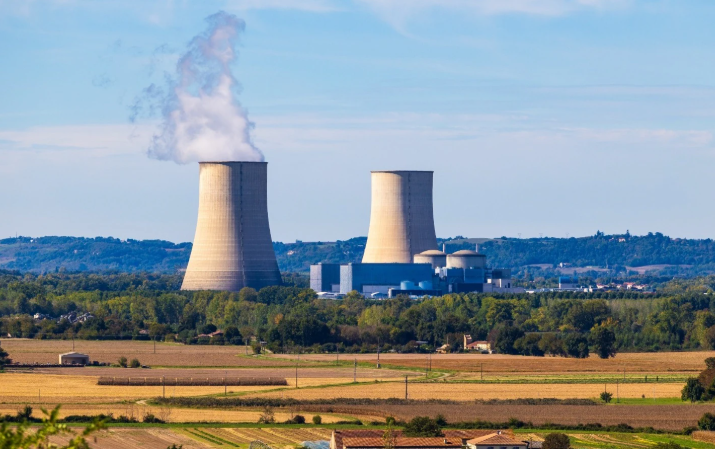
Located in the Tarn-et-Garonne department of France, the Golfech Nuclear Power Plant was commissioned between 1991 and 1994, and features two 1,300 MW pressurized water reactor units. It draws cooling water from the Garonne River and dissipates heat through natural-draft cooling towers. According to EDF data, the plant generated 11.4 TWh of electricity in 2025, enough to meet the annual demand of approximately 2.3 million French households. Under the relevant departmental permits issued in 2006, EDF is authorized to withdraw river water for plant operations and discharge liquid and gaseous effluents, subject to compliance with water temperature and environmental limits.
Under current regulations, cooling water returned to the Garonne River from the plant raises the river's temperature by an average of approximately 0.2°C. Once the daily average river temperature measured downstream of the plant exceeds 28°C, EDF is required to adjust reactor output based on grid requirements from RTE, the French transmission system operator, and if necessary, temporarily shut down the units. Unit 2 has now experienced its fourth shutdown since the start of this summer, having previously been taken offline for 17 consecutive days from July 9 to 26 due to high temperatures, and again on July 29.
This incident highlights the deepening impact of climate warming on nuclear power operating conditions. Bernard Doroszczuk, head of France's nuclear safety regulator, had requested in 2023 that studies on extending reactor lifespans must incorporate the effects of climate change, particularly the impact of extreme weather on cooling conditions. EDF has also announced plans to invest nearly €9 billion over 15 years to enhance the resilience of its nuclear plants against the effects of global warming.
In terms of generation losses, EDF estimates that high temperatures in June of this year reduced nuclear output by approximately 3% of that month's nuclear generation, and by about 6% in July, equivalent to a combined decline of roughly 4.5% in output over the two months. However, EDF emphasizes that since 2000, losses caused by high temperatures and drought have averaged only 0.3% of France's annual nuclear generation, describing the impact as still "very limited." The company also stated that France's electricity supply is currently sufficient to meet demand, with no cause for alarm; in the first half of 2026, France achieved a record 51 TWh of electricity exports even amid heatwaves.
Disclaimer: Information republished from partner media, institutions or other websites is provided for reference and communication purposes only. It does not imply endorsement of its views or verification of its accuracy. Please contact us if any content infringes rights or requires correction.