
Arkansas Evaluates Six Candidate Areas for New Nuclear Power Development
 Scan to share
A latest research report in the U.S. state of Arkansas concludes that six areas in the state could serve as candidate sites for future nuclear power development, and that new reactors are both "feasible and necessary" locally. The report states that, under a relatively aggressive timeline, a new nuclear power plant in Arkansas could begin operation by the mid-2030s.
The 533-page study was completed by Excel Services Corporation, a Maryland-based consulting firm, commissioned by the Arkansas Legislature's Joint Energy Committee. The six candidate areas listed in the report include Flint Creek in Benton County, the existing Arkansas Nuclear One (ANO) site in Pope County, central Arkansas south and southwest of Little Rock, southwestern Arkansas near Camden, Phillips County near West Helena, and Craighead County in northeastern Arkansas.
The report also notes that candidate sites in the eastern and northeastern parts of the state will require further review due to their proximity to the New Madrid seismic zone.
The study concludes that nuclear power could better meet Arkansas's growing electricity demand than other alternatives and help drive economic transformation in host communities. The report states that the state has real energy needs, developable sites, federal support for nuclear energy at levels not seen in decades, and only modest adjustments needed at the state legislative level.
According to the report's projections, Arkansas's electricity demand is growing rapidly, with demand expected to increase by more than 35% over the next five years; over the longer term, growth could expand to more than double that level. The report cites data showing that in 2025, the capacity factor of U.S. nuclear units reached 91%, higher than other generation types, while utility-scale solar was approximately 25% and onshore wind approximately 35%.
The report also notes that nuclear power emits no carbon dioxide during operation, with lifecycle emissions comparable to wind power and typically lower than solar photovoltaic; nuclear plants have a small land footprint, and mortality rates per unit of electricity generation are also relatively low. The report argues that nuclear power also offers advantages in energy security, as nuclear plants can store enough uranium fuel on site for 18 to 24 months of operation.
However, the report also cautions that reactor design, supply chain, and financing structures still need to mature further before large-scale reactor deployment can be placed on a more solid footing. Currently, no project under construction or proposed is fully mature in all three areas, although some projects are closer to commercial requirements.
The report cites the Vogtle Units 3 and 4 AP1000 in Georgia as an example, noting that these two units are among the few new large reactors built in the United States in decades, but the total project cost was approximately $35 billion, significantly higher than the original estimate of about $14 billion, with completion delayed by nearly seven years. The report argues that repeat construction and accumulated experience can help reduce costs. Analysis of subsequent AP1000 projects shows that overnight construction costs could decline from approximately $15,000 per kilowatt for the first-of-a-kind project to approximately $6,200 per kilowatt for the fourth twin-unit project, approaching approximately $4,700 per kilowatt at the mature serial production stage.
The report recommends that Arkansas need not make a simple choice between "building a first-of-a-kind reactor at high cost" and "taking no action," but should instead move forward now with site acquisition, site characterization, and licensing preparation to create the conditions for building nuclear power at mature project costs in the future.
The report also makes several recommendations, including establishing a nuclear energy development fund through legislation and expanding the responsibilities of the "Atomic Energy Development Activities Coordinator." This position was created by Arkansas state law in the 1950s but has never been formally appointed to date.
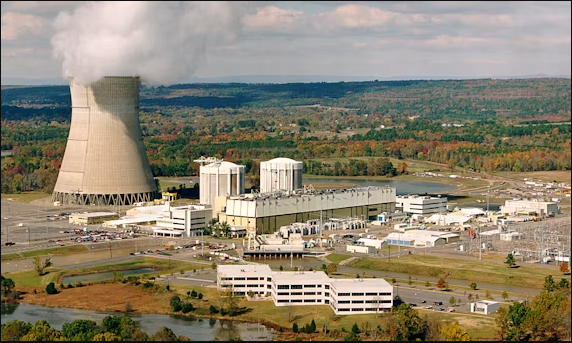
Currently, Arkansas's only commercial nuclear power plant is Arkansas Nuclear One. The station has two pressurized water reactor units, which entered commercial operation in 1974 and 1980, respectively, with Unit 1 having a net generating capacity of 836 megawatts and Unit 2 a net generating capacity of 988 megawatts.
Several U.S. states are recently reassessing the role of nuclear power in securing energy supply and reducing carbon emissions. New Jersey recently became the sixth state in the past decade—and the second this year—to fully lift its ban on new nuclear power plant construction. New York is also advancing reactor planning; in April of this year, the governors of six New England states—Maine, Connecticut, Massachusetts, New Hampshire, Rhode Island, and Vermont—asked their state energy agencies to study advanced nuclear energy technologies.
Disclaimer: Information republished from partner media, institutions or other websites is provided for reference and communication purposes only. It does not imply endorsement of its views or verification of its accuracy. Please contact us if any content infringes rights or requires correction.