
Kazakhstan Strengthens Radiation Safety Monitoring and Nuclear Power Talent Development
 Scan to share
Kazakhstan is improving its safety system in the field of nuclear energy and ionizing radiation source utilization, focusing on radiation monitoring, protective measures, and professional personnel training. Ionizing radiation technologies are now widely used in disease diagnosis and treatment, scientific research, product quality inspection, medical device sterilization, geophysical operations, and other fields, and their application simultaneously requires strict implementation of radiation safety management systems.
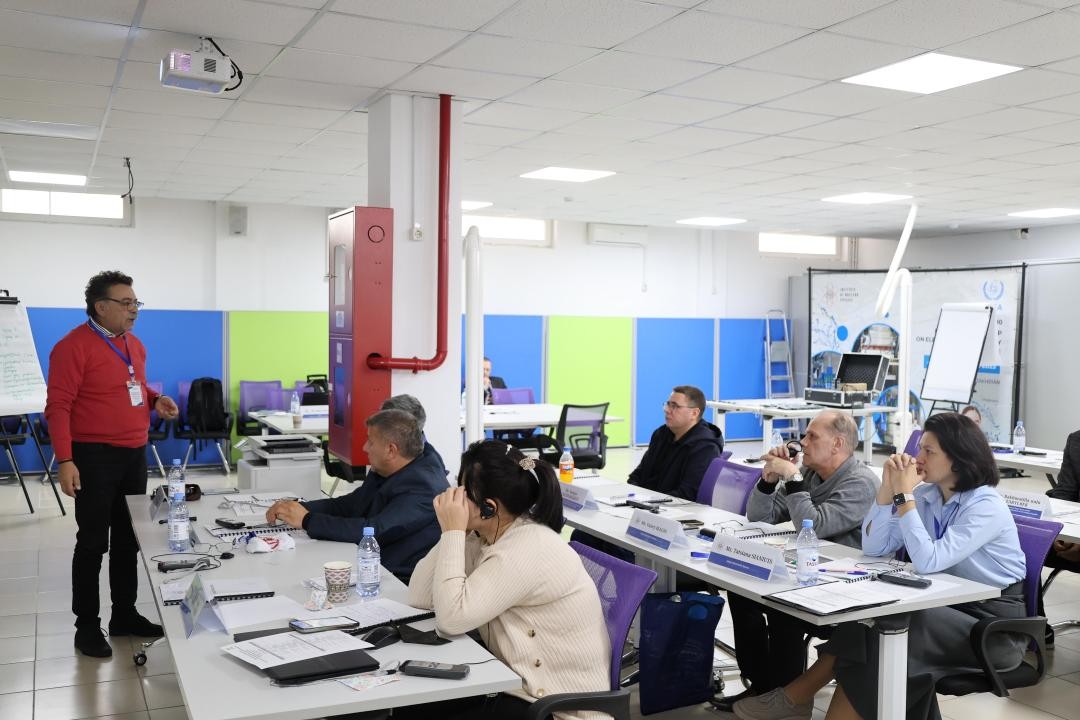
In Kazakhstan, national policy and regulation in the field of atomic energy utilization are the responsibility of the Atomic Energy Agency (AEA) of the Republic of Kazakhstan, while supervision and inspection of atomic energy utilization facilities are carried out by its subordinate Committee for Atomic and Energy Supervision and Control. Current regulations stipulate licensing of related activities, registration and control of ionizing radiation sources, radiation monitoring, personnel training, radioactive waste management, and radiation accident emergency response.
The implementation of radiation safety relies first and foremost on relevant operating organizations. Institutions using nuclear facilities, radiation facilities, or electrophysical devices are required to establish internal management mechanisms, with management ensuring safe operating conditions and specialized departments responsible for day-to-day radiation safety supervision. Routine radiation monitoring includes individual dose monitoring of personnel, dose rate measurements at workplaces, surface contamination monitoring of equipment and protective clothing, assessment of radionuclide content in environmental samples, as well as monitoring of radioactive discharges and effluents.
The WWR-K research reactor operated by the Institute of Nuclear Physics (INP) of Kazakhstan has been in service for more than 50 years. The reactor was commissioned in 1967 and is primarily used for fundamental and applied scientific research, as well as the production of radioisotopes for industrial and medical applications. According to available data, no deviations from normal operating conditions have occurred during the operation of this research reactor.
With regard to nuclear power development, Kazakhstan is considering the construction of a nuclear power plant with water-water type reactors. Relevant materials indicate that years of operating experience have demonstrated the high reliability and safety of this type of reactor. The International Nuclear and Radiological Event Scale (INES) established by the International Atomic Energy Agency (IAEA) classifies nuclear and radiation events into 7 levels, with the highest level 7 applied only to the Chernobyl accident and the Fukushima Daiichi nuclear power plant accident.
In terms of public radiation environmental monitoring, according to data from the "Information Bulletin on the Environmental Conditions of Almaty City, Almaty Region, and Zhetysu Region (2023 Annual)," the average natural gamma background of near-surface atmospheric radiation in residential areas of the relevant regions ranges from 0.13 to 0.24 microsieverts per hour, with a regional average of 0.17 microsieverts per hour, all within permissible limits.
In the summer of 2023, the Institute of Nuclear Physics of Kazakhstan distributed 50 "D-Shuttle" dosimeters to residents of the Alatau residential area in Almaty. Analysis of cumulative equivalent dose from external exposure conducted in the first quarter of 2024 showed that the external exposure equivalent dose for residents ranged from 0.13 to 0.17 microsieverts per hour, with an average of 0.15 microsieverts per hour, which is 0.02 microsieverts per hour lower than the average level of Almaty city and Almaty region. The research results indicate that residents of the Alatau residential area have not been subjected to technogenic radiation impacts from the WWR-K research reactor or other radiation and electrophysical facilities of the institute.
Personnel training is also an important component of Kazakhstan's nuclear safety system. Preliminary analysis shows that a nuclear power plant consisting of two 1200 MW units would require approximately 1,800 professional staff, of whom about 1,400 would be operational personnel, including approximately 400 employees with higher education backgrounds in the nuclear field.
Since 2011, the Institute of Nuclear Physics of Kazakhstan has been cooperating with universities such as Al-Farabi Kazakh National University and L. N. Gumilyov Eurasian National University to train personnel in areas such as "Nuclear Physics," "Nuclear Energy Materials," and "Nuclear Physics and Nuclear Energy." Since 2023, the institute has also taken the lead in jointly developing a "Nuclear Engineering" educational program with Al-Farabi Kazakh National University, with plans to conduct practical and experimental courses based on the WWR-K research reactor.
The Institute of Nuclear Physics of Kazakhstan currently operates the WWR-K stationary research reactor and six charged particle accelerator complexes, with 23 laboratories covering research areas including nuclear physics and neutron physics, radiation physics of solids, radioecology, and radiochemistry. The institute also houses a radiation safety training center, a non-destructive testing methods training center, and a nuclear safety training center, all of which were established with the support of the International Atomic Energy Agency.
According to plans, the Institute of Nuclear Physics of Kazakhstan will also establish a nuclear forensics training center in the future. By the end of 2026, under the framework of the International Science and Technology Center (ISTC) project, the institute will also commission a small modular reactor simulator for personnel training and technical exercises in the nuclear energy field.
Disclaimer: Information republished from partner media, institutions or other websites is provided for reference and communication purposes only. It does not imply endorsement of its views or verification of its accuracy. Please contact us if any content infringes rights or requires correction.