
Kazakhstan's National Nuclear Center Advances Full-Chain Nuclear Talent Development
 Scan to share
On August 7, the National Nuclear Center of the Republic of Kazakhstan (NNC RK) presented the status of its human resource development system in the field of atomic energy. Alua · Mirzagazkyzy · Kabdrakhova, scientific secretary of the center, stated that the modern nuclear energy industry is highly dependent on scientific research and engineering capabilities, and that talent development must begin with early career guidance and continue throughout higher education, research practice, and professional career development.
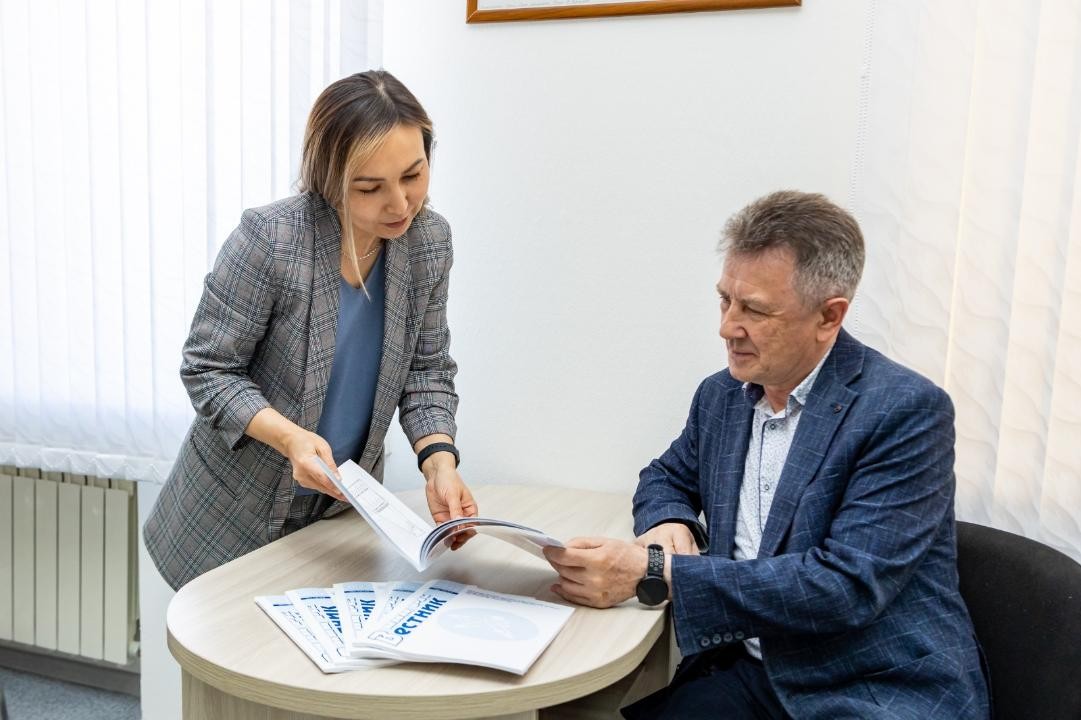
According to the center's plan, nuclear talent development is first directed at secondary school students. The National Nuclear Center holds an annual “Young Physicists” summer school and organizes student visits to research and technical facilities, helping high school students understand modern science, engineering technology, and the operation of research infrastructure, providing a reference for their subsequent career choices.
At the vocational education level, the National Nuclear Center maintains cooperation with regional institutions, including the Electrotechnical College, the Higher College of Civil Defense, and the Higher College of Geodesy, Cartography and Construction in Semey. This cooperation focuses on practical skill development, enabling students to familiarize themselves with future job requirements in advance, master basic operational skills, and understand the work standards of high-tech enterprises in the nuclear field.
University cooperation is regarded as a key link in training engineers and researchers. The National Nuclear Center cooperates with multiple universities in Kazakhstan, linking the educational process with research and experimental design work. Students can participate in teaching internships, production internships, and research practice under the guidance of the center's researchers and engineering personnel, gaining access to experimental facilities and analytical equipment and accumulating research work experience.
Experts from the National Nuclear Center also participate in doctoral-level research personnel training. Center staff serve on doctoral dissertation defense committees at multiple universities, covering educational directions such as “Technical Physics” and “Physical and Chemical Sciences.” These universities include D. Serikbayev East Kazakhstan Technical University, Shakarim University, and S. Amanzholov East Kazakhstan University. In addition, center experts participate in the work of final state certification committees, taking part in state examinations and graduation thesis defenses in relevant specialties.
Talent development does not stop after employees join the organization. Data show that more than 50 young employees at the National Nuclear Center are currently pursuing master's and doctoral degrees without interrupting their work. Over the past five years, 18 employees of the center have completed candidate of sciences or PhD thesis defenses, providing support for the development of Kazakhstan's research workforce.
International cooperation is also an important component of the center's talent development system. Through cooperation with the International Atomic Energy Agency (IAEA), National Nuclear Center staff regularly travel to foreign research institutions for internships and training. In recent years, more than 100 employees have participated in related programs. At the same time, the National Nuclear Center maintains long-term strategic cooperation with the Japan Atomic Energy Agency (JAEA) in the field of peaceful uses of nuclear energy, jointly training professionals for Asian countries that are developing their own nuclear energy programs.
In terms of support for young researchers, the National Nuclear Center has held an annual conference-competition of research and experimental design work for young scientists and professionals since 2001. The event has attracted young researchers from nuclear industry enterprises and relevant universities in Kazakhstan, with a cumulative participation of more than 1,000 people, many of whom later entered professional positions in the nuclear industry.
The National Nuclear Center stated that its current human resources policy covers multiple elements, including continuing education, practical training, research work, international cooperation, and support for young scientists, with the goal of building a stable talent pool for Kazakhstan's nuclear sector and enhancing the scientific and technological capabilities required for the country's nuclear energy development.
Disclaimer: Information republished from partner media, institutions or other websites is provided for reference and communication purposes only. It does not imply endorsement of its views or verification of its accuracy. Please contact us if any content infringes rights or requires correction.