
Kazakhstan Advances Nuclear Fuel Cycle from Resource Development to High-Value-Added Manufacturing
 Scan to share
Kazakhstan is advancing its nuclear fuel cycle industry from natural uranium mining toward deep processing and high-tech product manufacturing. As one of the world's major natural uranium producers, Kazakhstan has in recent years not only maintained its advantage in resource development but also continued to build capacity in uranium conversion, nuclear fuel component manufacturing, scientific research capabilities, and professional workforce training.
The nuclear fuel cycle encompasses the entire process of nuclear materials, from uranium ore mining and processing, to fuel use in reactors, and to the management of spent fuel and radioactive waste. Depending on the technical route, relevant stages may include uranium mining and processing, conversion, isotope enrichment, fuel pellet fabrication, fuel assembly production, as well as spent fuel storage, transportation, and reprocessing.
Kazakhstan has established an industrial foundation across multiple stages of the nuclear fuel cycle. In 2025, Kazatomprom accounted for approximately 40% of global natural uranium production. The country also operates enterprises producing higher-value-added uranium products, among which the Ulba Metallurgical Plant can produce natural uranium oxide, high-purity uranium dioxide powder, and nuclear fuel pellets.
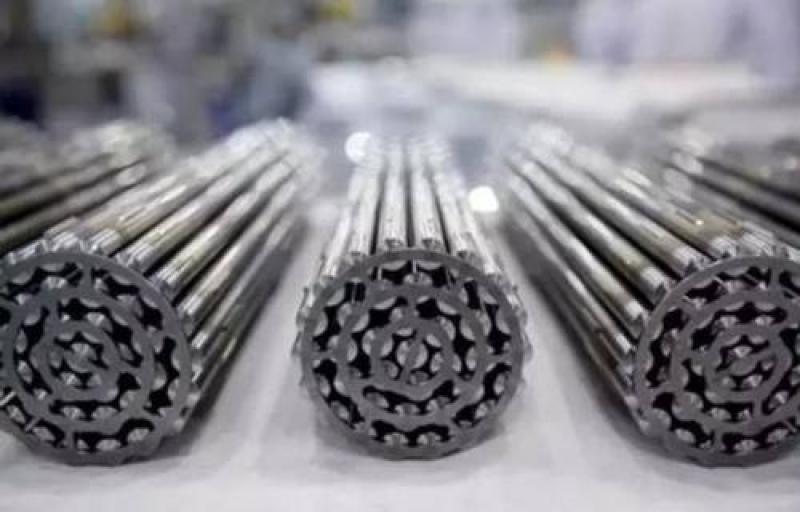
In fuel assembly manufacturing, the Kazakhstan-China joint venture Ulba-FA produces fuel assemblies for nuclear power plants in China. The enterprise reached its design capacity of 200 tonnes of low-enriched uranium per year in 2024. In 2025, the company delivered six batches of products to customers, with a total uranium volume exceeding 200 tonnes. This progress demonstrates that Kazakhstan's uranium industry is expanding from single-resource extraction toward high-tech, high-value-added product manufacturing.
Spent fuel and radioactive waste management is also an important component of the nuclear fuel cycle system. Related work includes nuclear material accounting, interim storage, transportation, physical protection, and subsequent management in accordance with established technical routes. These issues typically need to be considered at the stage of reactor technology selection and project design documentation preparation.
Kazakhstan's nuclear fuel cycle enterprises operate under strict national regulation and international oversight. The Ulba Metallurgical Plant site hosts the International Atomic Energy Agency (IAEA) Low-Enriched Uranium Bank. This facility is not Kazakhstan's own national nuclear fuel reserve, but its operation demonstrates that the country possesses nuclear material management infrastructure and professional personnel meeting international requirements.
The development of the nuclear fuel cycle not only entails the construction of new production facilities but is also closely linked to nuclear science, materials science, workforce training, safety culture, and international cooperation. Kazakhstan currently possesses a natural uranium resource base, uranium processing capabilities, fuel pellet and fuel assembly production capacity, and has accumulated experience in participating in international cooperative projects. In the future, the development level of the country's nuclear fuel industry will depend not only on natural uranium output but also on technological capability enhancement, expansion of manufacturing segments, and an increased share of high-value-added products.
Disclaimer: Information republished from partner media, institutions or other websites is provided for reference and communication purposes only. It does not imply endorsement of its views or verification of its accuracy. Please contact us if any content infringes rights or requires correction.