
India's Bihar signs memorandum of understanding for $2.3 billion small modular reactor project
 Scan to share
The government of Bihar, India recently signed investment memorandums of understanding totaling approximately $6 billion (about €5.2 billion) with several industrial enterprises, covering sectors such as steel, textiles, food processing, pharmaceuticals, and nuclear energy. Among these, the nuclear energy project investment amounts to approximately $2.3 billion, making it the largest investment proposal among the signed agreements.
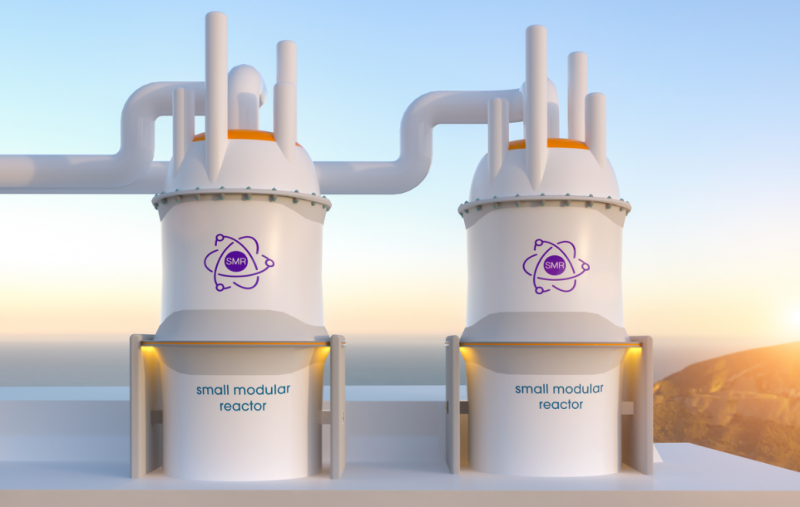
According to a statement issued by the office of Bihar Chief Minister Samrat Choudhary, Global Renewable Advanced Clean Energy, a recently registered company headquartered in Hyderabad in central India, signed the nuclear energy memorandum of understanding. Further details regarding the memorandum have not yet been disclosed.
In May this year, the Government of India approved a proposal to build a nuclear power plant in Bihar, a state in eastern India. The project's estimated cost is approximately $2.1 billion, with a planned total installed capacity of 2,000 megawatts, and it may adopt small modular reactor (SMR) technology.
Currently, public information on the proposed nuclear power project in Bihar remains limited. In July, India's Minister of Science and Technology Jitendra Singh stated that India is accelerating the expansion of its nuclear energy program, with a target of developing and operating at least five small modular reactors by 2033. Information from Indian sources indicates that Bihar currently has no commercially operating nuclear power plants, and the state is working to incorporate nuclear energy into its energy mix by signing formal agreements and advancing final approval procedures.
In a previous written reply to the Rajya Sabha, the upper house of India's Parliament, Singh stated that the Bhabha Atomic Research Centre (BARC), located near Mumbai, has designed and is developing three types of small modular reactors: the 220 MW-class Bharat Small Modular Reactor (BSMR-200), the 55 MW Small Modular Reactor (SMR-55), and a high-temperature gas-cooled small modular reactor with a power output below 5 MW intended for hydrogen production. By technical classification, the latter falls under the category of microreactors.
The Government of India has proposed a roadmap to achieve 100 GW of nuclear power installed capacity by 2047. According to this roadmap, as projects at various construction stages are commissioned successively, India's nuclear power installed capacity is expected to increase from the current 8.78 GW to approximately 22 GW by around 2031-2032.
In December 2025, India passed landmark legislation known as the "Shanti Act," ending a state monopoly on nuclear power that had lasted approximately 60 years and allowing private capital and foreign investment to enter the nuclear power generation sector. Under this Act, domestic private enterprises in India may construct, own, and operate nuclear power plants, while foreign enterprises may participate in projects through joint ventures established with Indian state-owned entities, with an equity stake of up to 49%.
According to data from the International Atomic Energy Agency (IAEA), India currently has 23 commercially operating nuclear power units and 8 nuclear power units under construction. In 2025, nuclear power generation in India accounted for approximately 3% of the country's total electricity production.
Disclaimer: Information republished from partner media, institutions or other websites is provided for reference and communication purposes only. It does not imply endorsement of its views or verification of its accuracy. Please contact us if any content infringes rights or requires correction.