
UK Low-Level Waste Repository Advances Capping Project, Rail-Transported Aggregate Exceeds 285,000 Tonnes
 Scan to share
Nuclear Waste Services (NWS) is advancing capping-related works at the Low-Level Waste Repository on the west coast of Cumbria, UK, to strengthen long-term protection of existing disposal trenches and vaults. Since the repository began operations in 1959, it has supported the safe disposal of approximately 1 million cubic metres of low-level radioactive waste, making it a key facility in the UK's radioactive waste management system.
NWS, part of the Nuclear Decommissioning Authority (NDA), is primarily responsible for consolidating the UK's radioactive waste management capabilities, providing management solutions for legacy wastes from civil and defence sectors as well as wastes arising from future new-build nuclear projects. As a licensed nuclear site, the repository's activities are underpinned by environmental safety cases covering both operational and long-term timescale environmental safety requirements.
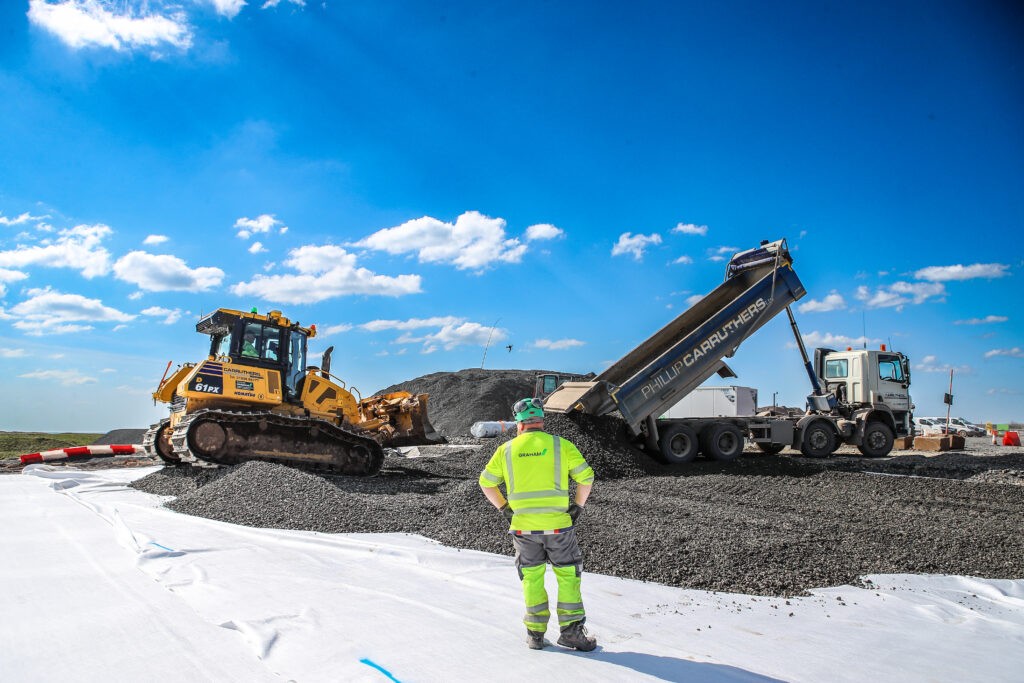
The capping work currently underway is a critical phase in the low-level waste disposal lifecycle. The project involves installing engineered barriers above trenches and vaults that have received their final waste consignments, ultimately enabling permanent closure. The cap comprises multiple layers of natural aggregates and engineered materials, with a total thickness of up to 10 metres, designed to isolate the waste over the long term and protect people and the environment.
As part of the capping preparation works, NWS is implementing the South Trenches Interim Membrane project, which primarily involves replacing the protective membrane in the southern area of the legacy waste disposal trenches to provide a more robust temporary cover for this area in response to changing weather conditions. The interim liner is expected to remain in place for up to 100 years.
For the transport of construction materials, NWS is working with Direct Rail Services (DRS), part of Nuclear Transport Solutions, to deliver aggregate to the repository by rail from Shap quarry. Each train carries more than 750 tonnes of aggregate, equivalent to the capacity of 36 heavy goods vehicles. Under the schedule, more than 300,000 tonnes of aggregate will arrive at the repository between February 2025 and August 2026.
As of 10 July 2026, 325 trains have completed deliveries, transporting a cumulative total of more than 285,000 tonnes of aggregate. NWS stated that using rail transport has kept more than 15,000 heavy goods vehicles off the roads, helping to reduce road traffic pressure and lessen the project's impact on surrounding communities. Rail deliveries are currently scheduled for completion in mid-August 2026, with the South Trenches Interim Membrane project expected to be completed in 2028. The procurement process for the next phase of capping works has already been initiated, with construction and design services to be delivered under a 10-year framework.
In addition to repository capping, NWS promotes waste minimisation through the waste hierarchy, including avoidance, reduction, reuse and recycling, with disposal only considered when no other suitable option exists. The repository accepts low-level radioactive waste from the nuclear industry, defence, education, healthcare and research sectors. Through measures such as reuse and recycling, approximately 98% of waste is currently diverted away from the repository, thereby preserving finite national disposal capacity.
The area surrounding the repository is adjacent to Sites of Special Scientific Interest and Special Protection Areas, with a sensitive local ecological environment that hosts species including roe deer, great crested newts, badgers and common bats. NWS stated that site operations and project planning must simultaneously consider safety, regulatory compliance, community impact and ecological protection, with measures such as species surveys, land-use assessments and habitat improvements implemented to minimise disturbance to the local environment.
Disclaimer: Information republished from partner media, institutions or other websites is provided for reference and communication purposes only. It does not imply endorsement of its views or verification of its accuracy. Please contact us if any content infringes rights or requires correction.