
Lucideon Plans £500 Million UK CMC Manufacturing Facility to Strengthen Aerospace, Defense, and Nuclear Supply Chains
 Scan to share
UK materials science consultancy Lucideon plans to build a manufacturing and R&D facility for ceramic matrix composites (CMCs) at Keele University Science Park, with total project investment expected to exceed £500 million over the next 7 to 10 years. The plan aims to address the UK's capability gap in high-temperature ceramics and industrial-scale CMC manufacturing, serving key industries such as aerospace, defense, and nuclear energy, while enhancing the UK's autonomy and competitiveness in the global advanced materials supply chain.
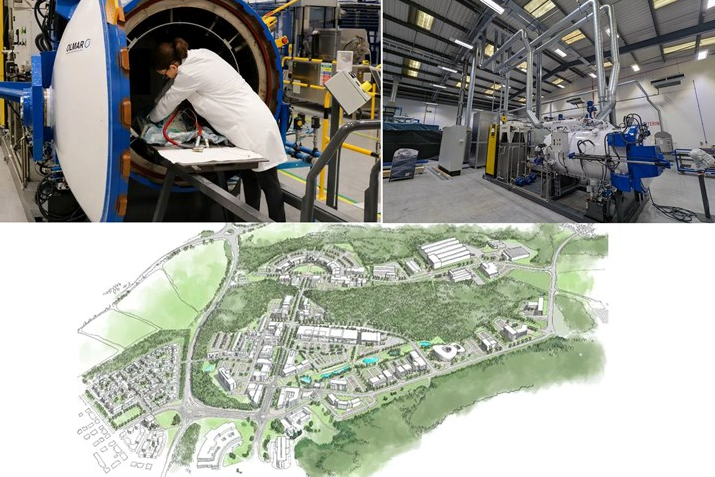
Ceramic matrix composites, consisting of ceramic fibers reinforcing a ceramic matrix, can withstand ultra-high temperatures, thermal shock, and mechanical impact, while offering weight reduction advantages over metallic materials. This has driven growing demand in fields such as high-performance engines, thermal protection structures, nuclear equipment, and high-speed aircraft. Lucideon notes that the UK currently lacks industrial-scale manufacturing capability for oxide and non-oxide high-temperature ceramics and CMCs, which constrains supply security in defense, energy security, and high-end manufacturing sectors.
Under the plan, Lucideon will advance the development of material systems including oxide fiber-reinforced oxide ceramics (Ox-Ox), carbon fiber-reinforced silicon carbide (C/SiC), and silicon carbide fiber-reinforced silicon carbide (SiC/SiC). To support the rollout of these operations, two companies—Oxide Ceramic Systems Ltd. and Non-Oxide Ceramic Systems Ltd.—have been established, with the future facility site secured at Keele University Science Park. The project will collaborate with end users in the aviation, defense, and nuclear sectors to identify priority component types and material systems for manufacturing capability development.
Lucideon expects the new facility to initially achieve pre-production scale manufacturing, with annual output potentially ranging from hundreds to thousands of components, expanding to tens of thousands of certified airworthy parts per year as the multi-year plan progresses. Beyond equipment, personnel, and building investments, the project will also cover R&D, technology maturation, validation, and certification. Lucideon will drive construction in partnership with industry partners and key R&D institutions, with AMRICC—the Applied Materials Research, Innovation and Commercialisation Centre located in Stone—serving as a key pillar of the initiative.
On funding, the project will require not only private capital but also an estimated over £200 million in government funding support. Lucideon states that it is currently engaged in constructive discussions with the government and relevant stakeholders, while maintaining active engagement with potential companies in the aerospace, defense, and nuclear sectors to validate market demand for establishing a national CMC manufacturing capability in the UK. If the project proceeds, it is expected to help the UK build a more complete industrial foundation in advanced ceramic materials, domestic production of critical components, and supply security for high-end manufacturing.
Disclaimer: Information republished from partner media, institutions or other websites is provided for reference and communication purposes only. It does not imply endorsement of its views or verification of its accuracy. Please contact us if any content infringes rights or requires correction.