
South Korea's Nuclear Expansion Faces Fuel Supply Pressure as Enriched Uranium Costs Surge Nearly Sixfold in Seven Years
 Scan to share
Against the backdrop of accelerating global nuclear power construction and surging electricity demand from AI data centers, the nuclear fuel supply chain is facing new tensions. Due to limited uranium enrichment capacity and sanctions affecting Russian-related supplies, international uranium enrichment prices have risen sharply over the past seven years. South Korea's nuclear expansion plans are consequently facing fuel procurement pressure, with industry experts concerned that if mid- to long-term nuclear fuel security proves insufficient, newly built nuclear units could face operational risks in the future.
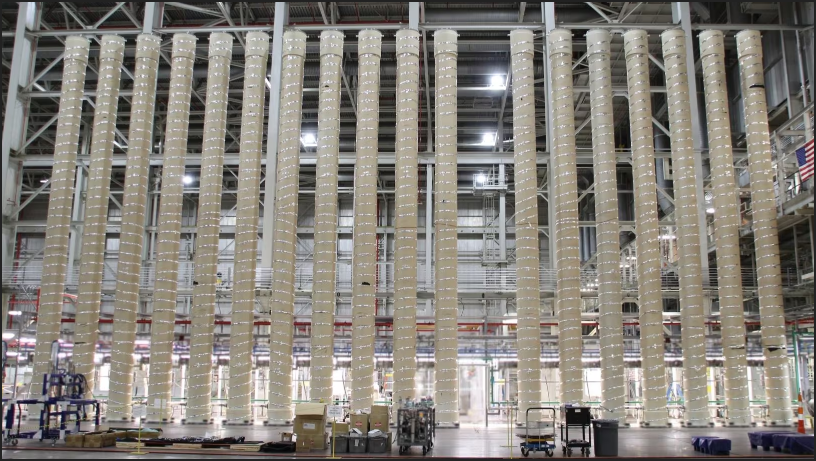
Korea Hydro & Nuclear Power (KHNP) recently disclosed that South Korea's domestic annual enriched uranium consumption is expected to increase from approximately 460 tons currently to about 540 tons next year. The rising demand mainly stems from the overlap between life-extension operations of some older nuclear units and the commissioning of new units. This projection does not yet fully account for additional nuclear projects planned for the 2030s, including Shin-Hanul Units 3 and 4 in Uljin, North Gyeongsang Province, two large nuclear units in Yeongdeok, North Gyeongsang Province, and a small modular reactor in Gijang, Busan.
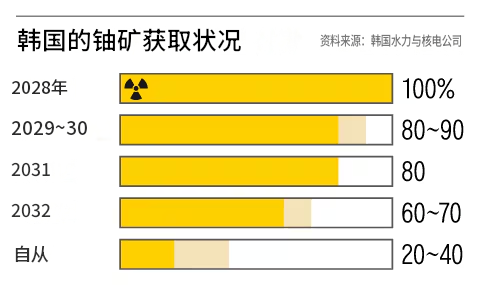
As South Korea advances its nuclear power construction, domestic enriched uranium demand is expected to continue rising. Relevant projections indicate that South Korea's secured enriched uranium procurement volumes can cover full demand through 2028, but coverage may decline to approximately 80% by 2031, further drop to 60%–70% by 2032, and potentially fall to only 20%–40% of demand by the late 2030s. In comparison, the European Union has largely secured enriched uranium supplies through 2032, with coverage expected to remain at 40%–50% thereafter.
The global commercial uranium enrichment market is highly concentrated. The British-German-Dutch joint venture Urenco, France's Orano, Russia's Rosatom, and China National Nuclear Corporation collectively control approximately 99% of global commercial uranium enrichment capacity. Uranium enrichment facilities rely on advanced centrifuge technology, require substantial capital investment, and typically take 5 to 10 years to build or expand, resulting in limited supply elasticity and an inability to rapidly ramp up production when demand surges.
Following the Russia-Ukraine conflict, uranium enrichment supply bottlenecks have further intensified. The United States has decided to fully ban imports of Russian enriched uranium starting in 2028, and the European Union has also restricted new related contracts. Since Rosatom accounts for over 40% of global uranium enrichment capacity, new demand from Western nuclear-powered countries is increasingly flowing to a small number of suppliers such as Urenco and Orano. South Korea relies on Russia for approximately 30% of its enriched uranium supply, and with external restrictions tightening, maintaining the related supply chain faces higher uncertainty.
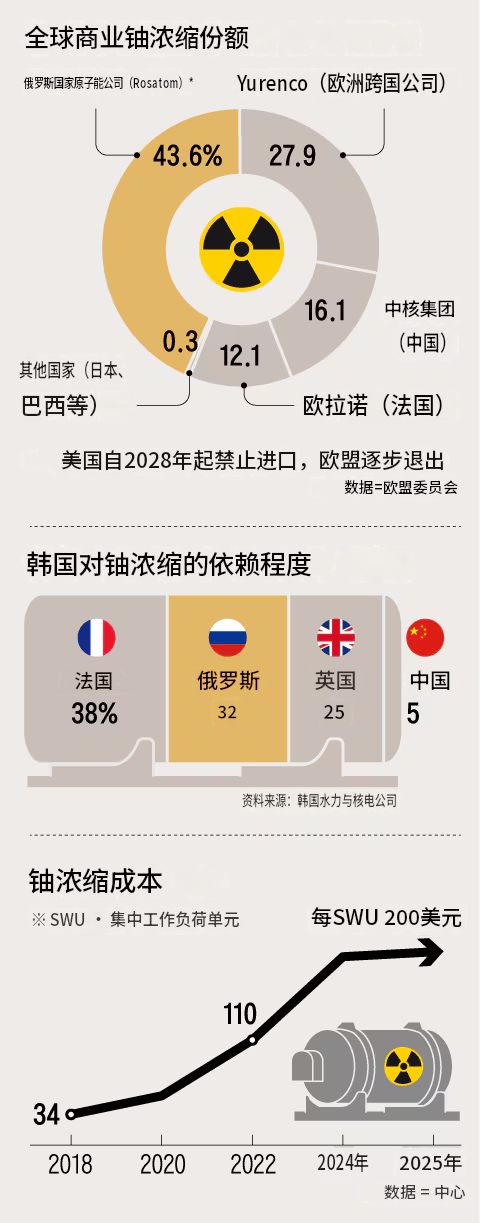
Uranium enrichment prices have clearly reflected supply tensions. International spot prices have risen from $34 per separative work unit (SWU) in 2018 to approximately $200 at the end of last year, an increase of nearly sixfold. Urenco's order backlog has also doubled within three years, reaching €21.3 billion.
Fuel shortages have already affected the progress of some advanced nuclear projects. TerraPower, a U.S. company backed by Bill Gates, delayed the commercial operation of its next-generation small modular reactor from 2028 to 2030 due to the failure to secure high-assay low-enriched uranium (HALEU) in a timely manner. U.S. nuclear developer X-energy has also disclosed to securities regulators that its project timelines could be delayed if fuel supplies cannot be secured.
This pressure is not limited to small modular reactors. Both HALEU and standard low-enriched uranium rely on a small number of uranium enrichment facilities for production, with the main difference lying in the degree of enrichment. As global nuclear energy expansion accelerates, fuel supplies for conventional commercial nuclear power plants could also face strain.
To mitigate supply risks, major nuclear-powered countries are accelerating deployment efforts. The U.S. Department of Energy has launched a $2.7 billion domestic uranium enrichment supply chain expansion program, providing funding support to Centrus Energy, General Matter, and Orano's U.S. subsidiary. Orano is advancing expansion plans to increase enrichment capacity by over 30%; Urenco is also expanding its facility in New Mexico. Japan has approved a government plan to expand uranium enrichment capacity, the Czech Republic has enacted legislation requiring a three-year nuclear fuel reserve, and the UAE has launched a government-level procurement strategy.
In South Korea, Korea Hydro & Nuclear Power currently bears primary responsibility for nuclear fuel procurement. Industry insiders believe that responsibilities for nuclear materials, uranium resources, and nuclear fuel management are dispersed across different departments, lacking a unified energy security coordination mechanism, which may affect the decision-making efficiency of long-term procurement contracts. Experts recommend that South Korea integrate nuclear power plant construction licensing and nuclear fuel procurement into a unified energy security framework, securing fuel supplies capable of supporting long-term operations in advance while planning new unit construction.
Disclaimer: Information republished from partner media, institutions or other websites is provided for reference and communication purposes only. It does not imply endorsement of its views or verification of its accuracy. Please contact us if any content infringes rights or requires correction.