
Port of Long Beach Advances Offshore Small Modular Reactor Project
 Scan to share
The Port of Long Beach in California, USA, is advancing an exploratory project for an offshore small modular reactor (SMR) system that could one day provide electricity for port operations, terminal equipment, charging infrastructure, and vessels at berth. If the project ultimately comes to fruition, it could become one of California's first new nuclear power projects in nearly 50 years.
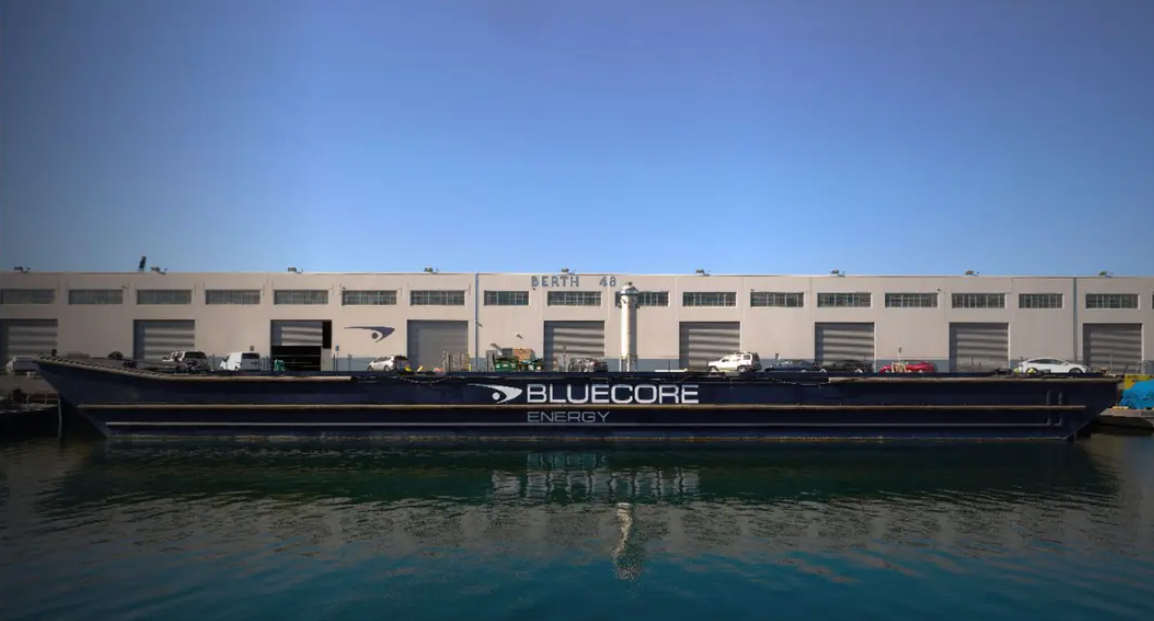
The project partner is Bluecore Energy. This startup, founded less than a year ago, plans to develop small nuclear reactors deployable on floating barges. The Port of Long Beach has leased the Pier 48 site to the company for related technology development and testing. Previously, the Port of Long Beach also signed a cooperation agreement with the U.S. Maritime Administration (MARAD) to assist in developing safety standards and operational regulations for offshore nuclear energy applications.
Kofi Asante, founder and CEO of Bluecore Energy, stated that the company is building on nuclear reactor technology with decades of operational experience, miniaturizing the system and integrating it onto a barge platform. The company claims that a single small modular reactor can generate enough electricity to power approximately 15,000 households.
According to disclosed information, Bluecore Energy plans to adopt a water-cooled reactor design that, like conventional nuclear power systems, generates heat through nuclear fission and subsequently produces electricity. The difference lies in the deployment location: the system is intended for an offshore floating platform rather than a fixed onshore site. In addition to meeting conventional nuclear safety requirements, this design also involves maritime safety considerations such as submersion, capsizing, extreme weather, and port traffic environments.
Currently, the U.S. Nuclear Regulatory Commission (NRC) is studying how existing regulatory frameworks can be applied to offshore nuclear power systems. The Port of Long Beach and MARAD are also collaborating with the NRC, the U.S. Coast Guard (USCG), and the U.S. Department of Energy (DOE) to discuss operational procedures, safety standards, and inspection protocols. Earlier this year, MARAD solicited industry input on the application of U.S.-manufactured, scalable, and commercially viable small modular reactors in maritime transport systems.
The Port of Long Beach's interest in this technology is tied to its port electrification and zero-emissions operational goals. As demand for cargo handling equipment, terminal infrastructure, and shore power for vessels continues to grow, the port's requirements for reliable electricity supply are increasing. The port believes nuclear energy can be studied as one of the clean, continuous power supply options.
However, the project still faces regulatory and policy hurdles. California has imposed restrictions on new nuclear fission power plants since 1976, a policy linked to long-term high-level radioactive waste disposal requirements. It remains unclear whether the proposed floating small modular reactors would fall within the scope of these restrictions.
Najmedin Meshkati, an engineering professor at the University of Southern California (USC), stated that the nuclear physics principles underlying small reactors are not new technology, but deploying them on barges in a busy port represents a novel application scenario that should undergo more rigorous, independent regulatory review. Meshkati also serves on the state's Independent Safety Committee for the Diablo Canyon nuclear power plant, but he emphasized that his comments reflect only his personal views.
To date, Bluecore Energy has not submitted a deployment application to the NRC. The project remains in the technology development and regulatory planning phase. Whether it can advance to substantive construction will depend on multiple factors, including regulatory review, applicability of state-level policies, and public participation procedures.
Disclaimer: Information republished from partner media, institutions or other websites is provided for reference and communication purposes only. It does not imply endorsement of its views or verification of its accuracy. Please contact us if any content infringes rights or requires correction.