
South Korean Lawmaker Proposes Designating SMRs as National Strategic Technology
 Scan to share
Kim Jung-jae, a lawmaker from South Korea's People Power Party, recently proposed an amendment to the Special Tax Limitation Act, calling for small modular reactors (SMRs) to be included in the category of national strategic technologies, thereby supporting related R&D, talent development, and facility investment through tax credits.
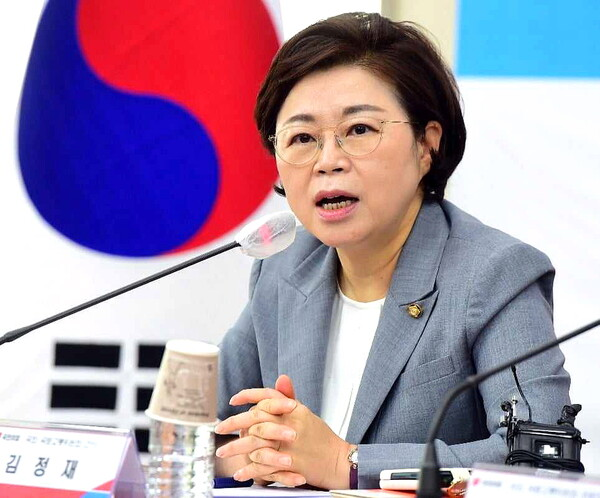
Kim believes that SMRs are a next-generation nuclear technology that balances carbon neutrality goals with stable energy supply. As global technological and industrial competition in the SMR market intensifies, South Korea needs to further improve its institutional foundation to promote the development of the related industry.
According to the proposal's explanation, the commercialization and export competitiveness of SMRs depend not only on R&D outcomes but also on the facility level of the manufacturing supply chain, workforce capabilities, and international quality standards and certification capabilities. Since the SMR industry requires sustained R&D and upfront facility investment, while private enterprises face issues such as order uncertainty and long commercialization cycles, investment enthusiasm has been constrained. The amendment therefore recommends listing SMRs as a national strategic technology category, providing tax credits for R&D expenses, talent development costs, and facility investment.
The National Assembly of South Korea has recently seen multiple legislative proposals in the energy sector. Ahn Ho-young, a lawmaker from the Democratic Party of Korea, proposed a bill related to the Korea Electric Power Corporation Act, recommending the integration of five public power generation companies—Korea South-East Power, Korea Southern Power, Korea East-West Power, Korea Western Power, and Korea Midland Power—into a new Korea Electric Power Corporation, with its headquarters located in North Jeolla Province. The proposal stipulates that the company's registered capital would be 32 trillion KRW, with the government's shareholding ratio no less than 51%.
The bill also proposes establishing a renewable energy transition headquarters within the company, responsible for expanding and promoting renewable energy generation and energy transition-related work, and stipulates provisions on the company's capital, organizational structure, executive appointments and dismissals, business scope, financing, accounting, corporate bond issuance, and supervision. Upon the company's establishment, the existing five public power generation companies would be dissolved, with their assets, rights and obligations, employees, disposal authority, and ongoing projects assumed by the new company.
In addition, Kim Wi-sang, a proportional representation lawmaker from the People Power Party, proposed an amendment to the Electricity Business Act, recommending a clear legal basis for electricity rate reductions for vulnerable groups. Kim pointed out that current reductions rely primarily on Korea Electric Power Corporation's terms and government discretionary arrangements, lacking stable legal provisions, resulting in issues such as insufficient sustainability and relatively low reduction rates, while also failing to adequately reflect regional heatwave risks and demographic differences.
The amendment recommends clarifying the legal basis for electricity rate reductions for groups such as elderly individuals living alone, basic livelihood security recipients, and persons with disabilities. It also stipulates that within "climate change heatwave risk zones" designated by the competent authority based on heatwave days, maximum temperatures, and elderly population ratios, the electricity rate reduction rate for vulnerable groups during the July–August heatwave peak period shall not be less than 70%.
Disclaimer: Information republished from partner media, institutions or other websites is provided for reference and communication purposes only. It does not imply endorsement of its views or verification of its accuracy. Please contact us if any content infringes rights or requires correction.