
South Korea Develops AI Model for Prioritizing Post-Earthquake Inspections at Nuclear Facilities
 Scan to share
A joint research team from the Korea Research Institute of Standards and Science (KRISS) and Ulsan National Institute of Science and Technology (UNIST) has developed a deep learning model that can assist nuclear facilities in rapidly identifying priority inspection areas after an earthquake. The model uses seismic wave signals collected from a single seismometer to predict in real time the vibration responses at multiple locations within a nuclear power plant and quantitatively ranks potential risks.
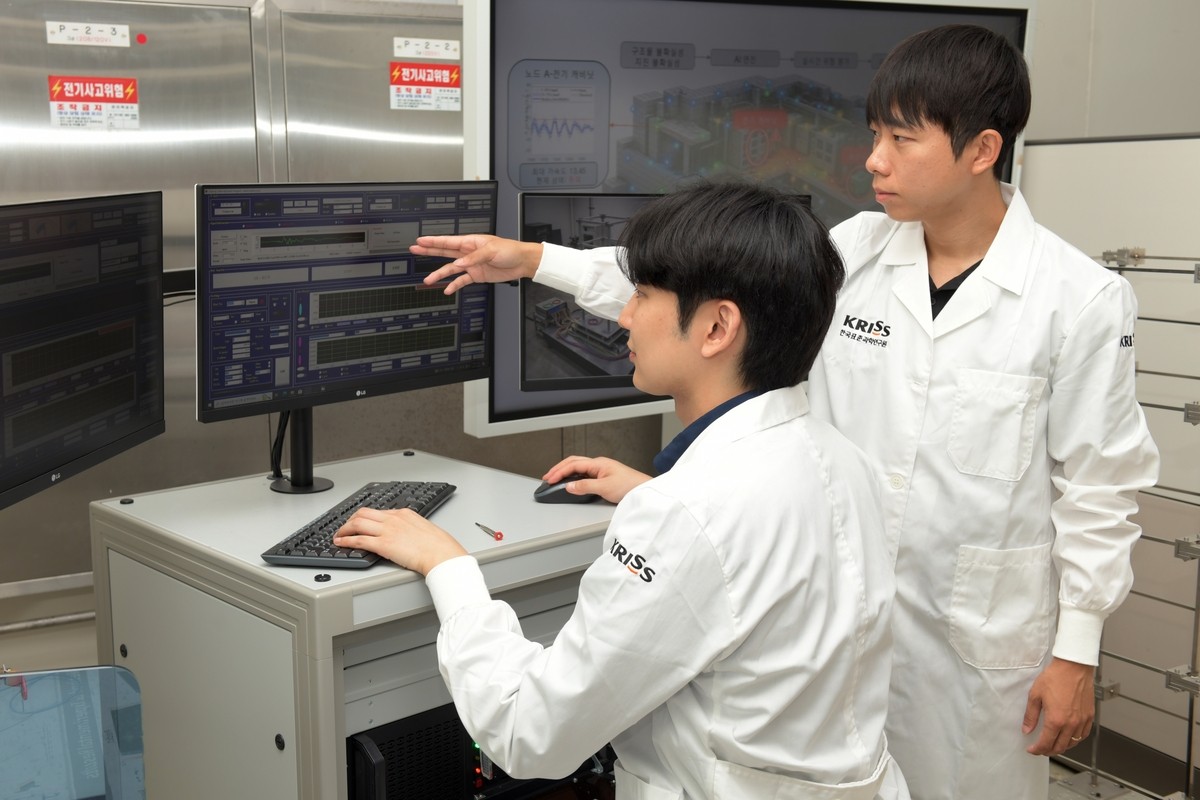
The research was jointly conducted by the team of Jae-Beom Lee, senior researcher at KRISS, and Young-Ju Lee, professor at UNIST. The researchers stated that this technology can infer the vibration conditions at 139 locations within a nuclear facility where sensors have not been installed, without the need to equip every critical location with sensors, thereby helping operators narrow down the scope of post-earthquake inspections more quickly.
After an earthquake, even if no visible damage is detected, safety confirmation and detailed inspections can still lead to extended downtime. Data shows that following the magnitude 5.8 earthquake in Gyeongju, South Korea, in 2016, Units 1 through 4 of the Wolseong Nuclear Power Plant resumed operation after approximately 80 days of performance verification and detailed inspections. Following a strong earthquake in Kumamoto, Japan, this July, TSMC's Kumamoto Plant 1 also suspended operations and gradually returned to normal after equipment inspections and adjustments.
The core of this research lies in "virtual sensing" technology. The model analyzes seismic waves recorded by a single seismometer to infer in real time the vibration responses at different locations within a facility; even when faced with actual earthquake records not included in training, it demonstrates strong predictive capability. The research team also incorporated uncertainties arising from structural characteristics into the calculations, quantifying the probability that vibration responses at each location exceed preset risk thresholds as a percentage from 0% to 100%.
This approach does not simply provide a binary "safe" or "dangerous" judgment, but rather ranks inspection points by risk probability. For large, complex facilities such as nuclear power plants, this helps experts prioritize high-risk areas for verification after an earthquake, improving the efficiency of safety validation.
The research team also proposed a design formula for deriving an optimal AI architecture based on the natural frequencies of structures, reducing the trial-and-error process required for repeatedly designing and comparing models. AI models designed using this method achieve accuracy comparable to some of the latest deep learning models, but with significantly fewer parameters and substantially lower computational burden, making them more suitable for deployment in field environments with limited computing resources.
Since the AI model can be flexibly designed based on the vibration characteristics of different structures, the research team believes that the related technology can be extended in the future to post-earthquake safety assessments of large industrial facilities such as semiconductor fabs and data centers.
Jae-Beom Lee stated that in the field of safety AI, accurately predicting outcomes and understanding the boundaries of model judgment are equally important. Future research will continue to enhance model reliability so that it can assist personnel in making decisions under uncertain scenarios.
The findings have been published in three papers, including one in the international journal Reliability Engineering & System Safety. The research was supported by the Individual Basic Research Program of the National Research Foundation of Korea and the basic research program of KRISS.
Disclaimer: Information republished from partner media, institutions or other websites is provided for reference and communication purposes only. It does not imply endorsement of its views or verification of its accuracy. Please contact us if any content infringes rights or requires correction.