
South Korea Launches Next-Generation Energy Leader Training Program in Nuclear Energy
 Scan to share
The "Next-Generation Energy Leader Training Program" in the nuclear energy sector, supported by the Ministry of Climate, Energy and Environment and the Korea Energy Technology Evaluation and Planning Institute (KETEP) and implemented by the Korea Association for Radiation Promotion (KARA), has been officially launched. On August 25, the association held an inauguration ceremony at the "2026 Climate and Energy Job Fair" held in Changwon, marking the program's entry into the implementation phase.
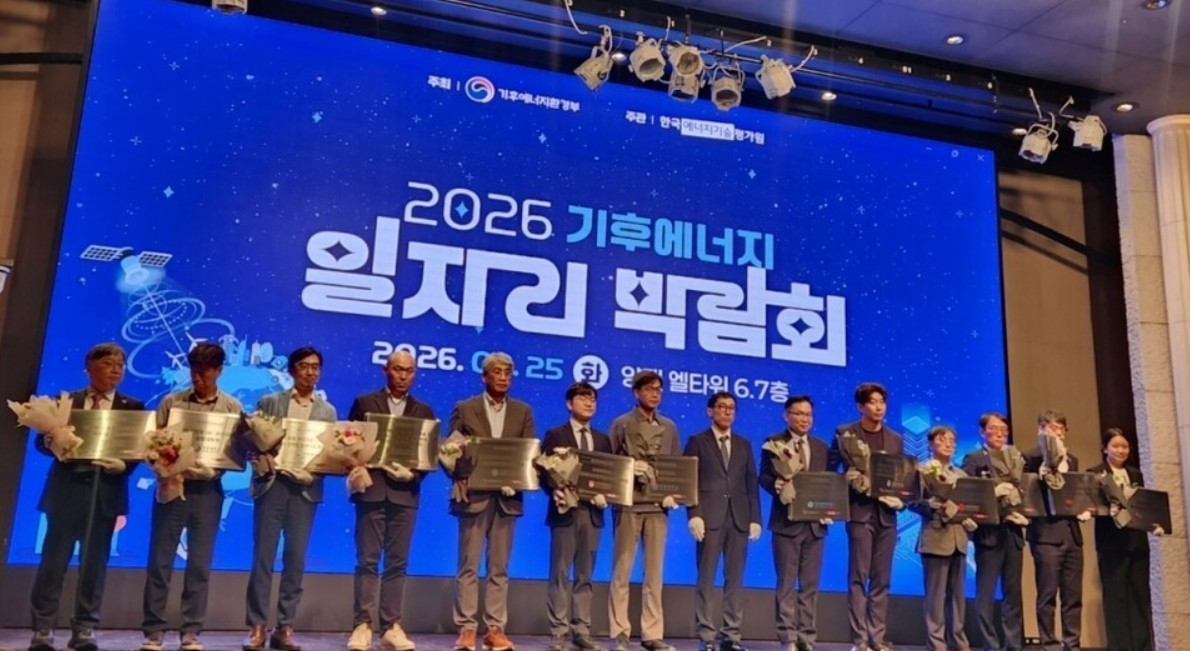
The program targets young researchers who have recently obtained doctoral degrees, focusing on enhancing their research capabilities and industrial adaptability in the nuclear energy field, while promoting closer talent cultivation linkage mechanisms among universities, enterprises, and research institutions.
In recent years, beyond large-scale nuclear power units, South Korea's nuclear energy industry has continued to pay attention to advanced nuclear technologies such as small modular reactors (SMR) and innovative small modular reactors (i-SMR). Compared with traditional large-scale nuclear power plants, these small reactors have attracted attention for their modular construction, flexible deployment, and enhanced safety. Meanwhile, areas such as nuclear power plant decommissioning, spent fuel management, and nuclear fusion have also created more urgent demands for highly qualified research personnel.
According to reports, this project does not simply provide research funding but emphasizes combining university research training with the actual needs of enterprises. Currently, 17 laboratories from 10 South Korean universities, including Seoul National University and the Korea Advanced Institute of Science and Technology (KAIST), have participated in related research, with research directions covering future nuclear energy technologies and their industrial applications. Young researchers will accumulate engineering practice and industrial collaboration experience by jointly conducting projects with enterprises and research institutions.
The Korea Association for Radiation Promotion stated that it will subsequently provide practical skills training, industry expert guidance, and employment linkage support in phases to help participants form a complete development pathway from research to employment.
Park Jeong-ki, Executive Vice President of the Korea Association for Radiation Promotion, stated that with the development of frontier technologies such as artificial intelligence, the nuclear energy research environment is undergoing rapid changes. The association will support young doctoral researchers in growing into talents equipped with both nuclear energy expertise and artificial intelligence application capabilities, while promoting smoother alignment between university research and industrial job demands.
Disclaimer: Information republished from partner media, institutions or other websites is provided for reference and communication purposes only. It does not imply endorsement of its views or verification of its accuracy. Please contact us if any content infringes rights or requires correction.