
First Russia-IAEA Small Modular Reactor Training Course Concludes in Murmansk
 Scan to share
On August 31, the Small Modular Reactor training course jointly organized by Rosatom Technical Academy and the International Atomic Energy Agency (IAEA) concluded in Murmansk, Russia. The training focused on the theme of “Operational Experience and Future Prospects of Small Modular Reactors.”
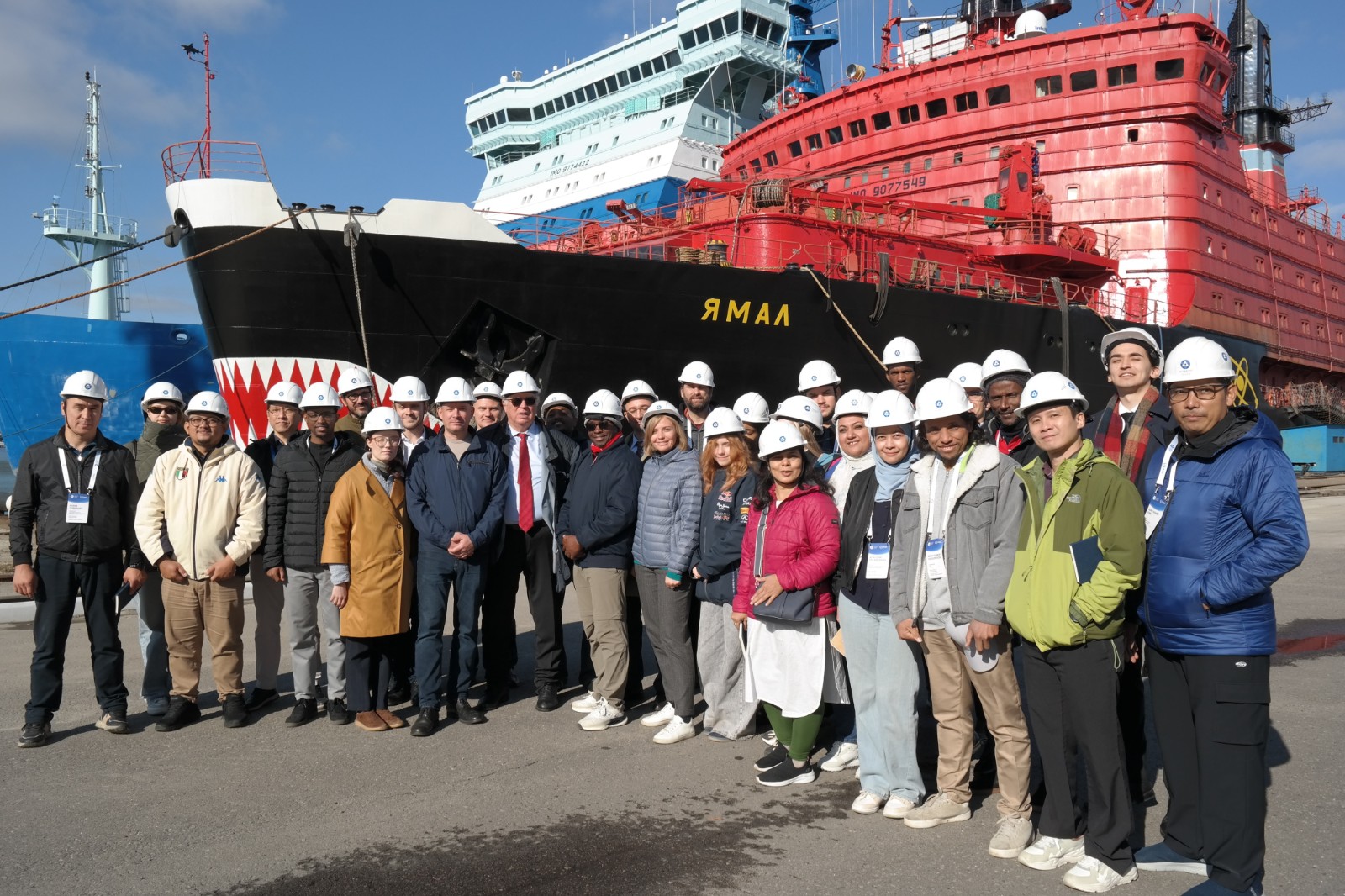
The five-day training brought together participants from Asia, Africa, the Middle East, and Latin America, including representatives from national nuclear energy agencies, regulatory bodies, and organizations interested in developing small nuclear power projects. Participants exchanged views on the current state of small modular reactor technology, readiness for engineering application, and deployment prospects.
The course highlighted Russia's operational experience with KLT-40S reactor and RITM series reactor technologies, as well as the actual operation of the “Akademik Lomonosov” floating nuclear power plant. Participants also received briefings on transportation, safety, and regulatory requirements for floating nuclear power units, and were introduced to the BREST-OD-300 reactor design.
During the training, the organizers also arranged for participants to visit the “Lenin” nuclear-powered icebreaker and the Rosatomflot base to learn about the operation of nuclear-powered vessels and related infrastructure.
Banyu Rizki Fazan, Head of Department at Indonesia's National Research and Innovation Agency (BRIN), stated that the course helped him gain a deeper understanding of Russia's experience in the development and operation of small modular reactors. Floating nuclear power is of practical relevance to Indonesia, and the knowledge gained from the course will contribute to the further advancement of the country's floating nuclear power projects.
Rosatom Technical Academy is an international multidisciplinary training institution for nuclear industry personnel. Since 2019, the Academy has served as an IAEA Collaborating Centre. In October 2024, the cooperation agreement was extended, making the Academy a centre for cooperation with the IAEA across five project areas. Over the years, the two parties have jointly organized more than 80 international events, attracting over 2,100 participants from multiple countries.
Disclaimer: Information republished from partner media, institutions or other websites is provided for reference and communication purposes only. It does not imply endorsement of its views or verification of its accuracy. Please contact us if any content infringes rights or requires correction.