
Russia's Leningrad Nuclear-Powered Icebreaker Electrical Distribution Equipment Passes Inspection
 Scan to share
The Nuclear-Powered Vessels Division of the Russian Maritime Register of Shipping (RS) has recently completed an inspection of the new electrical distribution equipment for the Project 22220 universal nuclear-powered icebreaker “Leningrad”. The inspected equipment includes shore power distribution panels and low-voltage distribution panels, manufactured by Novaya ERA company of St. Petersburg. The “Leningrad” is currently under construction at the Baltic Shipyard, part of the United Shipbuilding Corporation (USC).
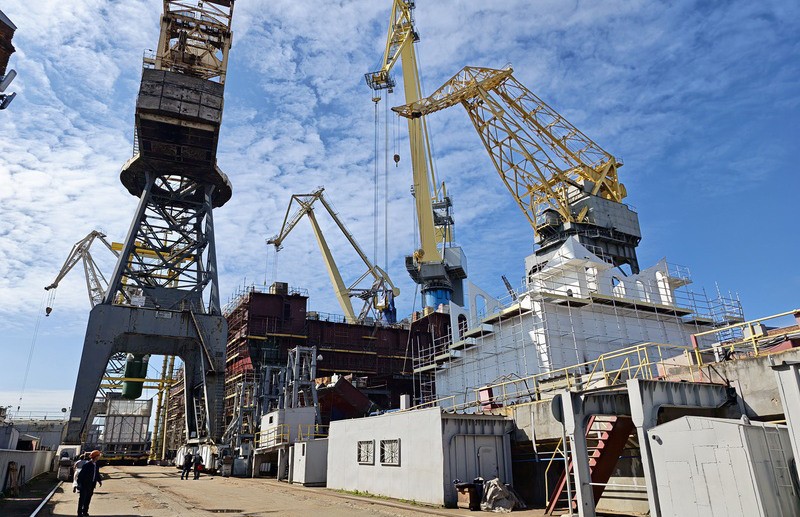
The inspection was carried out by RS survey engineers upon the enterprise's application. The inspection results confirmed that the relevant equipment meets the requirements of current Russian regulations, and the manufacturer has been issued the corresponding registration certificates.
The shore power distribution panel is used to connect to the shore power grid while the vessel is at anchor, ensuring a safe and reliable connection between the ship's electrical system and the external power source. The low-voltage distribution panel handles power distribution at low voltage levels, enabling safe and controlled operation of the ship's electrical system.
According to reports, the protective equipment manufactured by Novaya ERA can withstand impacts from external solid objects and prevent ingress of water drops falling vertically or at an angle of up to 15°. The equipment has a climate rating of OM4.1 and can operate in temperatures ranging from -40°C to +45°C, while also adapting to marine operating conditions such as salt spray, high humidity, and continuous vibration.
The Project 22220 nuclear-powered icebreaker is a key class of Russian nuclear-powered icebreakers currently in service and under construction, with the primary mission of ensuring year-round navigation in the western Arctic seas. The vessel has a shaft power of 60 MW, a speed of 22 knots in open water, an overall length of 173.3 meters, a beam of 34 meters, a maximum ice-breaking thickness of 3 meters, a full-load displacement of 33,540 tons, a design service life of 40 years, and a crew of 54.
The lead vessel of the series, the “Arktika”, was launched in 2016, and the “Sibir”, “Ural”, and “Yakutia” have since been completed. The “Chukotka”, “Leningrad”, and “Stalingrad” are still under construction at the Baltic Shipyard. A decision on whether to build two additional Project 22220 nuclear-powered icebreakers is expected to be made in 2026.
Disclaimer: Information republished from partner media, institutions or other websites is provided for reference and communication purposes only. It does not imply endorsement of its views or verification of its accuracy. Please contact us if any content infringes rights or requires correction.