
Canadian Indigenous-led Transportable Nuclear Power Plant Project Planned for Early 2030s Operation
 Scan to share
Pabineau First Nation, Eel River Bar First Nation, and Prodigy Clean Energy recently announced that they will advance an Indigenous-led new nuclear power project in Belledune, New Brunswick, Canada. Under the relevant exclusive agreements, the parties plan to deploy a full-size transportable nuclear power plant (TNPP) with a capacity of up to 50 megawatts within the traditional territories of Pabineau First Nation and Eel River Bar First Nation.
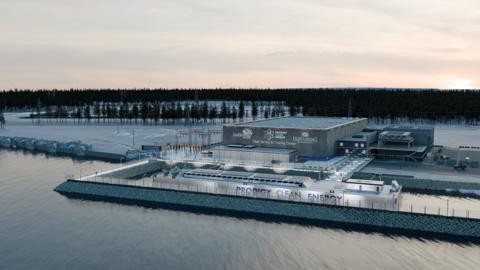
The pilot project, intended to be owned by the First Nations, is primarily aimed at validating the logistics organization and operational requirements of transportable nuclear power plants, and establishing a business model for future large-scale deployment of similar units in Canada's northern regions and international markets. The project is planned to enter service in the early 2030s. Based on peak generating capacity, the plant can provide clean baseload power sufficient to meet the electricity needs of up to approximately 40,000 households.
The Government of New Brunswick has signed a letter of intent committing to purchase electricity from the project and has notified Natural Resources Canada (NRCan) of its support for the project. The provincial government also plans to submit the project to the federal Major Projects Office (MPO) as an infrastructure project of national significance.
Prodigy Clean Energy's TNPP technology is independently developed in Canada and is designed to integrate micro-reactors and small modular reactors into modular plant infrastructure. The facility is not tied to a specific reactor type, can be configured with different power outputs based on demand, and can be deployed at coastal or land-based sites.
According to the project developers, the TNPP can be factory-fabricated, transported, and installed, achieving deployment capability within approximately 18 months, providing clean, reliable power to northern ports, communities, defense facilities, and critical mineral operations. Once delivered to the site in an assembled state, fueling and commissioning can proceed. Its design also supports complete removal and centralized decommissioning after the end of its operational life, reducing remote construction risks, capital expenditures, and environmental impact.
In addition to deploying commercial power generation facilities, the proposed project will include a supporting campus in Belledune, featuring a centralized operations and maintenance center and an Indigenous energy innovation visitor center. The operations and maintenance center will be used to monitor and maintain TNPP units deployed in northern regions in the future and to train plant personnel. The project developers estimate that the site preparation phase will create more than 150 jobs, and the completed plant will provide 40 long-term positions.
Chief Terry Richardson of Pabineau First Nation stated that the project will combine clean baseload energy technology with Indigenous ownership and economic participation, providing a replicable model for transportable nuclear power infrastructure deployment in Canada's northern and Arctic regions. Chief Chris George of Eel River Bar First Nation stated that the project will proceed through public engagement and key licensing milestones in the future.
Mathias Trojer, President and Chief Executive Officer of Prodigy Clean Energy, stated that for micro-reactors and transportable nuclear power plants to enter the energy systems of Canada's northern and Arctic regions, a commercially operating plant must first be established south of the 60th parallel north, in an area with a mature nuclear regulatory foundation.
Strategic project partner BWXT Canada Ltd. and BWXT subsidiary Kinectrics Inc. will provide support for licensing efforts and supply chain development.
In the coming months, the project team will establish a project sponsor joint venture organization and initiate key work such as site selection and site characterization analysis, in preparation for applying for a site preparation license. The parties will also identify a reactor technology capable of achieving commercial power generation by 2032 and will identify a qualified nuclear operating organization, namely the facility license holder, during the early project planning phase. The project target is to reach a final investment decision within 18 months.
Disclaimer: Information republished from partner media, institutions or other websites is provided for reference and communication purposes only. It does not imply endorsement of its views or verification of its accuracy. Please contact us if any content infringes rights or requires correction.