
Cameco says it can ramp up core uranium asset production when demand recovers
 Scan to share
Canadian uranium producer Cameco has said it is well positioned to respond to rising market demand, and will prioritize increasing output from its core assets if demand becomes clearer.
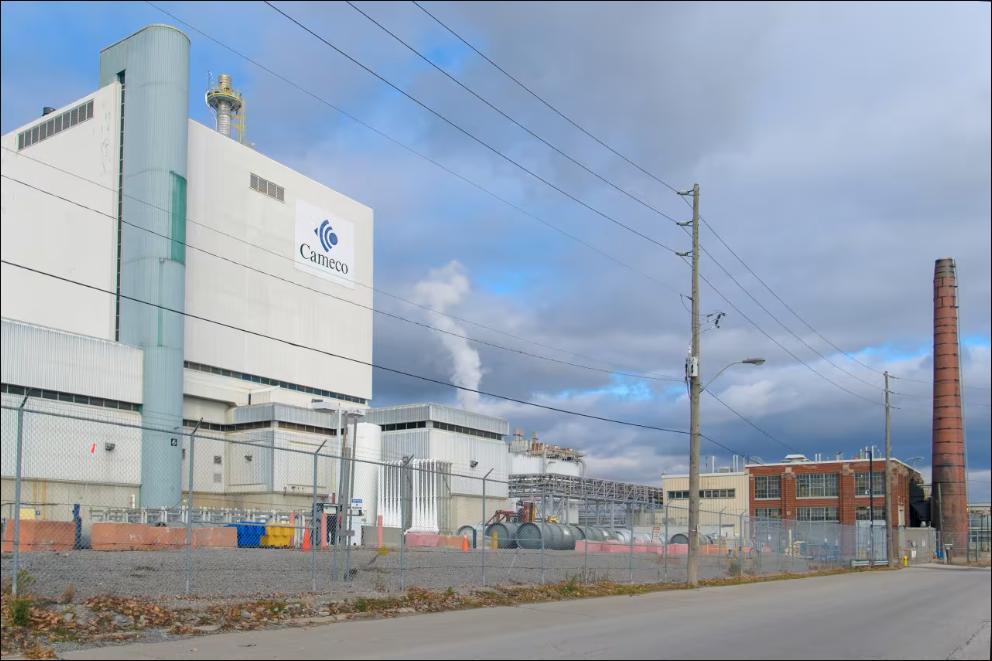
Grant Isaac, Cameco's President and Chief Operating Officer, said on a company podcast discussing long-term strategy that Cameco remains committed to supply discipline, focusing on meeting customers' actual needs rather than setting overly ambitious growth expectations in the absence of confirmed demand.
Isaac said the company is prepared to increase production from Tier 1 assets such as the McArthur River uranium mine and the Key Lake mill when market demand rises, lifting output from the current approximately 10 million to 11.5 million pounds of U3O8 to 25 million pounds. Cameco's full-year production guidance for this year is 19.5 million to 21.5 million pounds of U3O8, and although the Cigar Lake mine was previously affected by flooding, the related disruptions have been resolved.
He said the company is preserving optionality for future demand changes, including investing in sustaining and replacement capital expenditures at assets such as McArthur River and Key Lake, so that it is positioned to ramp up production when demand actually materializes. Isaac also stressed that demand has not yet increased significantly, so the company remains cautious, but the relevant assets already have a foundation for action.
In terms of resource positioning, Isaac said Cameco holds the largest exploration land package in the Athabasca Basin, with most of it located around existing infrastructure. The company has decided to extend the life of the Cigar Lake mine and can further expand production at the McArthur River mine.
He also noted that Cameco jointly holds the Inkai joint venture in Kazakhstan with Kazatomprom. If more demand emerges in the market, both parties would support increasing production from that project.
Beyond Tier 1 assets, Cameco regards Tier 2 assets such as the Rabbit Lake mine and mill and U.S. domestic mines as projects "waiting for the market to return." Isaac said these projects primarily involve restarting existing site assets, which entail relatively lower difficulty and shorter timelines compared to new greenfield projects. Only after Tier 2 assets resume operations would the company consider further plans, including developing new greenfield mines near existing milling infrastructure. He noted that the critical path in uranium mine development often lies with the mill.
Cameco is also monitoring the project being advanced by Global Laser Enrichment (GLE) in the United States. That project focuses on depleted uranium hexafluoride tails, re-enriching them to natural uranium hexafluoride equivalence. Isaac described it as equivalent to "a uranium mine producing 4 million to 5 million pounds per year," except that it more closely resembles a 2,000-tonne-class conversion facility already sitting above ground.
Global Laser Enrichment is 51% owned by Silex Systems and 49% owned by Cameco. The company is advancing the commercialization of the technology for producing nuclear fuel for commercial nuclear power plants. Under the plan, GLE would re-enrich approximately 200,000 tonnes of U.S. Department of Energy depleted uranium hexafluoride tails at the proposed Paducah facility in Kentucky, using Silex technology to enrich the material to levels suitable for nuclear reactor fuel production, including fuel for next-generation nuclear units. Depleted uranium hexafluoride tails are a byproduct of the uranium enrichment process.
Disclaimer: Information republished from partner media, institutions or other websites is provided for reference and communication purposes only. It does not imply endorsement of its views or verification of its accuracy. Please contact us if any content infringes rights or requires correction.