
UK PhD Students Travel to Canadian Nuclear Laboratories for Hands-On Nuclear Energy Training
 Scan to share
On August 10, 2026, Canadian Nuclear Laboratories (CNL) welcomed its first cohort of PhD students from the United Kingdom. The visit is part of a five-year collaboration with the UK's "Skills and Training Alliance for a Nuclear Renaissance" Centre for Doctoral Training (SATURN CDT), marking the launch of a new long-term partnership in the international development of nuclear energy talent.
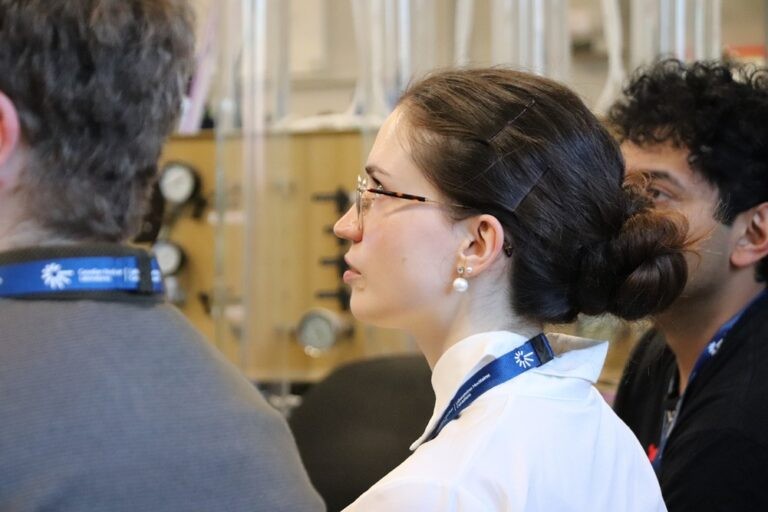
SATURN CDT is funded by the UK's Engineering and Physical Sciences Research Council (EPSRC) and led by the University of Manchester, in partnership with seven UK universities. The program aims to provide the next generation of nuclear energy professionals with hands-on training beyond the classroom, giving students exposure to real-world research environments, engineering facilities, and industry needs.
A total of six UK PhD students traveled to Canada for a two-week experiential learning program, with training sites including CNL's Chalk River Laboratories and McMaster University. Under the collaboration arrangement, CNL will deliver relevant training services through the upcoming Canadian Nuclear Learning Centre (CNLC), with plans to host up to two cohorts of SATURN CDT students per year for immersive courses in Canada.
Gina Strati, CNL's Director of Academic Partnerships, stated that this collaboration is not a one-time visit but the beginning of a long-term international partnership, further strengthening CNL's role as a platform for nuclear learning and innovation.
During their time in Canada, students gained a systematic understanding of Canada's nuclear technology landscape, including CANDU heavy-water reactors, small modular reactors and micro modular reactors, large hot cells, hybrid energy systems, environmental monitoring, space radiation effects, and long-term waste management strategies. The students also toured the fuel and materials hot cell facilities at Chalk River Laboratories and participated in demonstrations involving the ZED-2 research reactor.
Professor Molik Patel from the University of Liverpool accompanied the students on the visit. He noted that international visits help students build professional connections, broaden their research perspectives, and gain access to research conditions that complement existing UK facilities and capabilities.
Rebecca Bates, a PhD student from the University of Sheffield participating in the training, said the visit gave her a direct appreciation that research happens not only in universities but also extensively in industry. Bates' current research focuses on the recycling of radioactive concrete and steel during nuclear power plant decommissioning, with the goal of reducing carbon emissions associated with the production of these materials.
Another PhD student, Lucy Rudd, noted that CNL's processes in decommissioning and waste management are closely aligned with her research direction, making the relevant courses and site visits directly valuable to her work.
The SATURN CDT program aims to cultivate the skills and expertise needed to support the UK's nuclear energy industry. The program also focuses on the global trend of multiple countries expanding nuclear capacity and driving the transition to net-zero emissions. Through partnerships with international research institutions and nuclear organizations, students are able to compare regulatory frameworks, reactor technologies, fuel cycles, and nuclear science and engineering approaches across different countries.
CNL stated that this collaboration helps deepen its connections with UK and European universities and research institutions, while also demonstrating its capability to deliver systematic, high-level nuclear training. As the program progresses, both parties plan to continue expanding the curriculum, with some training sessions to be delivered on university campuses in the future.
Disclaimer: Information republished from partner media, institutions or other websites is provided for reference and communication purposes only. It does not imply endorsement of its views or verification of its accuracy. Please contact us if any content infringes rights or requires correction.