
Iowa Releases Final Report of Nuclear Energy Task Force
 Scan to share
Iowa Governor Kim Reynolds announced on September 3 that the Iowa Nuclear Energy Task Force has completed its final report. The task force was established in January of this year under Executive Order No. 17, with the mission of assessing opportunities for advancing nuclear energy technology and related infrastructure development in Iowa.
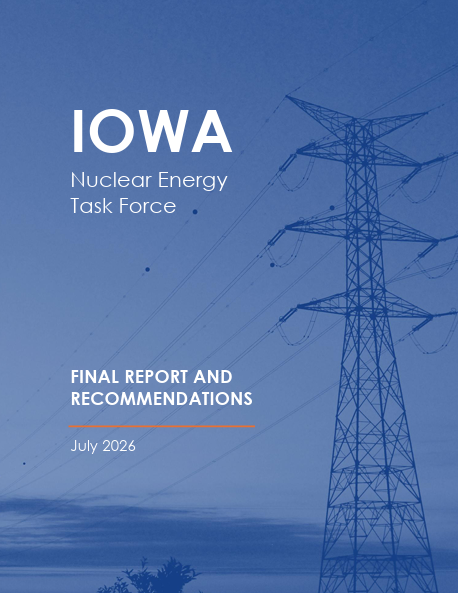
The task force is composed of representatives from utility companies, power generators, local governments, academia, the Iowa Utilities Commission, industry associations, national laboratories, and the state legislature, and is supported by the Energy Office of the Iowa Economic Development Authority. The report concludes that, against the backdrop of continued growth in electricity demand, nuclear energy can provide a stable and reliable source of electricity for Iowa and help support economic growth.
Over a five-month period, the task force held seven meetings, focusing on Iowa's positioning within the advanced nuclear energy ecosystem, potential collaboration with the federal government, emerging nuclear technologies, regulatory considerations, workforce and education needs, supply chain opportunities, spent fuel management, and the potential of nuclear energy to promote local economic development.
The report notes that Iowa possesses the foundational conditions for participating in the development of the nuclear energy industry, including experience in deploying new energy technologies, a manufacturing base, workforce capabilities, and progress on nuclear-related projects. Among these, the restart of the Duane Arnold Energy Center near Palo is identified as an important component of the state's nuclear energy landscape.
W. Mark Nutt, chair of the Iowa Nuclear Energy Task Force, stated that as energy demand grows in Iowa, the Midwest region, and across the nation, nuclear energy has the potential to provide stable and reliable electricity. He believes that Iowa's foundation in education, trade, manufacturing, and workforce gives the state an advantage in participating in the development of the nuclear energy industry.
The final report puts forward nine recommendations, including establishing a single point of contact for nuclear energy development at the state level, conducting a statewide nuclear energy feasibility study, studying incentive measures to support the nuclear energy supply chain, advancing state-level policy adjustments favorable to nuclear reactor investment, establishing a community-oriented "nuclear readiness" support program, improving nuclear-related workforce development pathways, strengthening coordination with the federal government on policies and incentives, assessing the state government's role in spent fuel management, and promoting Iowa projects in pursuit of federal funding support.
The task force also noted that deploying advanced nuclear reactors in Iowa will involve multiple factors including technical, commercial, regulatory, community acceptance, and workforce considerations, making the process relatively complex. The report concludes that sustained leadership, coordination, and engagement from the state government will be important conditions for the smooth advancement of related projects.
Disclaimer: Information republished from partner media, institutions or other websites is provided for reference and communication purposes only. It does not imply endorsement of its views or verification of its accuracy. Please contact us if any content infringes rights or requires correction.