
Concrete Placement Completed for Turbine Foundation Base Slab of Unit 5 Conventional Island at Ningde Nuclear Power Phase II
 Scan to share
At 13:09 on September 2, the large-volume concrete placement for the turbine foundation base slab at elevation +15.95 meters in the conventional island building of Unit 5 of the Ningde Nuclear Power Project Phase II was completed. The placement lasted approximately 46 hours, marking phased progress in the main civil construction of the conventional island for this unit and creating conditions for subsequent installation of turbine-generator equipment.
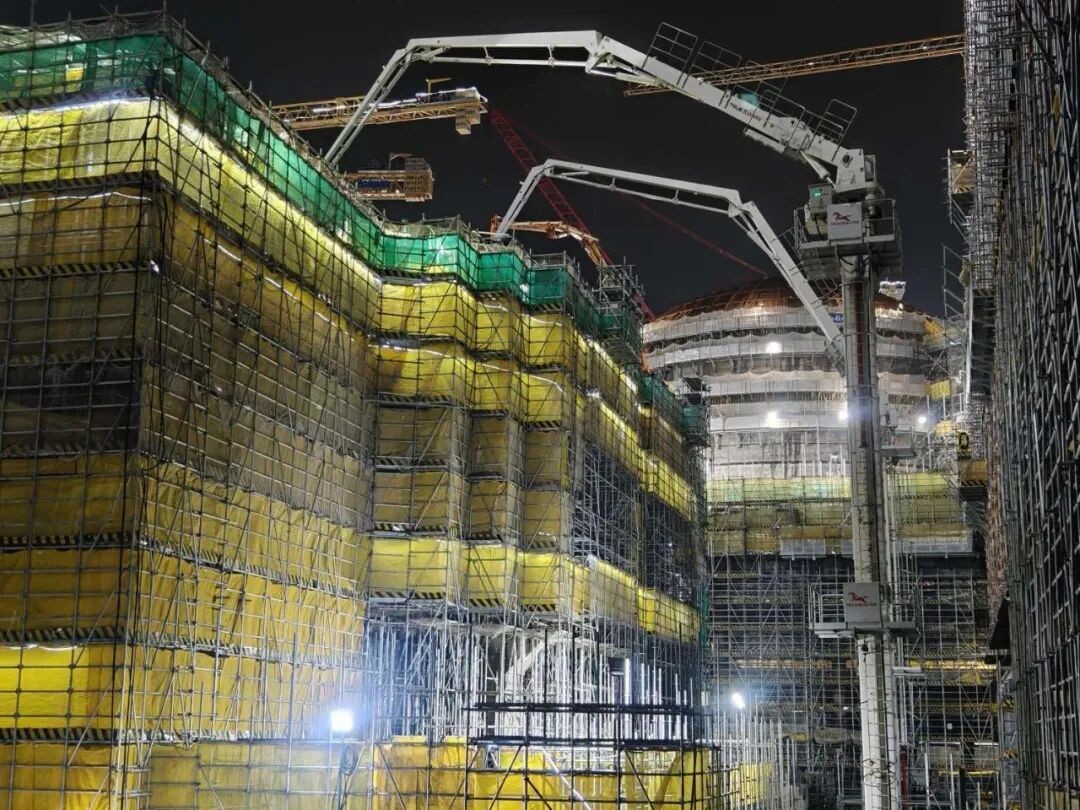
The placement commenced at 15:37 on August 31 and was carried out in a single continuous pour, with a cumulative concrete volume of 2,456 cubic meters. The turbine foundation base slab is a critical load-bearing structure in the conventional island of a nuclear power plant, supporting the loads of the turbine-generator unit and auxiliary equipment. It demands high structural precision, construction quality, and overall stability, and its forming quality will affect subsequent equipment installation accuracy and unit operational reliability.
The base slab for this placement was at elevation +15.95 meters, constituting high-altitude large-volume concrete work. The construction process imposed stringent requirements on formwork system stability, embedded part installation accuracy, concrete temperature control and crack prevention, and continuous placement organization.
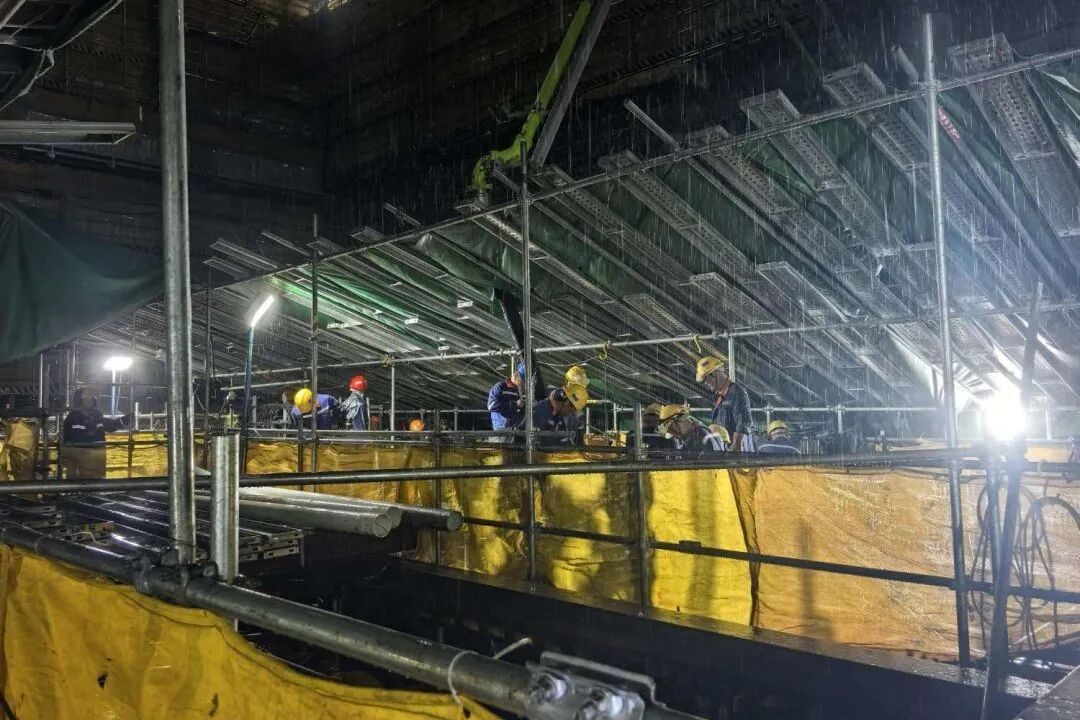
During the placement, the site experienced prolonged rainfall totaling 31 hours, including heavy rain and torrential downpour conditions. The rainfall increased safety risks for high-altitude work and affected concrete mixing quality, on-site drainage, formwork water accumulation treatment, and protection of the placement surface. As large-volume concrete placement must proceed continuously, on-site personnel rotation, equipment maintenance, material supply, safety control, and quality monitoring all required synchronized support.
To address the impact of rainy-day construction, the project site activated special safeguard measures with 24-hour duty leadership. A total of 443 participating management and construction personnel worked in rotating shifts, implementing measures such as rainproof covering of raw materials, drainage clearance at the construction site, and rain protection of the placement surface to mitigate the impact of rainfall on concrete forming quality.
During construction, technical and surveying personnel conducted continuous monitoring and recording of formwork displacement, support system stability, and positions of embedded sleeves and equipment embedments, promptly addressing on-site deviation risks to ensure that the formwork system, embedded part positions, and structural dimensions met construction requirements.
Disclaimer: Information republished from partner media, institutions or other websites is provided for reference and communication purposes only. It does not imply endorsement of its views or verification of its accuracy. Please contact us if any content infringes rights or requires correction.