
Grid Connection of Unit 1 at Bangladesh's Rooppur Nuclear Power Plant Delayed Again
 Scan to share
The grid connection of Unit 1 at Bangladesh's Rooppur Nuclear Power Plant has been delayed once again. Fakir Mahbub Anam, Bangladesh's Minister of Science and Technology, stated that two critical safety valves of the unit exposed technical faults during testing, and the next phase of testing cannot be initiated for the time being. A specific timeline for troubleshooting and grid connection of the unit has yet to be determined.
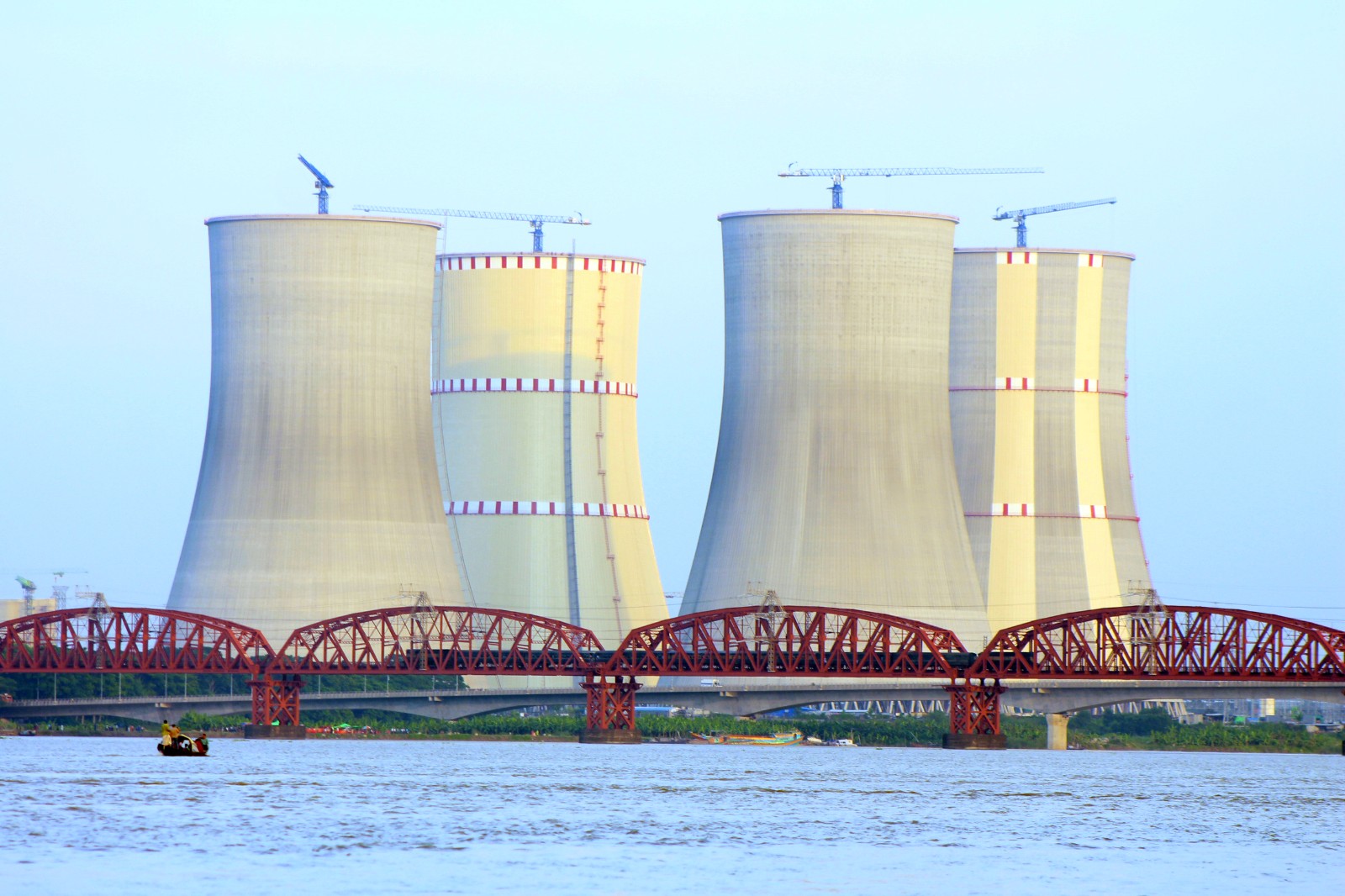
Located in the Pabna region of Bangladesh, the Rooppur Nuclear Power Plant is being constructed with financing and technical support from Russia, with plans for two VVER-1200 units totaling approximately 2,400 megawatts of installed capacity. On April 28 this year, the unit commenced fuel loading preparation and testing work, when the project party had anticipated achieving power delivery to the national grid within 4 to 6 months.
According to project updates, Unit 1 has completed over 90 tests, with Phase B testing concluded. However, as two safety valves failed to meet requirements, Phase C testing cannot proceed. Bangladesh's atomic energy regulatory authority will only approve the unit to enter the trial power generation stage after all test results meet the required standards.
The faulty components are pilot-operated relief valves in the reactor safety protection system. These valves are designed to automatically open when pressure in the primary cooling system rises abnormally, releasing excess pressure to reduce the risk of damage to equipment and piping. Relevant data indicates that when the reactor temperature reaches approximately 280 to 300 degrees Celsius and pressure exceeds the setpoint, the valves should actuate automatically as designed.
The project party stated that an expert team from Russia will visit the site to investigate the cause of the valve malfunction. The general designer of Russia's State Atomic Energy Corporation (Rosatom) is also participating in the relevant technical assessment. Preliminary assessments suggest that the two faulty valves may need to be replaced. Current options include transferring valves originally planned for Unit 2 to Unit 1, or requesting the Russian supplier to remanufacture and deliver new valves as soon as possible. Anam stated that the faster implementation option will ultimately be selected.
It is understood that the manufacturing and delivery cycle for such precision safety valves is relatively long, typically requiring 6 to 8 months, and in some cases even longer. The equipment was originally planned to be produced in Ukraine, but production was interrupted due to the Russia-Ukraine conflict, and procurement was subsequently shifted to Turkey.
Even after the safety valve issue is resolved, Unit 1 still needs to complete several critical steps, including criticality testing and grid synchronization. Only after systems such as the safety valves operate normally can the reactor initiate the fission reaction. Subsequently, at least another 8 to 10 weeks will be required before the unit can enter trial power generation and deliver electricity to the grid. After commissioning, trial production and various verification tests will continue for several more months.
Two officials from the Bangladesh Atomic Energy Commission, who spoke on condition of anonymity, indicated that based on current progress, the likelihood of Unit 1 at the Rooppur Nuclear Power Plant beginning power generation within this year has diminished.
Once both units of the Rooppur Nuclear Power Plant are fully operational, they will add approximately 2,400 megawatts of electricity to Bangladesh's national grid. Bangladesh's current power supply remains under pressure, and the plant's operation is expected to alleviate power shortages and reduce pressure on natural gas and liquid fuel supplies.
According to earlier plans, Unit 1 of the Rooppur Nuclear Power Plant was originally scheduled for commissioning in December 2022, and Unit 2 in October 2023. Due to factors such as the COVID-19 pandemic and supply chain changes, the project schedule has been adjusted multiple times. The current safety valve malfunction further adds uncertainty to the grid connection timeline for Unit 1.
Disclaimer: Information republished from partner media, institutions or other websites is provided for reference and communication purposes only. It does not imply endorsement of its views or verification of its accuracy. Please contact us if any content infringes rights or requires correction.