
Bangladesh Reaffirms Commitment to Peaceful Uses of Nuclear Technology
 Scan to share
Minister of Science and Technology Fakir·Mahbub·Anam recently attended the 70th General Conference of the International Atomic Energy Agency (IAEA) on behalf of Bangladesh, where he reaffirmed Bangladesh's firm commitment to the peaceful uses of nuclear technology and its dedication to the highest safety standards and strengthened international cooperation. This statement highlights Bangladesh's increasingly important position and sense of responsibility in the field of nuclear technology.
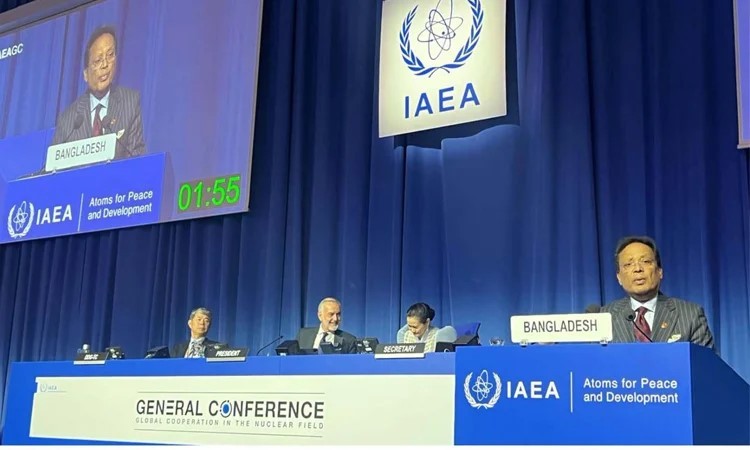
In a statement by the delegation in Vienna, Bangladeshi Prime Minister Tarique·Rahman expressed congratulations to the President of the IAEA General Conference, and also expressed gratitude to IAEA Director General Rafael·Mariano·Grossi for his outstanding role in promoting the peaceful uses of nuclear technology and international cooperation. This public recognition demonstrates Bangladesh's full acknowledgment and high appreciation of the work of the IAEA.
Over the past fifty years, Bangladesh has benefited from the IAEA's technical cooperation programs, which have covered multiple key areas including health, agriculture, food, water resource management, industry, and energy. These cooperation projects have effectively promoted Bangladesh's economic and social development and laid a solid foundation in various fields.
Recently, Bangladesh signed the 2026-2032 Country Programme Framework (CPF) with the International Atomic Energy Agency, heralding new opportunities in the field of technical cooperation in the coming years. This framework agreement will provide Bangladesh with broader international support and promote innovation and development in its application of nuclear technology.
The Rooppur Nuclear Power Plant (RNPP) was hailed by the Minister of Science and Technology as a historic milestone for Bangladesh's energy security. By loading fuel into Unit 1, the country has made significant progress in achieving carbon-free power generation, which is expected to meet growing electricity demand, ensure energy security, and effectively address the challenges of climate change.
Bangladesh's firm stance on nuclear safety issues is reflected in its becoming the first country in South Asia to accede to the Joint Convention on the Safety of Spent Fuel Management and the Joint Convention on the Safety of Radioactive Waste Management. This move clearly demonstrates the country's commitment to a safe and responsible nuclear program and its active assumption of international responsibilities.
The Minister of Science and Technology emphasized the importance of continuing to ensure nuclear safety, security, and responsible management in accordance with the highest international standards. This is not merely a technical requirement, but also a manifestation of responsibility to the nation and society, aimed at minimizing potential risks.
He stated that the benefits of science and technology should be tangibly felt by the people, and that the application of nuclear technology should not be limited to technological progress itself, but should also serve the needs of improving people's quality of life, enhancing climate resilience, increasing food and agricultural productivity, and expanding healthcare services.
In the area of cancer treatment, the Minister of Science and Technology particularly emphasized strengthening cooperation under the IAEA's “Rays of Hope” initiative to expand the coverage of cancer treatment. This initiative aims to enable more patients to access advanced medical technologies and resources, contributing to the improvement of public health.
In addition, creating new opportunities for young researchers and scientists, encouraging research and innovation, and leveraging international cooperation to build knowledge and technical capacity have always been priorities for Bangladesh. Bangladesh deeply recognizes the importance of talent and is actively committed to cultivating future innovative forces.
Disclaimer: Information republished from partner media, institutions or other websites is provided for reference and communication purposes only. It does not imply endorsement of its views or verification of its accuracy. Please contact us if any content infringes rights or requires correction.