
China officially promotes Hualong One 2.0 Gen-III+ nuclear power technology to the global market
 Scan to share
Nine key safety indicators of the Hualong One 2.0 Gen-III+ nuclear power technology have been significantly improved, the number of cabinets in the new-generation "Harmony System" has been reduced by approximately 40%, and the world's first 8.6-meter-aperture solar thermal collector, "Yuanyao-1," can achieve a photoelectric efficiency of 17%... These were the highlights reported by this journalist at the CGN 2026 Sustainable Development Conference held in Shenzhen on September 7. At the conference, CGN officially released the "2025 CGN Sustainable Development Report," and simultaneously launched its global responsibility brand, the "CGN Firefly Plan."
As the APEC Economic Leaders' Meeting draws near, Shenzhen is becoming the focus of Asia-Pacific attention. On September 7, CGN, headquartered in Shenzhen, hosted a sustainable development conference themed "Green Energy Illuminating Mountains and Seas, Joining Hands to Create the Future," presenting to think tanks, media, and other stakeholders from APEC member economies and countries jointly building the "Belt and Road" a panorama of China's clean energy development and the latest progress in its "going global" efforts.
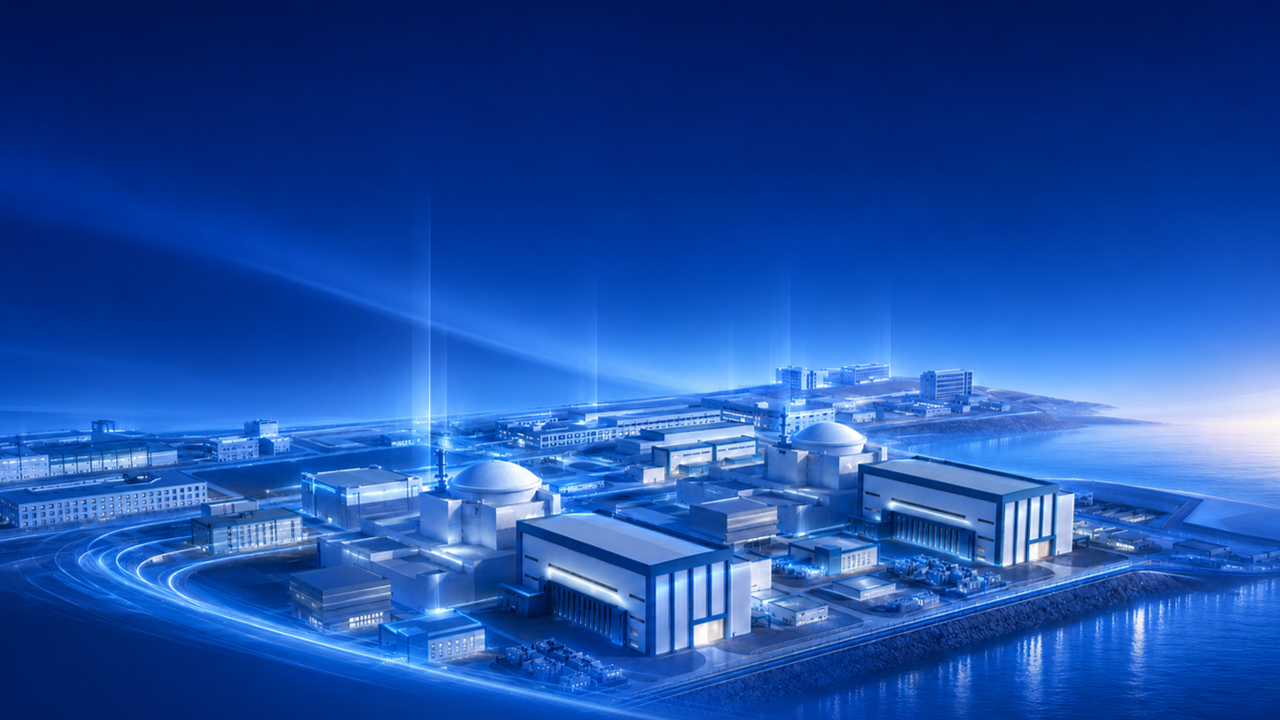
Design rendering of Hualong One 2.0
Automated operation ratio of China's Gen-III+ nuclear power units increases by 66%
In 1978, the Third Plenary Session of the 11th Central Committee of the Communist Party of China was held, establishing the fundamental national policy of reform and opening up. Comrade Deng Xiaoping personally made the decision to introduce two million-kilowatt-class nuclear power units from France. The equipment for these two nuclear power stations was ultimately sited on the shores of Daya Bay in Shenzhen, marking the launch of China's first large-scale commercial nuclear power station—Daya Bay Nuclear Power Station—from which CGN originated.
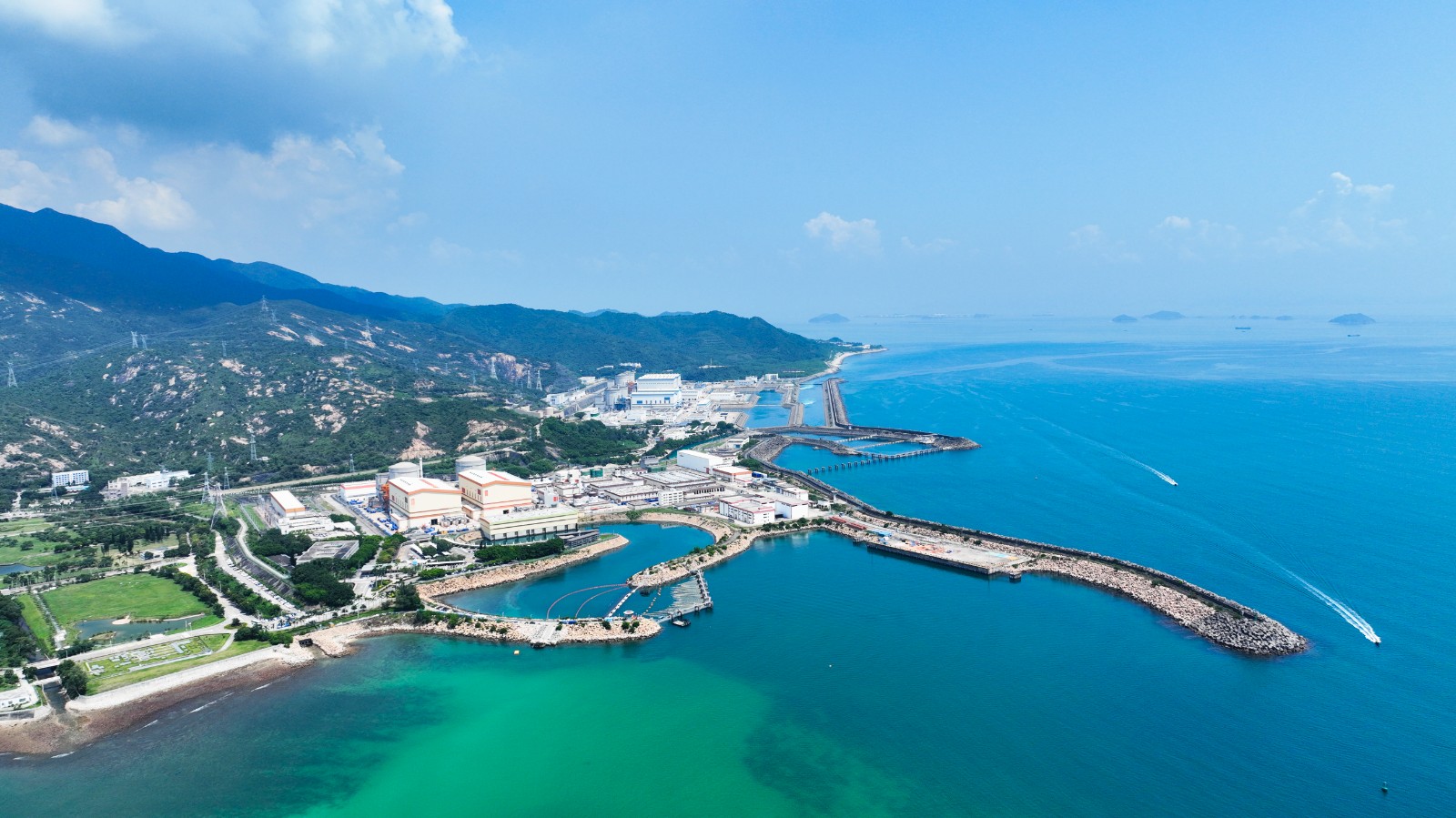
CGN Guangdong Daya Bay Nuclear Power Base
At the conference site, Daya Bay Nuclear Power, a "local star" of Shenzhen, officially made its debut as a corporate brand. From a localization rate of less than 1% at Daya Bay Nuclear Power Station to 64% at Ling'ao Phase II, and the formation of China's independent nuclear power brand CPR1000, Daya Bay Nuclear Power serves as a microcosm of China's nuclear power development, charting a path of leapfrog progress through "introduction, digestion, absorption, and re-innovation." The base has accumulated over 144 reactor-years of safe operation, with cumulative on-grid electricity exceeding 1 trillion kWh. It has continuously supplied power to Hong Kong for 32 years, delivering over 330 billion kWh—accounting for one-quarter of Hong Kong's total electricity consumption. Over the decades, the Daya Bay Nuclear Power Base has achieved highly reliable operational performance, with Unit 1 of Ling'ao Nuclear Power Station operating safely and stably for over 7,200 consecutive days, continuously setting new international records for safe operation among similar reactor types.
Leveraging the innovative talent, resources, and nuclear power construction and operation experience accumulated through CPR1000 projects, CGN successfully launched Hualong One, China's third-generation nuclear power technology with independent intellectual property rights, competing on equal footing with mainstream international nuclear power technologies. To date, 10 Hualong One units are in commercial operation both domestically and internationally, with another 37 units approved and under construction, making the total number of units firmly ranked first globally among Gen-III nuclear power units. Its maturity has been validated through large-scale, batch construction and operation.
Building on this foundation, CGN, together with industry partners, completed nearly a hundred design optimizations and iteratively launched the Hualong One 2.0 Gen-III+ advanced nuclear power technology. On July 31, the State Council executive meeting approved 8 nuclear power units, among which CGN's Guangdong Taipingling Nuclear Power Phase III was designated as the Hualong One 2.0 demonstration project. Currently, procurement contracts for main equipment such as steam generators for this project are being signed successively, and preliminary production preparations are progressing steadily.
As the most significant technology release at this conference, Hualong One 2.0 was presented to the global market for the first time. Niu Wenhua, chief expert of Hualong One 2.0, stated during the presentation: "This is not a brand-new technology developed from scratch, but a systematic enhancement of efficiency and quality based on mature designs, achieving comprehensive upgrades across five dimensions: safety, schedule, cost, operation and maintenance, and environmental protection."
Niu Wenhua stated that Hualong One 2.0, building on the original defense-in-depth safety system, has comprehensively optimized 14 safety features, with 9 key safety indicators significantly improved. It enables operators to take no action for 72 hours after an accident and achieves 7-day accident autonomy. The configuration of auxiliary systems has been fully simplified, with pipeline length reduced by approximately 31%, process valves reduced by about 25%, nuclear island building volume reduced by 21%, and nuclear island installation volume reduced by approximately 33%. The automated operation ratio of units has increased by 66%, with more precise system regulation and faster response, and key equipment possesses 100% localization capability.
"Since its inception, CGN has naturally carried the genes of openness and innovation in its bloodline," said Pang Songtao, Deputy Secretary of the Party Committee and General Manager of China General Nuclear Power Group. He explained that after more than four decades of development, CGN's business has expanded from nuclear energy to nuclear fuel, new energy, nuclear technology applications, digital technology, and other "6+1" industry segments. Its total installed capacity of clean energy has surpassed 110 million kilowatts, with cumulative on-grid electricity exceeding 3.8 trillion kWh, and business operations spanning 21 countries and regions worldwide.
New-generation "Harmony System" reduces instrumentation and control operation and maintenance workload by approximately 50%
At the conference, in addition to Hualong One 2.0, CGN also showcased a range of hardcore scientific and technological innovation achievements.
Concentrated solar power (CSP) generation collects the heat of sunlight, functioning like a "giant thermal power bank." It combines the dual functions of power generation and energy storage, enabling 24-hour continuous and stable power supply with excellent peak-shaving, frequency-regulation, and voltage-stabilization capabilities. The "Yuanyao-1," the world's first 8.6-meter-aperture solar thermal molten-salt trough collector independently developed by CGN, has a single-loop heat collection area of 5,970 square meters—equivalent to 14 basketball courts. Compared to traditional 5.7-meter-aperture products, its heat collection area has increased by approximately 83%, land occupation reduced by 19%, and the operating temperature range raised by 172 degrees Celsius. As certified by a third-party CNAS-accredited institution, the collector's design-point photothermal efficiency exceeds 70%. As the large-scale application project of "Yuanyao-1," CGN's Golmud 350,000-kilowatt CSP project officially commenced construction in June this year, expected to drive continuous technological upgrades and capacity expansion for hundreds of upstream and downstream industry chain enterprises, including reflector, heat collection tube, molten-salt pump and valve, and high-temperature material manufacturers. It is reported that CGN's current CSP projects in operation and under construction total 900,000 kilowatts, ranking first in China.
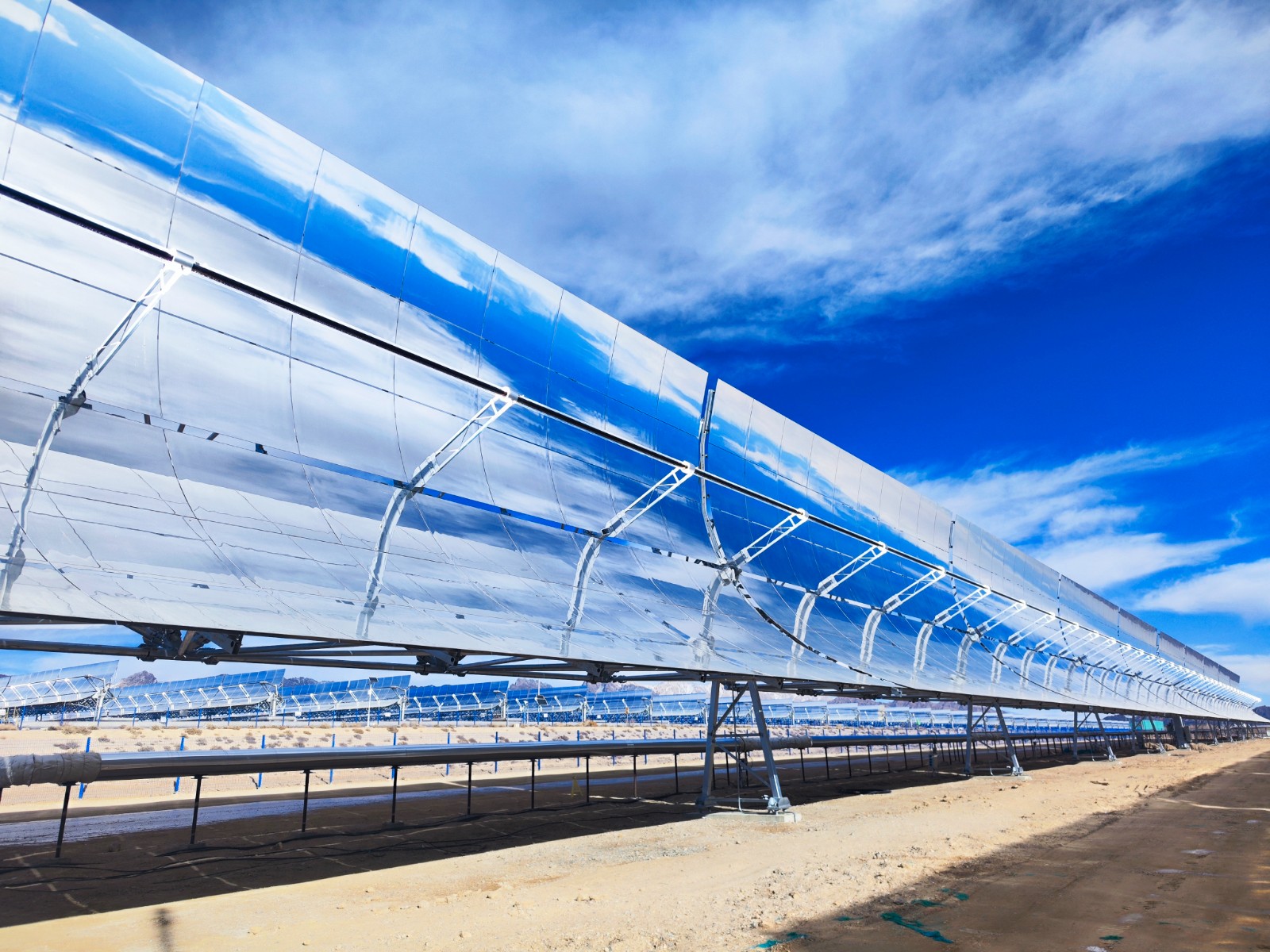
CGN "Yuanyao-1" solar thermal molten-salt trough collector
Cancer treatment has always been a worldwide challenge. Proton therapy is one of the most advanced and mature radiotherapy technologies in the world today, capable of ensuring that the energy of ray particles is only released upon entering tumor cells, achieving "precision demolition" of cancer cells. The homologous products of CGN's Hezhi proton therapy system have served over 170,000 patients globally. The system is equipped with leading technologies including the industry's smallest 3-mm beam spot size and a 360° full-range rotating gantry. A single accelerator can be configured with 1 to 5 treatment rooms as needed, with a designed service life exceeding 25 years. It can be expanded in phases according to hospital requirements, effectively lowering the threshold for proton center investment and construction. Currently, CGN has established a manufacturing base in Sichuan with complete machine manufacturing capabilities, with multiple sets of equipment already produced. It has also formed an innovation consortium with over 70 industry chain partners. In August this year, CGN partnered with West China Hospital of Sichuan University to launch joint research on arc therapy and adaptive therapy for protons, driving proton therapy toward greater intelligence and precision.
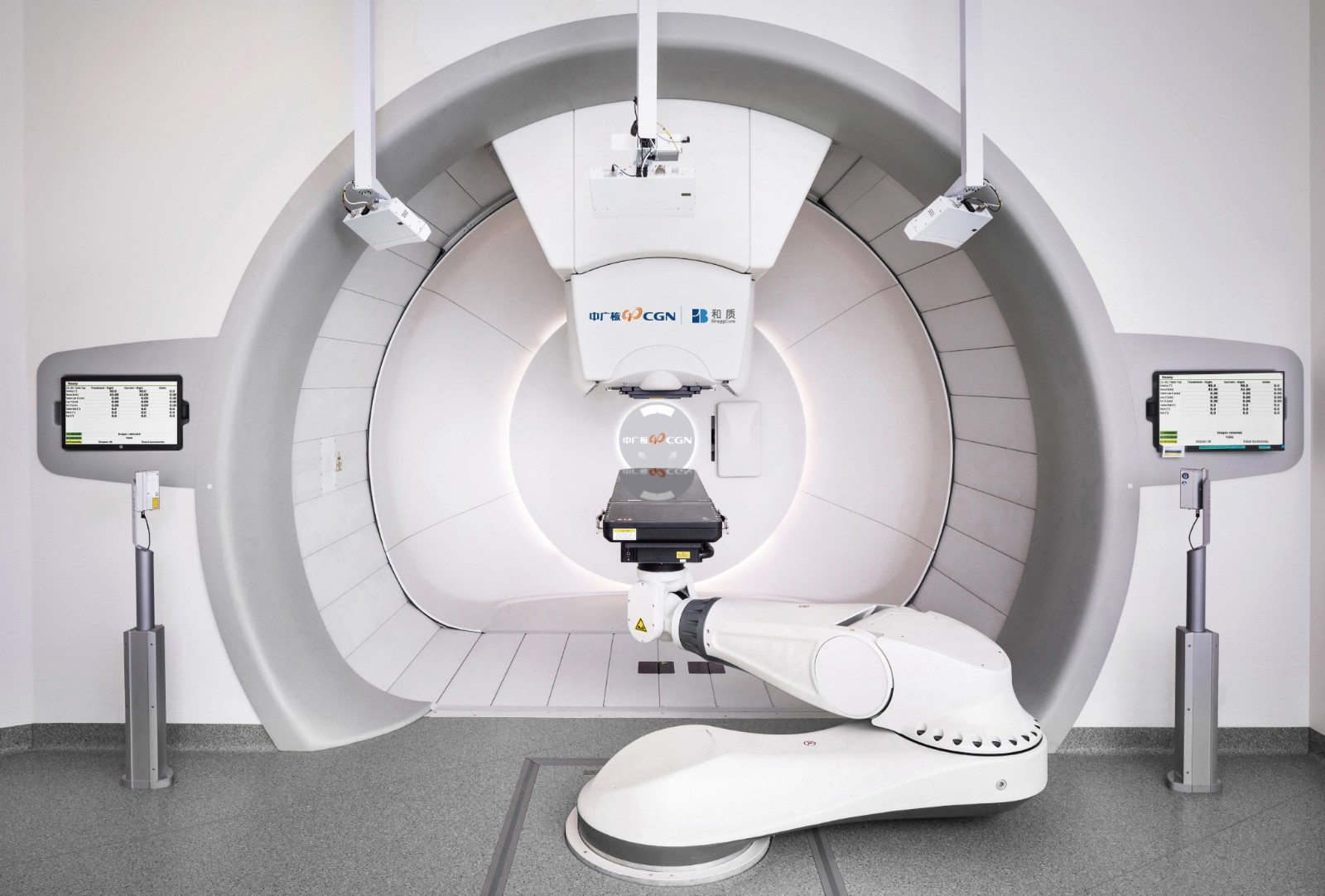
CGN Hezhi proton therapy system
The "Harmony System" is China's first independently developed nuclear-grade digital instrumentation and control system, known as the "neural center" and "brain" of nuclear power plants. Hundreds of systems, tens of thousands of devices, and 26,000 signals within a nuclear power plant are all sensed, monitored, and commanded by it, and it can ensure safe reactor shutdown in critical situations. CGN continues to advance the iterative upgrade of the "Harmony System." The new-generation "Harmony System" integrates intelligent models such as knowledge graphs, helping reduce operators' daily operations by approximately 30% and instrumentation and control operation and maintenance workload by about 50%. The number of cabinets for a single nuclear power unit can be reduced by approximately 40%—taking Hualong One as an example, the number of cabinets has been reduced from 351 to approximately 200. To date, the "Harmony System" has been applied to 34 nuclear power units in operation and under construction, achieving full coverage of reactor types from Generation II to Generation IV. The "Harmony Family" product matrix has also expanded to multiple industry scenarios including nuclear security, wind power control, and solar thermal control.
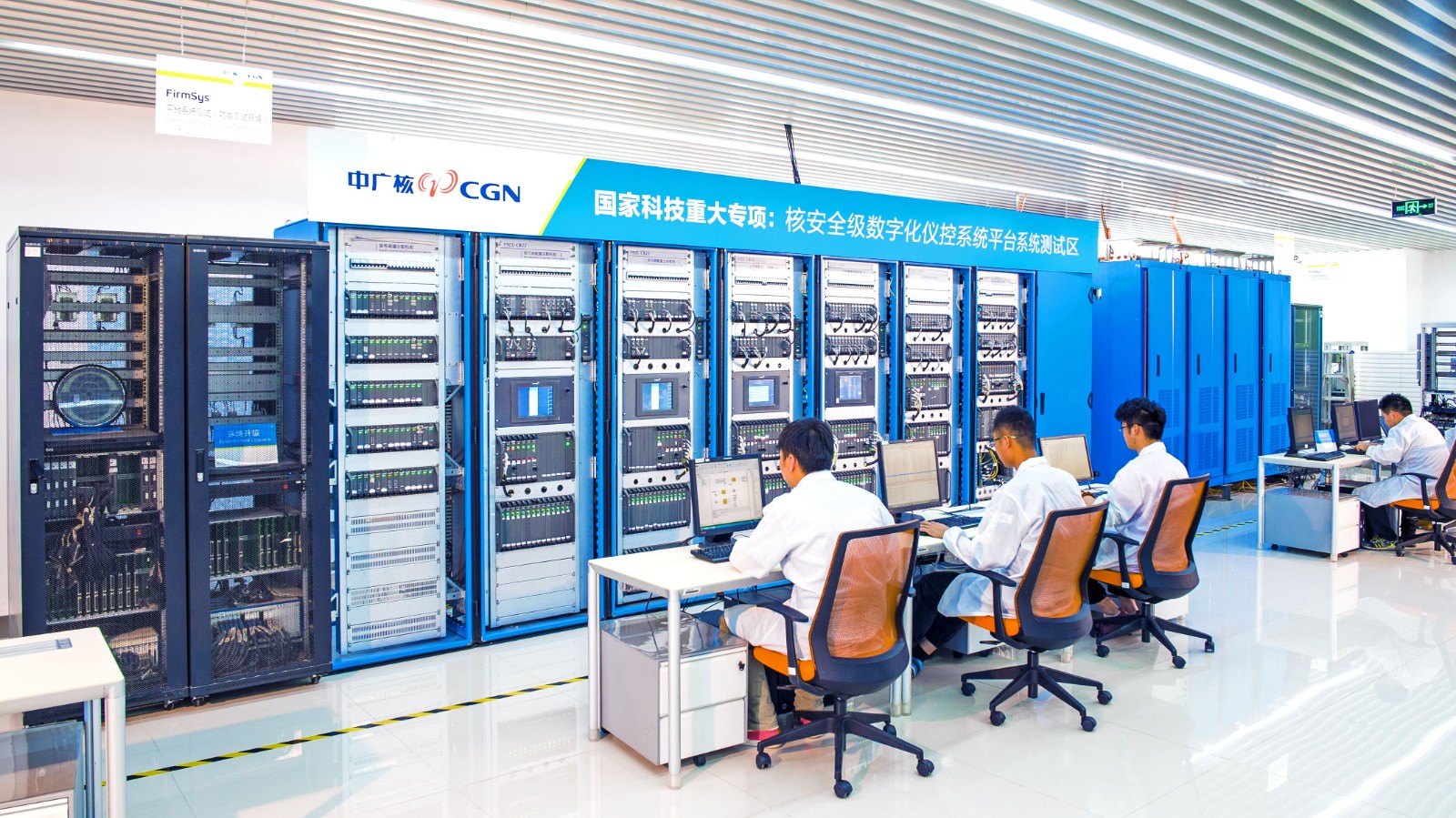
Nuclear-grade digital instrumentation and control system—Harmony System Firmsys
Global responsibility brand "Firefly Plan" officially unveiled
At the conference site, five young people from different countries took to the stage to share their stories of connection with CGN.
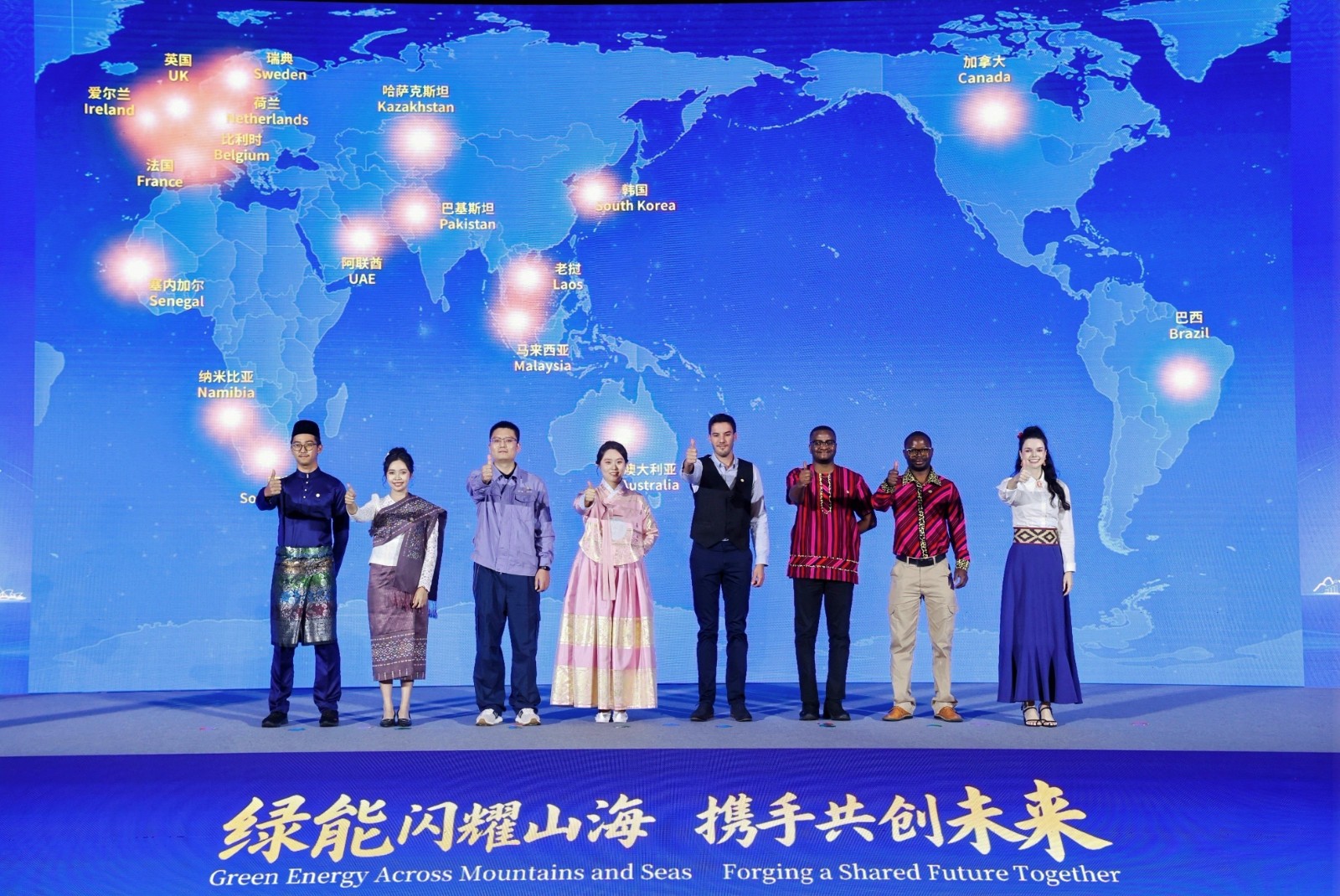
CGN 2026 Sustainable Development Conference venue
Jason from Namibia was born into poverty, one of 11 siblings, and once lived with 12 people squeezed into a small house for two years. In his junior year of university, his family could no longer afford his tuition. Just as he thought his dream of a university education was about to end, CGN Uranium Resources Swakop Uranium, the company responsible for building Husab Mine—the world's third-largest uranium mine—provided a full scholarship that allowed him to complete his degree. Today, through down-to-earth hard work, he has transitioned from a technical position to a management role at Swakop Uranium. He said: "Swakop Uranium rewrote my life, and I am willing to devote all my strength to becoming a part of this mine's story."
Cristiele, a Brazilian woman born in a small inland city in southern Brazil, started working as a store clerk at 16 and joined CGN at 22, growing from a junior administrative assistant to an operations and maintenance administrative analyst. Just as she was steadily advancing on her career path, her mother-in-law and father were both diagnosed with cancer, forcing her to temporarily leave her position. After returning to CGN, she was assigned to participate in wind farm construction in Piauí, 2,500 kilometers from home. During that time, her 82-year-old grandmother took her first flight to visit her and see firsthand the place where she works. "CGN has given me more than just a job," she said. "It has shown me that a truly caring company values not only its employees' professional identities but also understands that we are first and foremost ordinary people."
Khamphay Souphathong, a young Lao national, applied to join CGN Laos in early 2024 on a trial basis, participating in Phase I of the 1-million-kilowatt photovoltaic project of the Northern Laos Interconnection Clean Energy Base, starting as a project coordinator. She quickly discovered that this Chinese company was different—while the project was still under construction, it had already drilled deep water wells for three water-scarce villages, installed 217 solar streetlights, and paved village access roads. The company also established "Egret Classes" to teach local youth Chinese and new energy skills, with top performers eligible to join CGN as new energy engineers. These efforts gradually changed local perceptions of foreign investment. Khamphay noted that after Phase I was completed, villages became brighter, roads improved, and children had breakfast. She has now grown into a key member of CGN's Laos Phase II project: "Oudomxay Province has transformed from a 'place people just passed through' to a place known by more and more people—and CGN has played a part in that change."
Malaysian engineer Wan Afif, a former recipient of the CGN Edra scholarship, has now grown into an engineer and witnessed firsthand how the Kedah photovoltaic project transformed once-barren land into a "Solar Village." French employee Paul has worked at CGN Europe Energy for six years. He is a SCADA technical coordinator and also a local volunteer firefighter. He has witnessed how, through initiatives such as "CGN OPEN DAY" and joint emergency drills, CGN has forged increasingly close ties with the local community—no longer just a foreign investor, but a partner with whom direct communication and collaboration are possible.
"Responsibility is the warmth of a brand," said Li Li, Deputy Secretary of the Party Committee and Director of China General Nuclear Power Group, citing a series of figures: CGN has cumulatively supplied over 370 billion kWh of clean electricity overseas; during peak construction of the Laos project, nearly 3,000 local jobs were provided, engaging over 70 industry chain enterprises, earning it the local nickname "the project that brings light"; the localization rate of employees at Husab Uranium Mine reached 96%, with local procurement exceeding 30 billion Namibian dollars and tax payments surpassing 2 billion Namibian dollars over the past decade; and Malaysia's Edra scholarship program has benefited 30,000 students.
At the conference, CGN officially launched its global responsibility brand, the "CGN Firefly Plan," integrating the community-benefit initiatives carried out in accordance with local conditions across overseas project sites into a systematic, replicable, and scalable global public welfare brand.
"CGN's sustainable development story is a sincere practice and vivid portrayal of Chinese enterprises joining hands with partners around the world and sharing a common destiny," said Zhang Xiaosong, Deputy Director of the Social Responsibility Bureau of the State-owned Assets Supervision and Administration Commission of the State Council. He expressed his expectation that CGN will forge its brand with hardcore technology, highlight its credentials with green development, and integrate into the world through win-win cooperation, enabling the world to understand China's responsibility and feel China's warmth through Chinese brands.
Disclaimer: Information republished from partner media, institutions or other websites is provided for reference and communication purposes only. It does not imply endorsement of its views or verification of its accuracy. Please contact us if any content infringes rights or requires correction.