
Türkiye partners with Danish company to develop thorium-based nuclear technology
 Scan to share
Türkiye's Ministry of Energy and Natural Resources stated on September 7 that the Turkish Energy, Nuclear and Mineral Research Agency (TENMAK) has signed a memorandum of understanding with Danish nuclear technology developer Copenhagen Atomics to cooperate on developing next-generation nuclear energy technologies centered on Türkiye's thorium resources.
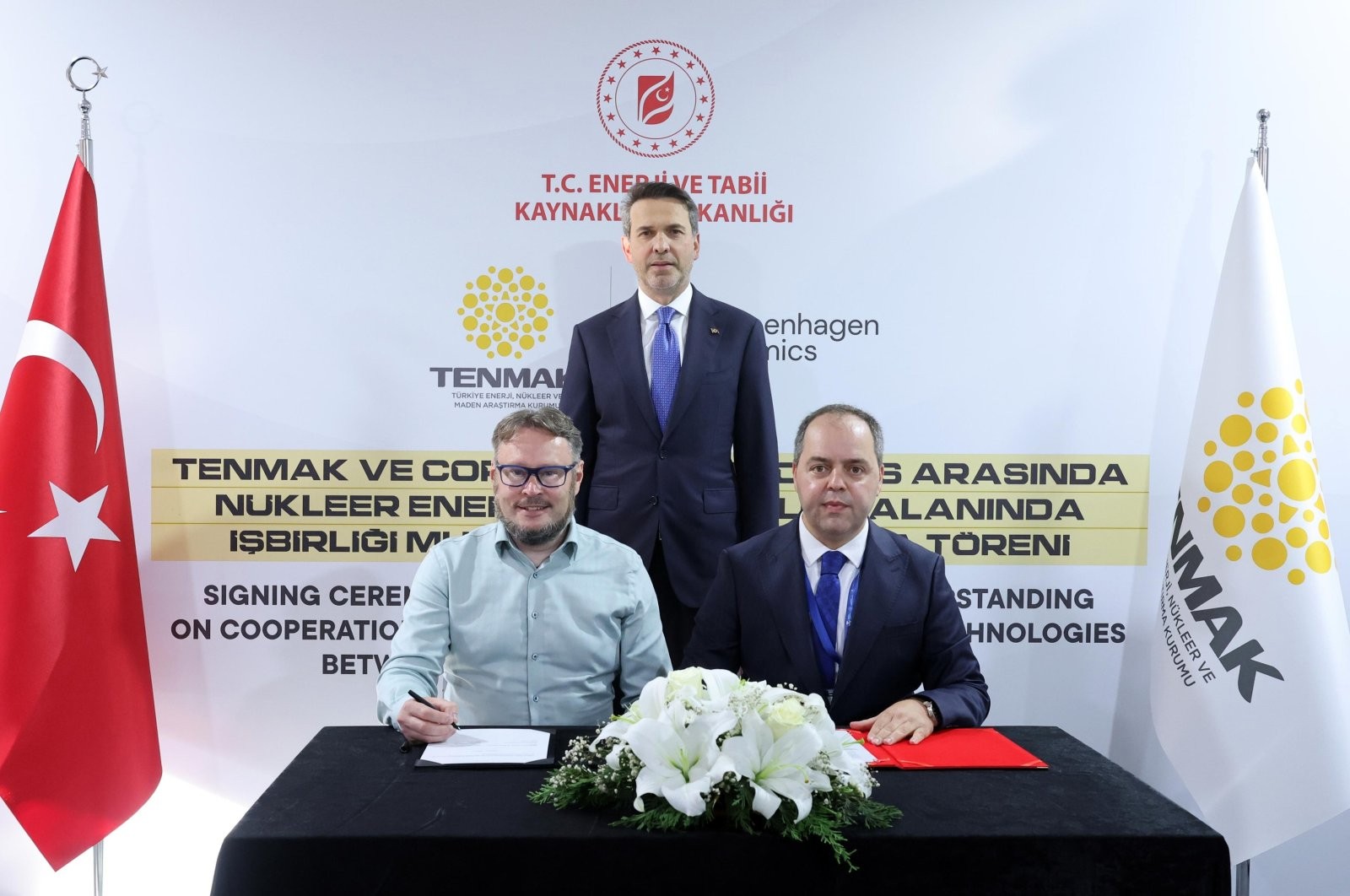
According to the Turkish statement, the cooperation priorities include research and development of technologies that can utilize thorium, domestic production of thorium compounds in Türkiye, and promoting the participation of Turkish industrial enterprises, technology companies, and researchers in thorium-based nuclear technology development. The two sides will focus on thorium material preparation, research and development, and project design applicable to next-generation nuclear reactors, particularly molten salt reactors.
The Turkish side stated that one of the cooperation goals is to domestically produce thorium compounds that meet nuclear fuel standards and to help Türkiye develop an internationally competitive supply capability in this field. Thorium is currently regarded as a potential nuclear fuel option, with related research focusing on aspects such as its resource abundance, fuel cycle characteristics, and reactor compatibility.
Copenhagen Atomics is advancing the development of molten salt reactors. Molten salt reactors represent one of the technology pathways for Generation IV reactors and can provide a technical route for thorium to enter the nuclear fuel cycle. The company is focusing on developing a modular molten salt reactor concept called the "onion core." Under this agreement, the relevant technology will be evaluated in conjunction with Türkiye's existing research infrastructure, human resources, and industrial capabilities.
Türkiye's Minister of Energy and Natural Resources Alparslan Bayraktar stated that small modular reactor (SMR) technology and large reactor technology are developing in parallel, and Türkiye is also advancing multiple related efforts. He said Türkiye is studying the feasibility of introducing different nuclear technologies, and it will gradually become clearer in the coming years which technologies can further mature and achieve commercialization.
Türkiye is expanding the share of nuclear energy in its energy system. The country's first nuclear power plant, the Akkuyu Nuclear Power Plant, is still under construction, with a planned total installed capacity of 4,800 megawatts across 4 units. In addition to the Akkuyu project, Türkiye also plans to build large-scale nuclear power plants in Sinop on the Black Sea coast and in the Thrace region.
Under Türkiye's current targets, conventional nuclear power installed capacity will reach 15 gigawatts by 2050, with plans to deploy 5 gigawatts of small modular reactors as well. Bayraktar stated that thorium is abundant in Türkiye, and thorium-based technologies hold special significance for the country because they help reduce dependence on external nuclear fuel supplies. He expressed hope that this cooperation will ultimately yield commercially viable products.
Disclaimer: Information republished from partner media, institutions or other websites is provided for reference and communication purposes only. It does not imply endorsement of its views or verification of its accuracy. Please contact us if any content infringes rights or requires correction.