
UK Tokamak Energy completes testing of Demo4 fusion high-temperature superconducting magnet system
 Scan to share
On September 9, 2026, Tokamak Energy of the UK announced the completion of a 14-month testing campaign for its Demo4 fusion magnet system, validating the company's capabilities in the design, manufacture, integration, and operation of complete high-temperature superconducting (HTS) magnet systems.
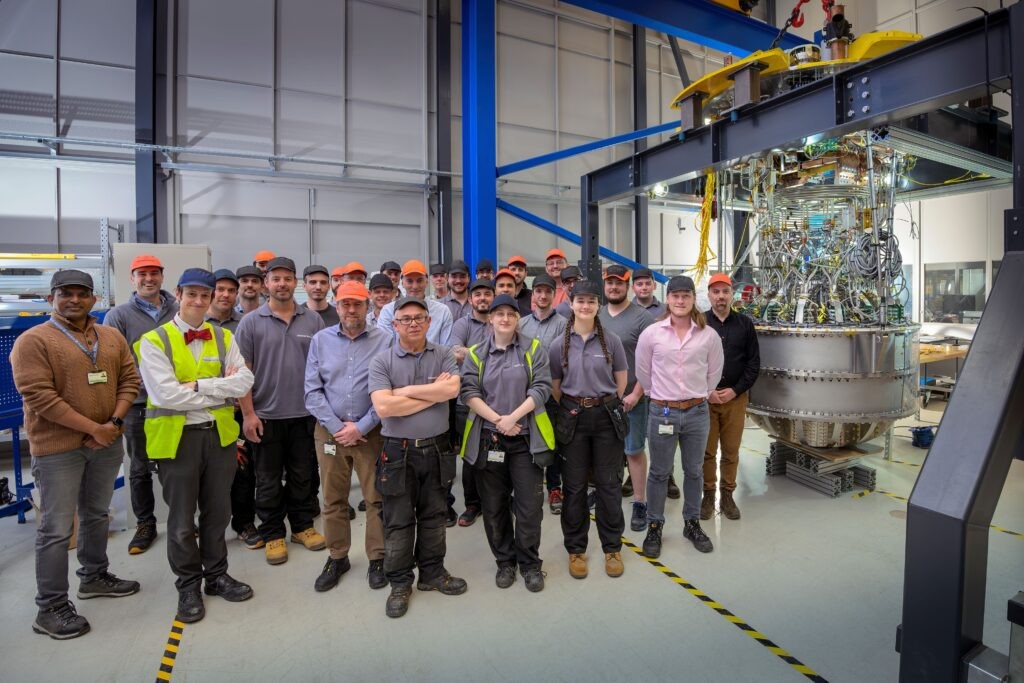
The technical experience gained from Demo4 testing is being applied to the collaboration between Tokamak Energy and UK Fusion Energy (UKFE), supporting the development of HTS magnet systems for the Spherical Tokamak for Energy Production (STEP) fusion program. The results also target HTS commercial applications beyond fusion and were presented this week at the Applied Superconductivity Conference (ASC 2026) held in Pittsburgh, USA.
During testing, the engineering team raised the Demo4 peak magnetic field to 13.7 tesla, operated the toroidal field coils at a current of 5,600 amperes, and cycled the system across an operating temperature range of 77 kelvin to 17 kelvin. The system simultaneously withstood transverse mechanical stresses of 150 megapascals, approximately 1,500 times atmospheric pressure.
Demo4 employs a spherical tokamak configuration relevant to fusion applications and accumulated approximately 10,000 hours of operation across different energization states, including extended periods of high-field operation. Testing also included multiple forced and high-current discharges at up to 12.5 tesla to verify system stability under fault conditions.
Warrick Matthews, Chief Executive Officer of Tokamak Energy, stated that Demo4 represents a significant technical and commercial milestone, demonstrating the company's capability to design, build, and operate complete HTS magnet systems. The system's durability testing provided critical data showing the robustness of its HTS design, which is of significant importance for industrial applications of magnets and power systems.
Liam Brennan, Head of TE Magnetics, Tokamak Energy's HTS business unit, stated that HTS magnet design is central to the performance and economics of fusion power plants. The Demo4 experiments demonstrated that the company's integrated magnet system can operate in a demanding configuration close to fusion application requirements, and the experience gained has been applied to UK Fusion Energy's STEP program.
Demo4 is a complete HTS fusion magnet system that simultaneously validates magnetic field strength and angle, current density, operating temperature, and mechanical loads within a single integrated device. Testing covered not only the magnet itself but also the cryogenic system, power supply system, instrumentation, and control systems—the critical elements supporting coordinated operation of multiple magnets.
The system comprises 44 HTS coils arranged in a spherical tokamak configuration. This includes 14 toroidal field limbs, each consisting of two partially insulated HTS coils, and 2 poloidal field coils, each comprising 8 fully insulated HTS coils. The system is cooled with pressurized helium at operating pressures of up to 20 bar and monitored by more than 600 sensors tracking parameters such as voltage, magnetic field, temperature, and stress.
Tokamak Energy stated that the data collected during this testing campaign will continue to be used to validate and improve its models and control software, thereby enhancing its ability to predict HTS system performance and supporting the design of robust, reliable magnet systems in the future.
Test results showed that HTS components performed as expected at magnetic fields of up to 13.7 tesla, with critical current characteristics verified. Across the 77 kelvin to 17 kelvin temperature range, the system's critical surface mapping performance was further confirmed. The reliability of more than 90 HTS joints was also validated, with joint resistances meeting expectations and maintaining stable current transport throughout the testing campaign.
Testing also confirmed that HTS materials exhibit good thermal stability, with early quench detection and active cooling proving effective means of avoiding quench events. During fault testing and forced discharges at 12.5 tesla and high currents, no hot spots or performance degradation were observed. On the mechanical side, the system was validated under transverse compressive stresses of 150 megapascals, contributing to a deeper understanding of wound coil behavior.
Furthermore, Tokamak Energy stated that its HTS magnet design has been verified to withstand thermal cycling effects. Full-system coordinated operation of the magnets, power supplies, cryogenic system, control system, and quench protection devices was achieved, and the HTS current leads as well as the interactions between toroidal field coils and poloidal field coils were also validated through testing.
Tokamak Energy is the magnet system partner for the UK government's STEP fusion program. Leveraging its HTS magnet manufacturing and design capabilities, the company has been awarded a contract by UK Fusion Energy valued at £70 million, running through March 2029. Experience from Demo4 will be applied to STEP model coil testing and research into power plant-scale HTS magnet systems.
Tokamak Energy is also a member of the UK Infinity Fusion Alliance, which includes Type One Energy and AECOM, and is advancing the development of commercial fusion power plants in the UK with support from Barclays Bank.
Disclaimer: Information republished from partner media, institutions or other websites is provided for reference and communication purposes only. It does not imply endorsement of its views or verification of its accuracy. Please contact us if any content infringes rights or requires correction.