
US Company DTE Advances 177 MW Power Uprate at Fermi 2 Nuclear Power Plant
 Scan to share
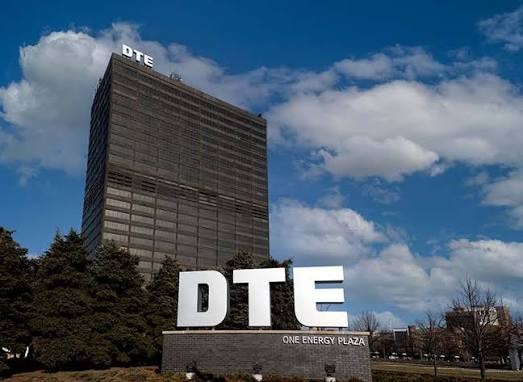
DTE Electric, a subsidiary of Michigan utility giant DTE Energy, has formally submitted a 20-year long-term Integrated Resource Plan (IRP) to the Michigan Public Service Commission (MPSC). In the clean power restructuring layout of the plan, DTE explicitly establishes nuclear power as an indispensable zero-carbon baseload hub, and plans to carry out a deep modernization and technical upgrade of the Fermi 2 Nuclear Power Plant in Monroe County in 2036, achieving an additional 177 megawatts (MW) of clean carbon-free power output.
As Michigan's core operating nuclear power infrastructure, the Fermi 2 Nuclear Power Plant houses a single boiling water reactor (BWR) unit with a rated net output of approximately 1,140 megawatts, providing stable baseload support for industrial manufacturing and residential electricity in the Great Lakes region year-round. This power uprate project is explicitly included in DTE's "All-of-the-above" energy strategy portfolio. According to the project plan, the technical upgrade will be implemented in 2036. Through efficiency optimization and power uprate of the turbine steam path, generator rotor, and key secondary-loop thermodynamic components, and on the premise of ensuring long-cycle nuclear safety operating margins, it will directly unlock the potential generating capacity of the existing nuclear unit, securing high-quality baseload output equivalent to the electricity consumption of hundreds of thousands of households at the lowest marginal construction cost.
Behind DTE's accelerated push for nuclear power uprate are Michigan's aggressive hard decarbonization targets and the supply gap pressure caused by coal plant retirements. Under the state's statutory clean energy standard, energy utilities must achieve 80% clean energy supply by 2035 and fully reach the 100% target by 2040. To achieve this path, DTE reaffirmed that it will fully exit all of its coal power business by 2032, including the complete shutdown of the 3-gigawatt (GW) Monroe Power Plant in two steps in 2028 and 2032.
Matt Paul, President of DTE Electric, emphasized that while phasing out 3 GW of coal power, the grid must not rely solely on weather-intermittent wind and solar power, but must rely on around-the-clock stable nuclear power and efficient gas systems to achieve multi-energy complementarity. The technical upgrade of the Fermi 2 unit can not only form all-weather grid coordination with the planned 15 GW of renewable energy and 4.5 GW of new energy storage, but can also provide continuous power backup unaffected by weather disturbances for local high-energy-consuming advanced manufacturing and AI computing loads under extreme rain, snow, and cold wave weather, becoming the core cornerstone for Michigan to smoothly cross the coal power retirement window period.
Disclaimer: Information republished from partner media, institutions or other websites is provided for reference and communication purposes only. It does not imply endorsement of its views or verification of its accuracy. Please contact us if any content infringes rights or requires correction.