
Search Results
Keyword:Fission
U.S. Plans to Launch Nuclear Fission-Powered Spacecraft to Fly by Mars by End of 2028
The National Aeronautics and Space Administration (NASA) is advancing the Space Reactor-1 "Freedom" (SR-1 Freedom) mission, with the goal of launching a nuclear fission-powered spacecraft by the end of 2028 to validate deep-space nuclear electric propulsion technology. According to existing mission documentation, the mission plans to fly by Mars in 2029 and deploy the SkyFall payload. The SR-1 Freedom is neither a fusion spacecraft nor a crewed Mars vehicle. Its core experiment is to operate a small uranium fission reactor, an energy conversion system, and Hall-effect thrusters in coordination beyond Earth orbit, accumulating engineering data for future higher-power deep-space missions...
2026-08-24

Astrotech Plans Commercial Lunar Power Facility, Evaluating Nuclear Fission Power Supplement Options
Astrotech Corporation announced on August 11 that its wholly-owned subsidiary, Lunar Power & Light (LP&L), plans to develop a commercial power generation, storage, and distribution network in high-illumination regions near the lunar poles to provide lunar power services for future government and commercial customers. The company also stated that the plan remains in its early stages, with further progress contingent on technology validation, financing, customer commitments, launch conditions, and relevant government authorizations. According to LP&L's vision, the proposed power grid would consist of distributed elevated solar towers, sun-tracking systems, utility-scale and local battery storage, autonomous control...
2026-08-12

Deep Fission Details 'One-Mile-Deep PWR' Roadmap at Canaccord Conference, Targeting First Commercial Operation by End of 2027
On August 11, Deep Fission (FISN) unveiled a differentiated nuclear commercialization pathway at Canaccord Genuity's 46th Annual Growth Conference: rather than reinventing nuclear fission technology, the company aims to deploy mature pressurized water reactors in underground boreholes approximately one mile deep. CEO Liz Muller emphasized that the core approach is to change where reactors are deployed, not to adopt an entirely new reactor physics model. Given that PWR technology has been used in commercial nuclear power for decades, the company hopes to shorten the validation cycle by leveraging mature technology and avoid the new fuel, new material, and new design licensing hurdles faced by some advanced nuclear projects. According to the company's plan...
2026-08-12
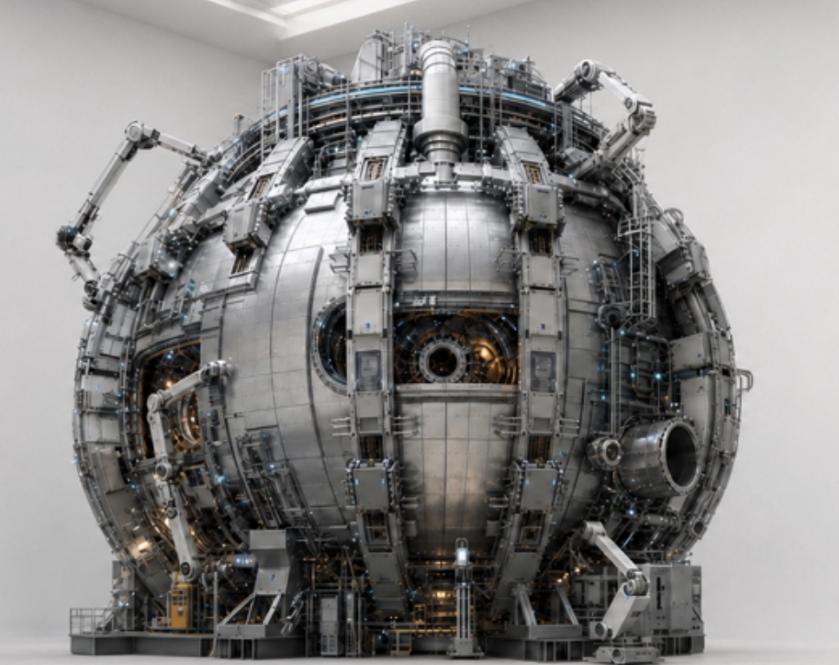
Shenju Nuclear Energy Unveils "Jinwu-1" Spherical Torus Fusion-Fission Hybrid Reactor Design
Shenju (Sichuan) Nuclear Energy Co., Ltd. has unveiled the first-generation device, the Jinwu-1 design, which adopts the spherical torus fusion-fission hybrid reactor technology pathway, driving a subcritical nuclear energy system with a compact fusion neutron source to achieve functions such as energy amplification, fuel breeding, and transmutation of long-lived nuclides. According to the design, Jinwu-1 uses a 50 MW-class fusion power as the conceptual design baseline, employing high-temperature superconducting magnets, a replaceable center column, and a modular subcritical nuclear energy zone. Its fusion core has a major radius of approximately 1.5 meters, with the goal of delivering approximately 40 MW of fusion neutron power at 14.1 MeV energy, serving as an industrial-grade neutron source. In terms of system design, Jinwu-1 amplifies fusion neutron energy through a subcritical fission blanket...
2026-08-11
US DOE Approves Nuclear Safety Design Agreement for Deep Fission Underground SMR
Deep Fission, a US advanced nuclear energy company, announced on August 6 that the US Department of Energy (DOE) has approved the Nuclear Safety Design Agreement (NSDA) for its Gravity reactor. The company stated that this milestone means its reactor design meets the requirements for continued advancement under the DOE's Reactor Pilot Program. Deep Fission is developing a small modular pressurized water reactor concept, with plans to place the reactor in a borehole approximately 1 mile, or about 1.6 kilometers, underground. The approved Nuclear Safety Design Agreement will serve as the safety framework for subsequent reactor development work. According to the company's plans, the project will proceed into the DOE authorization process...
2026-08-07
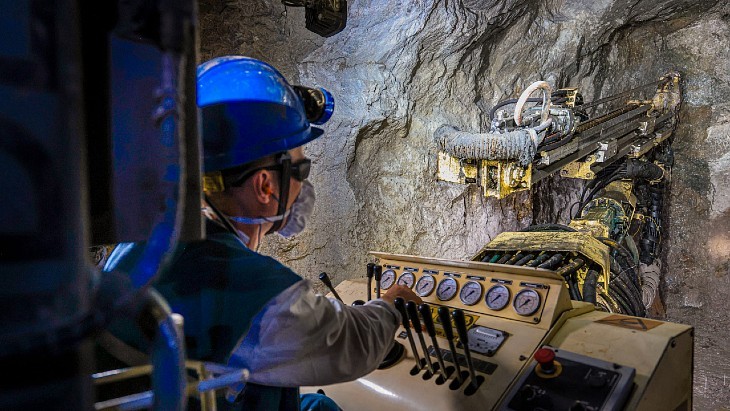
UK Interim Report on Fission Materials Roadmap Highlights New-Generation Nuclear R&D Priorities
The UK National Nuclear Laboratory (UKNNL) and the Henry Royce Institute recently released the "UK Fission Materials Roadmap Interim Report." The report states that the UK needs to clarify as soon as possible the priority technology routes and operating environments for next-generation nuclear reactors, so as to concentrate materials research resources on key directions and support future nuclear power development. The report argues that the UK should decide within the next one to two years whether to build a domestic materials test reactor; within the next five years, the government should also establish a national materials archive to preserve irreplaceable irradiated material samples. The report also recommends making long-term funding commitments of at least five years for relevant research projects...
2026-07-31