
Beijing Key Laboratory Unveiled: Focusing on Domestic Production of Liquid-Helium-Free Superconducting MRI and X-ray CT Equipment
 Scan to share
Recently, the "Beijing Key Laboratory for Innovation and Translation of Advanced Superconducting MRI and CT Medical Equipment," spearheaded by Wandong Medical, was officially inaugurated. Previously approved by the Beijing Municipal Science & Technology Commission and the Zhongguancun Science Park Administrative Committee, the laboratory was jointly established by Wandong Medical in collaboration with CAS Magnetics, Beijing Friendship Hospital (Capital Medical University), Peking Union Medical College Hospital (Chinese Academy of Medical Sciences), and Beijing Tiantan Hospital (Capital Medical University).
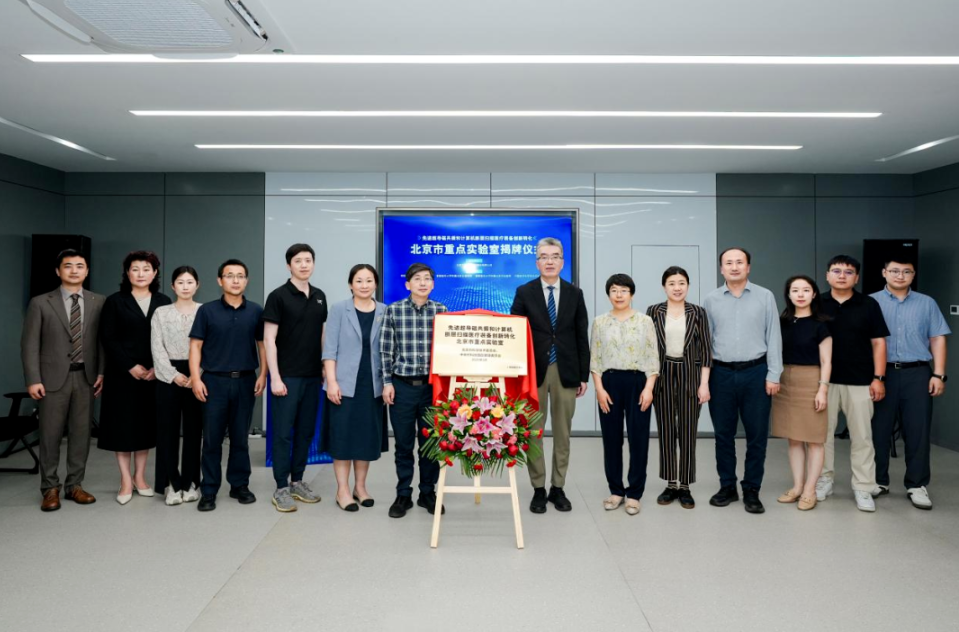
The laboratory will focus its research and development efforts on two main areas: liquid-helium-free superconducting MRI and ultra-wide-bore, ultra-high-speed CT. Key objectives include achieving breakthroughs in core components and technologies—such as liquid-helium-free magnet integration, precision mounting of ultra-wide detectors, X-ray tube manufacturing, high-power high-voltage generator inverters, non-contact cardiovascular gating, and AI-driven scan positioning and reconstruction—while also driving the development and industrialization of related products.
As the lead entity, Wandong Medical has previously undertaken research projects such as the Ministry of Industry and Information Technology’s (MIIT) "Demonstration Platform for Medical Device Material Production and Application" and the Beijing Municipal Science & Technology Commission’s AI health system innovation initiative. The company has successfully localized key core components, including liquid-helium-free superconducting MRI systems, CT detectors, and high-voltage generators. Notably, its liquid-helium-free superconducting MRI product has been included in the catalog of high-end medical equipment promoted for application, jointly issued by the MIIT, the National Health Commission, and the National Medical Products Administration.
Regarding clinical application, the laboratory aims to enable high-end imaging equipment to better serve diagnostic and treatment scenarios in fields such as cardiovascular and cerebrovascular medicine and neuroimaging. In the MRI sector, the goal is to allow patients to undergo cardiac examinations while breathing freely and without the need for attached electrodes. In the CT sector, the focus is on achieving high-definition imaging of the entire heart within a single heartbeat—without requiring strict heart rate control—thereby enhancing capabilities for non-invasive, precise cardiac examinations.
The laboratory operates under a collaborative model involving "industry leaders, research institutes, and clinical institutions." Wandong Medical is responsible for system integration and industrialization; CAS Magnetics leverages its team of academicians to conduct fundamental research on liquid-helium-free superconducting magnet technology; and Beijing Friendship Hospital, Peking Union Medical College Hospital, and Beijing Tiantan Hospital provide clinical requirements and validation scenarios in the fields of cardiovascular/cerebrovascular medicine, comprehensive diagnosis and treatment, and neuroimaging, respectively.
An appointment ceremony was also held concurrently with the laboratory's inauguration. Song Jinsong, President of Wandong Medical, serves as the director of the laboratory, while the academic committee is co-chaired by Wang Qiuliang, an academician of the Chinese Academy of Sciences, and Wang Zhenchang, an academician of the Chinese Academy of Engineering. The laboratory has assembled a research team of 114 members; over 80% hold master's or doctoral degrees, and nearly 80% are young professionals born in the 1980s and 1990s.
Wandong Medical originated as the Jingmen Medical Equipment Factory, founded in 1955; it was listed on the Shanghai Stock Exchange in 1997 and became part of the Midea Group in 2021. Headquartered in Beijing, the company operates two major R&D and manufacturing bases—located in Beijing and Suzhou—and offers a product portfolio that includes medical imaging equipment such as DR, CT, MRI, and DSA systems. The unveiling of this key laboratory marks a significant milestone in the company's efforts to drive independent innovation and industrial transformation in high-end medical imaging equipment.
Disclaimer: Information republished from partner media, institutions or other websites is provided for reference and communication purposes only. It does not imply endorsement of its views or verification of its accuracy. Please contact us if any content infringes rights or requires correction.