
CNNC-CNI assists in the launch of the high-quality nuclear medicine diagnosis and treatment project at Mianyang Central Hospital.
 Scan to share
A high-quality development project for nuclear medicine diagnosis and treatment was recently launched at Mianyang Central Hospital. An expert delegation from the Chinese Society of Nuclear Medicine (CSNM), accompanied by representatives from China Isotope & Radiation Corporation (CIRC) and Atom High-Tech, arrived at the hospital to conduct an on-site assessment and discuss the project. Attendees at the launch ceremony included CSNM Chairperson Professor Wang Jing; Vice Chairpersons Professor Xu Baixuan and Professor Li Lin; Deputy Secretaries-General Professor Tian Rong and Professor Yang Weidong; Youth Group Deputy Leader Professor Kang Fei; Youth Group Member Professor Zhang Wei; as well as Mianyang Municipal Health Commission Deputy Director Lan Ziren; Mianyang Central Hospital Party Secretary Zhou Liangxue; Party Deputy Secretary and President Yang Pei; and Vice Presidents Du Xiaobo and Zhang Yu. Representatives from the CSNM and Mianyang Central Hospital signed a cooperation agreement and jointly pressed the launch button, marking the project's entry into the substantive construction phase.
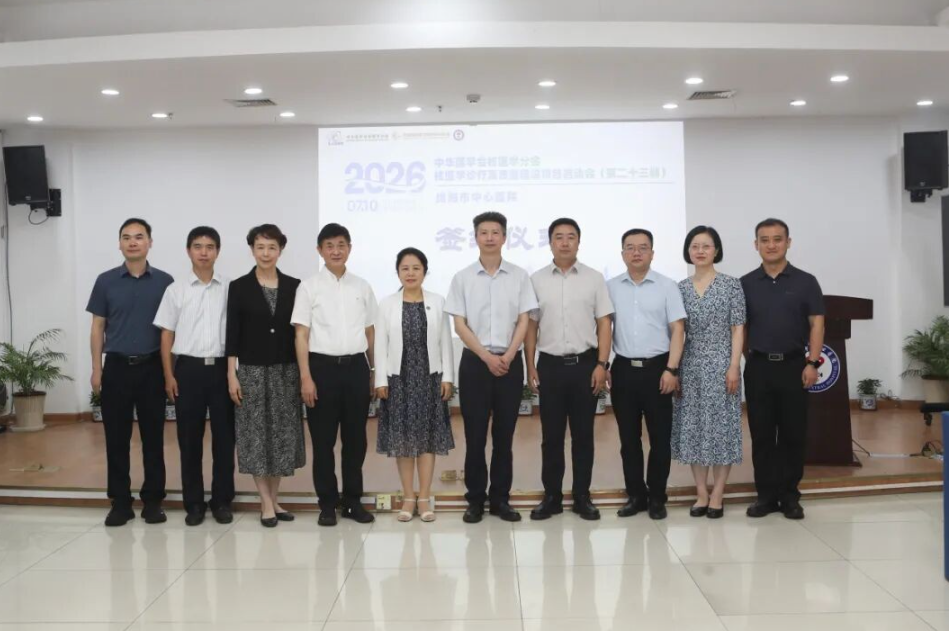
During the opening remarks, Lan Ziren, Deputy Director of the Mianyang Municipal Health Commission, extended warm congratulations on the project's launch. He expressed hope that Mianyang Central Hospital would seize this opportunity to accelerate the development of its nuclear medicine discipline, enhance diagnostic and therapeutic capabilities, and elevate the overall standard of medical services across the city. Zhou Liangxue, Party Secretary of Mianyang Central Hospital, expressed deep gratitude for the strong support provided by the CSNM and the visiting experts. He stated that the hospital would use this project as a catalyst to fully strengthen talent cultivation, technological application, and disciplinary development in nuclear medicine. He emphasized a commitment to the coordinated advancement of clinical practice, scientific research, and teaching, while effectively translating cutting-edge knowledge and technology into practical new projects and services to provide the public with higher-quality, more precise medical care. Professor Wang Jing, Chairperson of the CSNM, highly commended the achievements made by the hospital's Department of Nuclear Medicine. She stated that the CSNM would assist the hospital in overcoming development challenges through initiatives such as expert guidance and technical training. By promoting the adoption of new technologies and building a robust talent pool—effectively leaving behind a lasting support team—the Society aims to establish Mianyang Central Hospital as a model for the high-quality development of nuclear medicine diagnosis and treatment.
Following the launch ceremony, the CSNM expert delegation delivered academic presentations addressing specific issues of interest to various departments at Mianyang Central Hospital. In her presentation titled "Current Status and Development of Nuclear Medicine," Professor Wang Jing outlined the developmental history and key policies of nuclear medicine in my country, while deeply analyzing feasible pathways and future directions for the discipline's development. Professor Xu Baixuan, in her talk "A Series of Studies on Innovative Nuclear Medicine Technologies for the Early Diagnosis of Prostate Cancer," drew upon cutting-edge research findings to systematically demonstrate the value of these innovative technologies in the early, precise diagnosis of prostate cancer. Through the presentation "Nuclear Medicine Molecular Imaging Facilitates MDT Development," Professor Tian Rong shared illustrative cases, demonstrating how molecular imaging technologies tangibly advance multidisciplinary team (MDT) collaborative diagnosis and treatment. Professor Kang Fei, speaking on "Nuclear Medicine Technologies Boosting Clinical Research," vividly explained the application pathways and key points for the clinical translation of these technologies. Professors Li Lin, Yang Weidong, Zhang Wei, and Yang Xing presided over the academic presentation sessions.
During the session dedicated to discussing key project matters, the expert panel heard a report on discipline development from Chen Zhengguo, Deputy Director of the Department of Nuclear Medicine at Mianyang Central Hospital, and engaged in an in-depth discussion regarding the future direction of the nuclear medicine discipline.
During the conference, the expert panel visited the Department of Nuclear Medicine to conduct an on-site inspection and review.
Founded in 1939, Mianyang Central Hospital is a Grade-A tertiary comprehensive hospital integrating medical care, teaching, research, emergency services, and disaster medicine; it serves as the regional medical center for northwestern Sichuan. The Department of Nuclear Medicine performs multi-system and multi-site radionuclide imaging and therapy, providing patients with comprehensive, high-quality care through standardized, precise, and personalized medical services, complemented by high-quality nursing.
As the platform for the nuclear technology application industry under the China National Nuclear Corporation (CNNC), China Isotope & Radiation Corporation (CIRC) shoulders the dual responsibility of building a "nuclear industry powerhouse" and advancing the "Healthy China" initiative. In collaboration with the Chinese Society of Nuclear Medicine, CIRC is actively developing the "One County, One Department" smart nuclear medicine solution. This initiative aims to drive the standardization, regulation, and smart transformation of nuclear medicine departments across my country, thereby fostering high-quality development in the nuclear medicine sector. The launch of the "High-Quality Nuclear Medicine Diagnosis and Treatment Project" at Mianyang Central Hospital will serve as a catalyst for the department's high-quality development, playing a significant role in enhancing diagnostic and therapeutic capabilities and benefiting the local population.
Disclaimer: Information republished from partner media, institutions or other websites is provided for reference and communication purposes only. It does not imply endorsement of its views or verification of its accuracy. Please contact us if any content infringes rights or requires correction.