
Russia Completes Manufacturing of Second RITM-200 Reactor Unit for Leningrad Nuclear-Powered Icebreaker
 Scan to share
On July 29, Rosatom's ZiO-Podolsk Mechanical Plant in the Moscow Region completed the manufacturing of the second RITM-200 reactor unit for the Leningrad nuclear-powered icebreaker. With this, the manufacturing of all major equipment for the reactor compartment of this under-construction 22220-type universal nuclear-powered icebreaker has been fully completed.
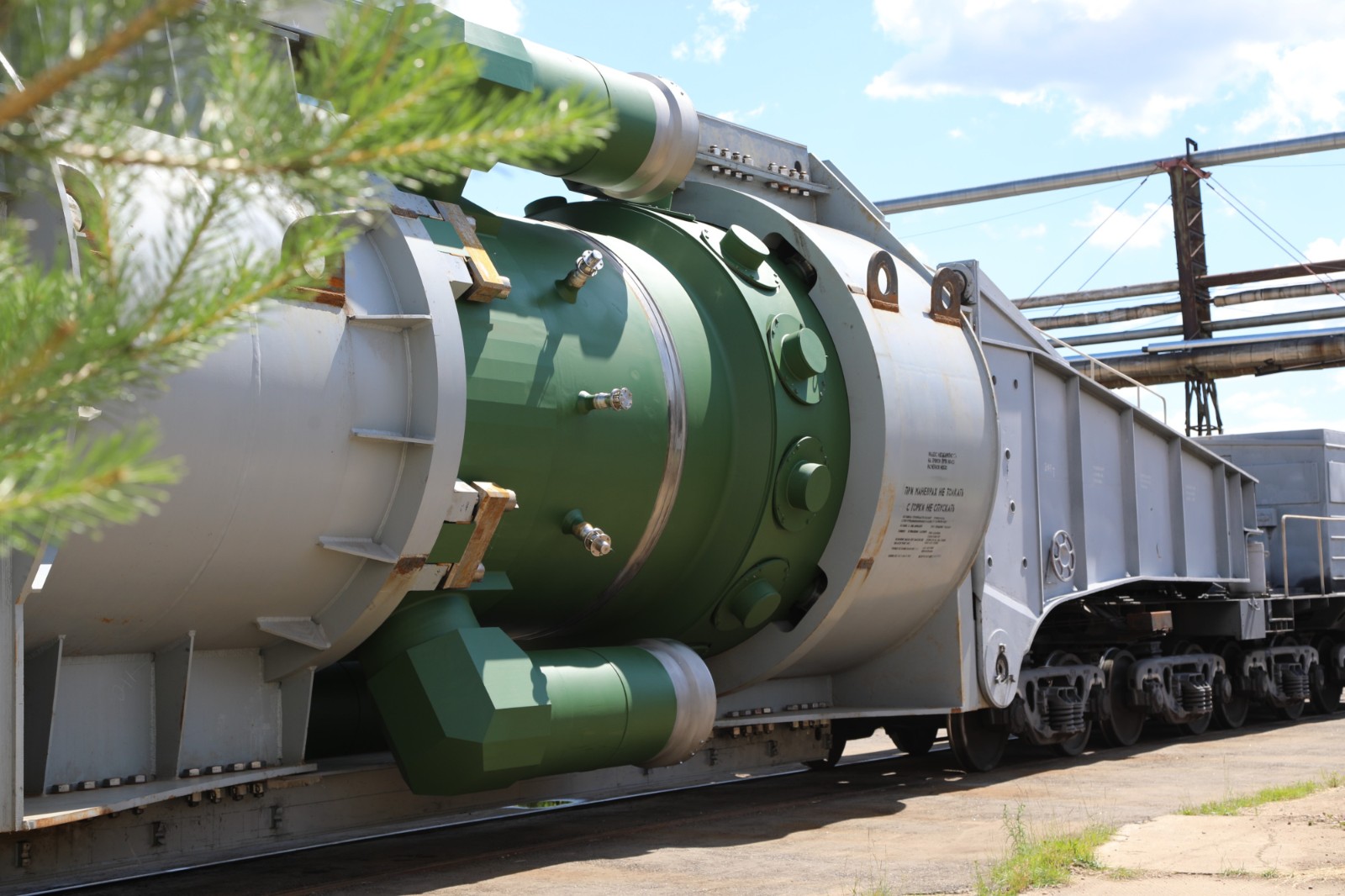
The Leningrad nuclear-powered icebreaker began construction in January 2024. The naming of the vessel is linked to the 80th anniversary of the lifting of the Siege of Leningrad, with veterans and survivors of the siege proposing that this new-generation nuclear-powered icebreaker be named Leningrad. Following Rosatom's tradition of naming reactor units, the two completed reactor units of the Leningrad have been named "Iskra" and "Grom," commemorating the operations that broke and ultimately lifted the Siege of Leningrad between 1943 and 1944.
Rosatom CEO Alexey Likhachev stated that the RITM-200 reactor units will serve the transportation needs of the Northern Sea Route for decades to come. By design, these reactors will provide power to nuclear-powered icebreakers, enabling them to break through sea ice several meters thick and support vessel passage along Arctic shipping routes.
The Leningrad is equipped with two RITM-200 reactors. This type of reactor integrates the reactor core with steam generators, helping to improve system reliability and reduce equipment weight, allowing the icebreaker to operate both in open ocean and in shallow waters such as the mouths of northern rivers. The RITM-200 has already been deployed on the 22220-type nuclear-powered icebreakers Arktika, Sibir, Ural, and Yakutia; other vessels of the same type under construction include Chukotka, Leningrad, and Stalingrad.
In addition to nuclear-powered icebreakers, the RITM series of reactors is also planned for use in small nuclear power projects. Rosatom states that this reactor series will serve as a key technological foundation for its small nuclear power plant projects in Yakutia, Uzbekistan, and elsewhere, as well as for floating nuclear power plant projects supplying electricity to remote coastal areas.
Currently, Rosatom is manufacturing 13 small reactor pressure vessels for nuclear-powered icebreakers and small nuclear power plants, including equipment for the nuclear power project in Uzbekistan. Likhachev noted that this production scale sets a record in Russia's nuclear industry machinery manufacturing sector.
The production of related equipment is undertaken by several enterprises within Rosatom's machinery manufacturing division. Among them, enterprises in St. Petersburg are responsible for producing metallurgical blanks, enterprises in Nizhny Novgorod are responsible for manufacturing internal components of the RITM reactor, and enterprises in Podolsk, Moscow Region, are responsible for manufacturing reactor pressure vessels. Afrikantov OKBM Mechanical Engineering is the designer, general supplier, and manufacturer of internal components for the RITM-200 and RITM-400 reactor units; reactor pressure vessel manufacturing and trial assembly are carried out at the ZiO-Podolsk Mechanical Plant.
In 2018, the Russian government authorized Rosatom to operate the infrastructure of the Northern Sea Route. The company is involved in advancing projects related to the development of the Northern Sea Route, aiming to enhance its capacity as a transport corridor connecting Europe, Russia, and the Asia-Pacific region. In December 2024, Russia approved the federal project "Greater Northern Sea Route," planning the construction of a transport corridor from St. Petersburg and Kaliningrad to Vladivostok.
Disclaimer: Information republished from partner media, institutions or other websites is provided for reference and communication purposes only. It does not imply endorsement of its views or verification of its accuracy. Please contact us if any content infringes rights or requires correction.