
Northwest Nuclear and Radiation Safety Supervision Station of the Ministry of Ecology and Environment Completes Routine Supervision and Emergency Assessment of Thorium-based Molten Salt Reactor
 Scan to share
Recently, the Northwest Nuclear and Radiation Safety Supervision Station of the Ministry of Ecology and Environment (hereinafter referred to as the Northwest Supervision Station) organized a supervision team to conduct routine nuclear and radiation safety supervision and comprehensive emergency drill assessment for the 2 MW Liquid Fuel Thorium-based Molten Salt Experimental Reactor (hereinafter referred to as the Thorium-based Molten Salt Reactor) of the Shanghai Institute of Applied Physics, Chinese Academy of Sciences (hereinafter referred to as Shanghai Institute of Applied Physics).
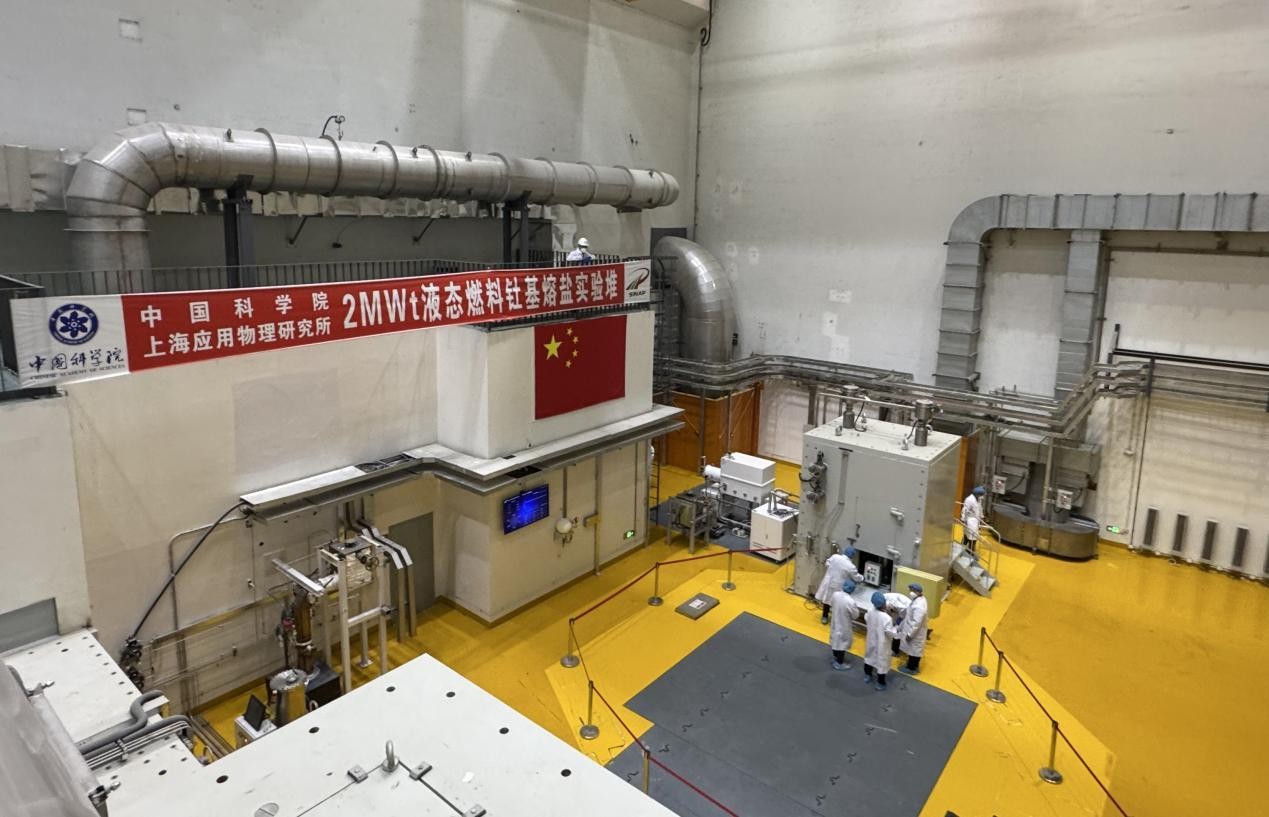
This supervision focused on the operational safety of the Thorium-based Molten Salt Reactor, effluent and environmental monitoring, radiation safety of nuclear technology utilization projects, and comprehensive emergency drills. The supervision team, through document review, on-site verification, and record tracing, primarily examined the effectiveness of the quality assurance program, personnel training and authorization, effluent and environmental monitoring records, emergency system documents, and the rectification records from previous inspections. At the same time, the supervision team observed the comprehensive emergency drill on-site and provided guidance based on actual conditions, conducting a full-process assessment of accident response procedures, cross-departmental coordination, and emergency response measures. In response to the issues and deficiencies identified during the supervision, the supervision team held a special communication meeting with the Shanghai Institute of Applied Physics and proposed rectification requirements.
The Northwest Supervision Station emphasized that the Shanghai Institute of Applied Physics should adhere to a bottom-line mindset, strengthen the primary responsibility for nuclear safety, fully leverage the role of internal supervision, and ensure that responsibilities are transmitted layer by layer and interconnected; it should continuously optimize system operations, timely revise and improve procedural documents based on actual conditions, and ensure the suitability and effectiveness of the system; it should enhance awareness of operating according to procedures, accurately identify risk points, and focus on the timely response and closed-loop handling of abnormal signals.
Disclaimer: Information republished from partner media, institutions or other websites is provided for reference and communication purposes only. It does not imply endorsement of its views or verification of its accuracy. Please contact us if any content infringes rights or requires correction.