
n situ GIWAXS characterization using synchrotron radiation helps overcome challenges in wide-bandgap perovskites
 Scan to share
Wide bandgap perovskites are key light-absorbing materials for preparing high-efficiency perovskite/organic tandem solar cells. To achieve spectral matching with the narrow bandgap organic rear cell, a higher proportion of bromine is usually introduced into the perovskite composition. However, due to the different crystallization rates of iodine and bromine components during film formation, the phenomenon of "sequential crystallization" easily occurs, making it difficult for iodine and bromine to be uniformly distributed and forming local compositional differences in the thin film. These non-uniform regions increase the risk of halide phase separation in perovskites under illumination, thereby limiting device efficiency and operational stability. To reveal the preparation process of wide bandgap perovskite films, the research team relied on the Beijing Synchrotron Radiation Facility (BSRF) 1W1A grazing incidence wide angle X-ray scattering (GIWAXS) experimental station, and used an in-situ device independently designed by Senior Engineer Chen Yu to conduct in-situ GIWAXS characterization under nitrogen atmosphere, real-time tracking the structural evolution of wide bandgap perovskite films from spin coating to annealing.
In-situ GIWAXS results showed that after spin coating, the diffraction peak of the perovskite film rapidly split into two peaks, indicating that a bromine-rich phase and an iodine-rich phase were already formed in the wet film stage (Figure 1). Based on this phenomenon, the research team introduced an additive TDB (4-[3-(trifluoromethyl)-3H-diazirin-3-yl]benzylamine hydrochloride) for crystallization control. In-situ GIWAXS showed that TDB can suppress the preferential precipitation of bromine-rich phase, maintain a more uniform mixed halide structure in the wet film stage (Figure 1), and promote the preferential growth of perovskite grains along the (100) orientation during subsequent annealing (Figure 2).
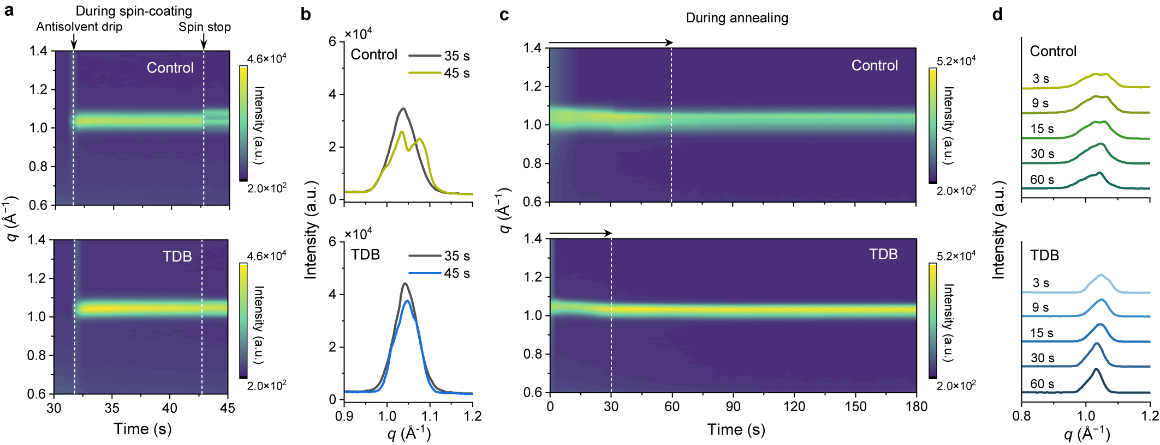
Figure 1 In-situ GIWAXS revealing the phase evolution mechanism of mixed halide perovskites during spin coating and annealing
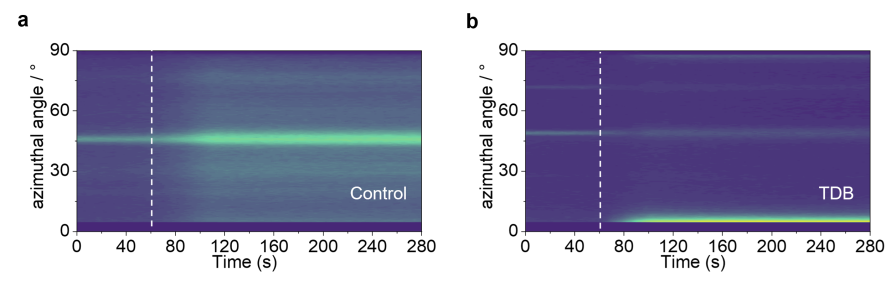
Figure 2 In-situ GIWAXS revealing the orientation induction of additive molecules on perovskite films during annealing
By combining synchrotron radiation in-situ characterization with additive control strategies, the team achieved precise control over the crystallization process of wide bandgap perovskites, thereby achieving a certified stable efficiency of 28.04% for perovskite/organic tandem solar cells, breaking the world record. The relevant results were published in “Perovskite–organic tandem solar cells with a photo-transformable stabilizer” in 《Nature》.
Disclaimer: Information republished from partner media, institutions or other websites is provided for reference and communication purposes only. It does not imply endorsement of its views or verification of its accuracy. Please contact us if any content infringes rights or requires correction.