
Russian researchers detect anomalous signs in bottomonium states using Belle II experiment data
 Scan to share
The Budker Institute of Nuclear Physics of the Siberian Branch of the Russian Academy of Sciences recently announced that Russian researchers have detected anomalous phenomena in the analysis of data from the international Belle II experiment, indicating that the structure of certain excited states of bottomonium may be more complex than predicted by traditional models.
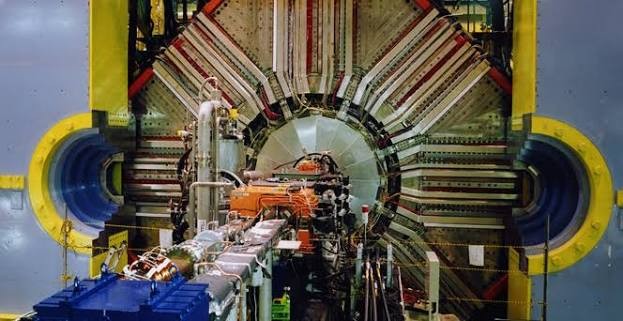
Bottomonium is a class of unstable heavy particles composed of a bottom quark and an anti-bottom quark. Yevgeny Kovalenko, a young researcher at the Budker Institute of Nuclear Physics of the Siberian Branch of the Russian Academy of Sciences, stated that analysis of Belle II experiment data suggests that certain excited states of bottomonium may contain lighter quark components. In other words, these particles in specific states may not simply be plain bottom quark–anti-bottom quark combinations.
According to available information, the Belle experimental facility in Japan was built at the turn of the century. The related experiments collide beams of matter and antimatter to study heavy particles produced in the interactions, including short-lived particles such as bottomonium and ψ mesons. The behavior and structure of such particles can typically be described by relatively simple theoretical models, making them important subjects for testing particle physics theories.
The researchers detected anomalies while analyzing the so-called “hadronic transition” process. This process refers to a bottomonium state emitting a pair of light particles and transitioning to a lower energy state. According to theoretical predictions, transitions accompanied by the production of π mesons should occur at a significantly higher rate than similar processes producing η mesons. However, analysis of Belle II data shows that the actual production rate of η mesons is far higher than theoretical calculations predict.
Kovalenko stated that the formation probability of η mesons is approximately two orders of magnitude higher than some theoretical estimates, which may suggest that the internal structure of the particle states under study is more complex than previously assumed. At present, the research team cannot draw definitive conclusions about the structure of bottomonium, but this discrepancy has been observed, and the presence of light quark components may provide one explanation for the anomaly.
Disclaimer: Information republished from partner media, institutions or other websites is provided for reference and communication purposes only. It does not imply endorsement of its views or verification of its accuracy. Please contact us if any content infringes rights or requires correction.