
Shanghai Synchrotron Radiation Facility Science Center Organizes 2026 Annual Major Science and Technology Infrastructure Operation Training
 Scan to share
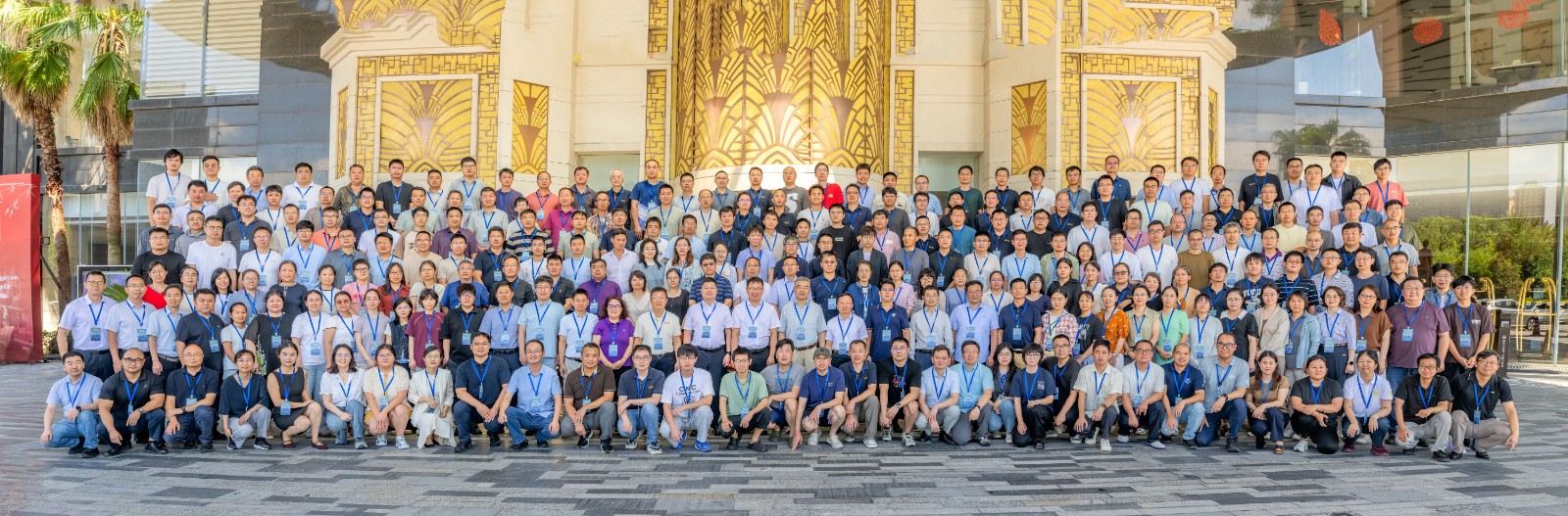
The joint training for the 2026 annual operating facilities (SSRF & SXFEL) of the Shanghai Synchrotron Radiation Facility Science Center, Chinese Academy of Sciences Shanghai Advanced Research Institute (hereinafter referred to as "Shanghai Advanced Research Institute"), was held in Haiyan, Zhejiang Province from July 28 to 30. Academician Zhao Zhentang, Director of the Academic Committee of Shanghai Advanced Research Institute and Director of the Shanghai Synchrotron Radiation Facility Science Center; Deng Haixiao, President and Deputy Secretary of the Party Committee of Shanghai Advanced Research Institute; Chen Fengwei, Secretary of the Party Committee; Tai Renzhong, Vice President and Executive Deputy Director of the Shanghai Synchrotron Radiation Facility Science Center; Zhou Sigen, Vice President; and over 260 representatives from the operation team of the Shanghai Synchrotron Radiation Facility Science Center, various functional departments of Shanghai Advanced Research Institute, and sister institutions participated in the training. The opening session was hosted by Zhu Wanqian, Deputy Director of the Shanghai Synchrotron Radiation Facility Science Center.
Deng Haixiao fully affirmed the achievements of the stable operation of the Shanghai Synchrotron Radiation Facility and the Shanghai Soft X-ray Free-Electron Laser Facility over the past year. In the new stage of coordinated advancement of large-scale scientific facilities under the "four-in-one" framework, frontline practice and talent team building should be taken as key pillars. He hoped that this training would serve as an opportunity to strengthen two-way communication between functional departments and researchers. In light of the operation work, he put forward three expectations: first, attach great importance to every detail in operation and never overlook any "almost there" issues; second, do not settle for "just holding the fort," but proactively identify problems, optimize details, and maximize efficiency; third, promote mentorship and knowledge transfer to ensure the continuity of the operation endeavor.
Zhao Zhentang reviewed the more than two decades of construction and operation history of the Shanghai Synchrotron Radiation Facility, noting that user services and scientific output reached new heights in the current operating year. Looking toward the next stage of development, the third-generation synchrotron radiation light source remains an important platform supporting user research. It is essential to seize the window period, be driven by major scientific output, adhere to high standards and strict requirements, closely follow the "four orientations," strengthen support for key fields, coordinate performance enhancement with stable operation, and promote the transfer and application of operational experience and key technologies to new project construction. In light of future light source upgrades and the development of a light source cluster, further efforts should be made to strengthen AI-enabled facility operation, continuously explore operational patterns and organizational models, and enhance the capacity to meet major national strategic needs, support scientific frontier breakthroughs, and promote industrial innovation and development.
The training arranged a total of 13 plenary reports and 77 breakout session reports. The plenary reports covered the operation, performance enhancement, and user access of facilities including the Shanghai Synchrotron Radiation Facility, the Shanghai Soft X-ray Free-Electron Laser Facility, and the first domestically produced proton therapy device. National major science and technology infrastructures including the Beijing Electron-Positron Collider, the Lanzhou Heavy Ion Research Facility and the High-Intensity Heavy-Ion Accelerator Facility, the Hefei Synchrotron Radiation Light Source, the China Spallation Neutron Source, the Dalian Coherent Light Source, and the High Energy Photon Source were invited to share their experiences. In the breakout sessions, six groups conducted discussions on accelerator and beamline station operation, commissioning, and performance improvement, reviewing progress, analyzing issues, and identifying optimization directions.
The summary session was hosted by Feng Chao, Deputy Director of the Shanghai Synchrotron Radiation Facility Science Center. Representatives from each group delivered summary presentations, analyzing issues in facility operation and proposing improvement suggestions. The Light Source Center recognized teams and individuals who demonstrated outstanding performance in facility operation support, performance enhancement, and technological innovation. During the training, participants also visited Qinshan Nuclear Power Plant to learn about the development trajectory of China's nuclear power industry and the construction history of Qinshan Nuclear Power Plant.
In his training summary, Tai Renzhong pointed out that the construction and operation of large-scale scientific facilities should strive to achieve the transition from "well-built" to "easy-to-use" and then to "fully utilized." Facing major national strategic needs, the facilities should take the lead in proactively planning and organizing major national scientific research missions, continuously enhancing the capacity to serve national strategic demands. In the face of rapid development and competition from similar facilities both domestically and internationally, it is essential to maintain a sense of urgency and ambition, sharing the motto "like sailing against the current, one must forge ahead or fall behind," proactively promote the deep integration of large-scale scientific facilities with advanced computing and AI technologies, benchmark against internationally advanced levels, and continuously improve facility operation capabilities and the quality of scientific output.
Disclaimer: Information republished from partner media, institutions or other websites is provided for reference and communication purposes only. It does not imply endorsement of its views or verification of its accuracy. Please contact us if any content infringes rights or requires correction.